
Gokce (Dervisoglu) OkandanCreative Entrepreneurship

Areas of expertise
- Knowledge management
- Tacit knowledge
- Corporate culture conflicts
- Culture policy
- Strategic management support
- Social-cultural-creative entrepreneurship
Education
- Post Doc, Cultural Policy, Princeton University
- Ph.D., Management Organization, Istanbul University
- Design Management, Istanbul Bilgi University
- MA-Mag, Strategic Management, Istanbul/Inssbruck University
- B.A., Business Administration, Istanbul University
Gokce (Dervisoglu) Okandan started her academic career at Istanbul University, where she mostly concentrated on strategic management issues related to knowledge management. She continued her studies at Innsbruck University with Prof. Hans Hinterhuber with the support of an Austrian research scholarship and published the result as a on Strategic Knowledge Management in Turkish. During her Ph.D., she worked on the role of Corporate Support on Culture and the Arts and developed a scorecard for these activities, with the support of Copenhagen Business School Art and Leadership Center.
Gokce (Dervisoglu) Okandan has completed her post doctoral research at Princeton University Woodrow Wilson School Center for Arts Policy and Research as a Tübitak fellow and appointed as the Director of Cultural Management Graduate Program as well as Vice Director of Work Ethics Research Center and board member of Cultural Policy and Management Research Center.
Her research interest continues in creativity related issues such as art, design, especially in terms of innovation and sustainability as well as strategic thinking. She also acted as the pioneer academic actor in the foundation of YEKON- Turkey’s Creative Industries Association and has been working especially on creative entrepreneurship within the GEW Executive Committee and Istanbul Chamber of Industry Quality Board.
Latest Analyses & Insights on Gokce's expertise
-
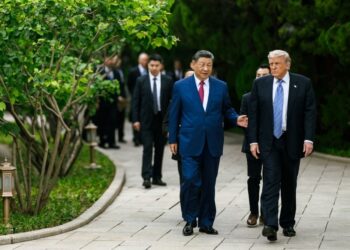
U.S.-China trade war is evolving into selective economic bargaining
The approaching Trump-Xi summit is likely to test whether the United States and China can exchange selective commercial concessions while preserving their broader strategic rivalry. Agricultural purchases offer Washington visible gains for farmers, energy trade creates opportunities to reopen disrupted business, and rare earth supplies give Beijing influence over critical American industries.
Sanctions add another negotiating instrument, linking bilateral commerce to US policy toward Iran and Russia. These issues create room for an agreement, although each operates through a different combination of political pressure and commercial incentives.
September 18, 2026 -

Europe is testing managed trade as its next defense against China
Europe’s reported request for China to restrain hybrid-car exports signals a harder approach to a trade relationship increasingly viewed in Brussels as a threat to industrial capacity. By seeking negotiated limits on shipments alongside greater Chinese purchases of European goods, the EU appears to be exploring direct management of trade flows. The objective would be to slow competitive pressure on European manufacturers while avoiding an escalating exchange of restrictions.
Brussels has proposed limiting Chinese hybrid sales to around 15% of the relevant EU market. The precise market definition matters. A ceiling covering all passenger cars would have very different consequences from one applying only to hybrids or plug-in hybrids, and the reported figure should not be interpreted as a settled, comprehensive quota.
September 17, 2026 -
Europe’s carbon border policy faces its first serious flexibility test
Europe’s carbon border policy is becoming a test of whether the bloc can sustain a predictable price on industrial emissions when that policy collides with demands for cheaper goods. The European Parliament’s September 15 vote to reject a proposed emergency suspension mechanism exposes a fundamental disagreement over how to manage that tension.
Lawmakers favour keeping the carbon charge in place and providing financial relief to affected industries, while member governments want the ability to temporarily exempt products during exceptional price shocks. The vote establishes Parliament’s negotiating position; it does not settle the final rules.
September 16, 2026