
Equinor set to open world’s biggest floating wind farm in Norway
- August 23, 2023
- Posted by: Quatro Strategies
- Categories: ESG & Renewable Energy, Europe
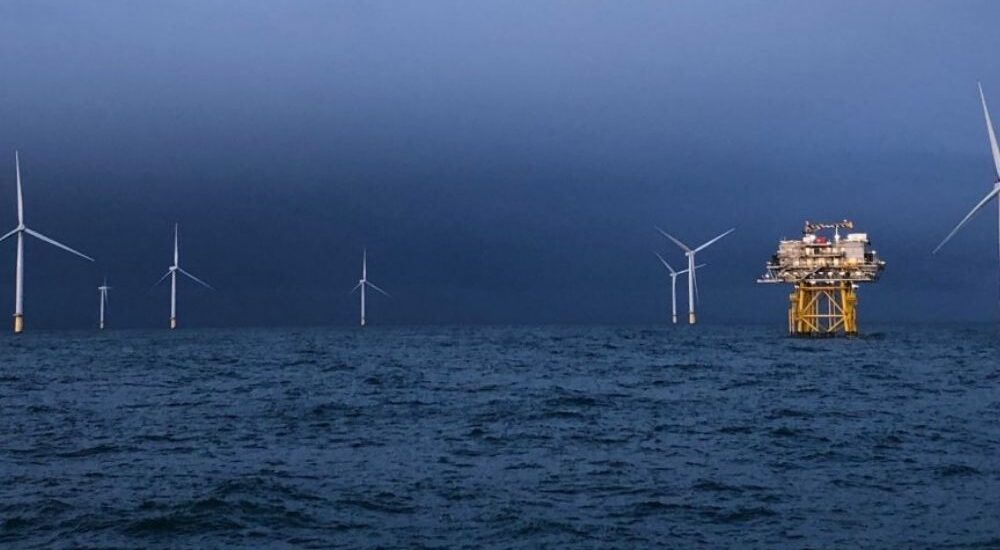
Norwegian energy company Equinor, along with its partners, is set to inaugurate the world’s largest floating offshore wind power farm, named Hywind Tampen. The wind farm, located in the North Sea about 140 kilometers off Norway’s west coast, began producing power in November the previous year and recently reached full output. The 88-megawatt capacity of Hywind Tampen will supply about 35% of the annual power demand for five oil and gas platforms at the Snorre and Gullfaks fields, operated by Equinor and its partners.
The innovative aspect of the Hywind Tampen project is its use of floating wind turbines. The 11 wind turbines are affixed to floating bases anchored to the seafloor, a technology considered suitable for deeper waters offshore. Equinor sees potential in developing this technology further for offshore wind projects in similar environments.
 One of the key benefits of the Hywind Tampen wind farm is its contribution to reducing greenhouse gas emissions. By supplying renewable power to the oil and gas platforms, the project is expected to cut CO2 emissions from the fields by approximately 200,000 tonnes per year. This reduction corresponds to about 0.4% of Norway’s total carbon dioxide emissions in 2022.
However, the project has sparked debates among environmentalists. While some view it as a positive step towards lowering the country’s carbon emissions, others argue that Norway should prioritize phasing out oil and gas production altogether.
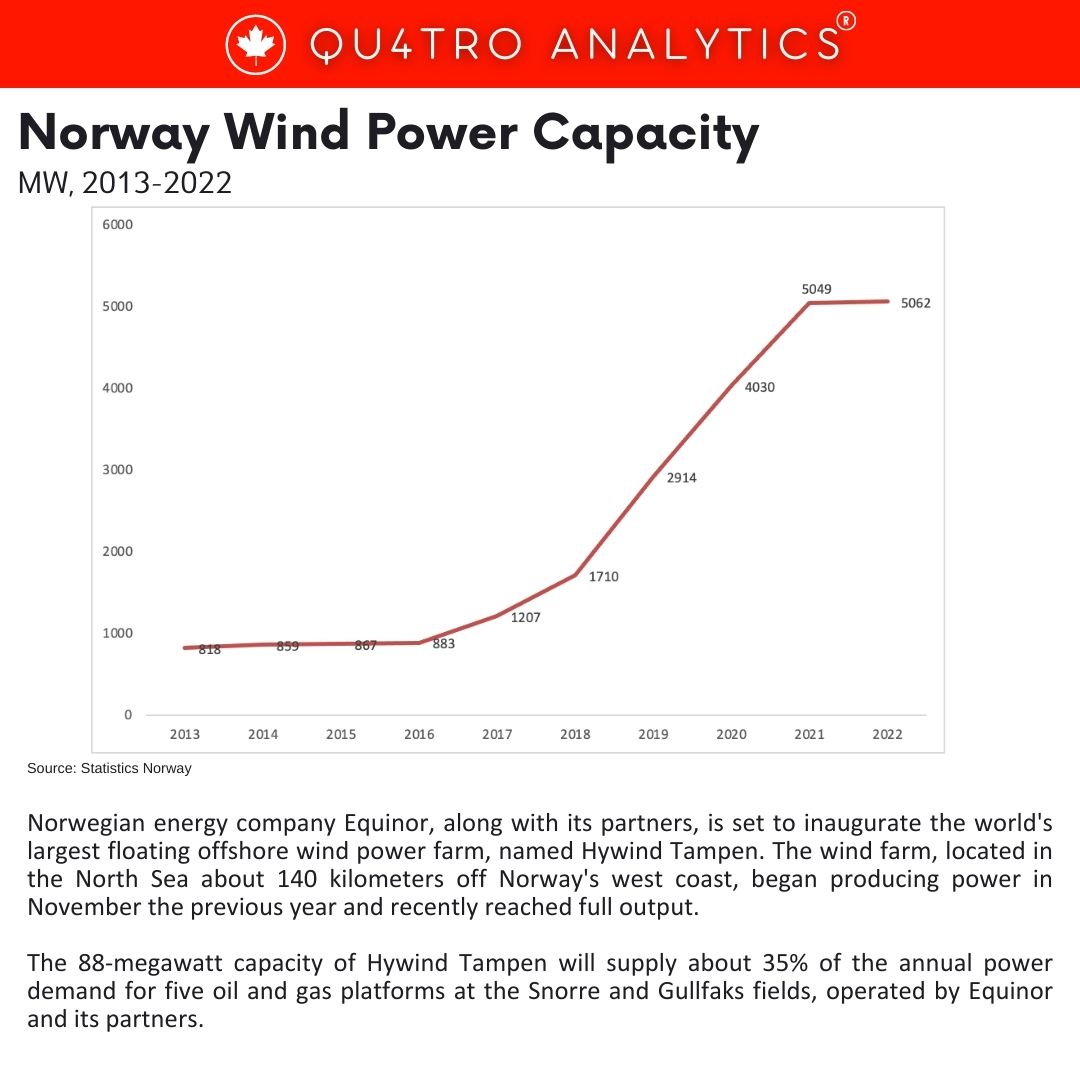
Norway has ambitious plans for offshore wind power. The country aims to achieve 30 gigawatts of offshore wind capacity by 2040, which would double its current power output. As part of this goal, Norway plans to tender its first commercial wind farms, including three floating projects, in the upcoming months. Equinor’s partners in the Hywind Tampen project include Wintershall Dea, INPEX Idemitsu, and Norway’s Petoro.
Interested in learning more?
Sign up for Top Insights Today

Top Insights Today delivers the latest insights straight to your inbox.
You will get daily industry insights on
Oil & Gas, Rare Earths & Commodities, Mining & Metals, EVs & Battery Technology, ESG & Renewable Energy, AI & Semiconductors, Aerospace & Defense, Sanctions & Regulation, Business & Politics.
Read more insights

Vietnam leverages defense ties with U.S. in bid to avoid harsh tariffs
Vietnam has formally requested a 45-day delay in the imposition of steep new U.S. tariffs as it seeks to negotiate a broader trade deal with Washington, Prime Minister Pham Minh Chinh said late Monday. The move comes as Hanoi scrambles to soften the blow of U.S. President Donald Trump’s 46% tariff on Vietnamese goods announced last week, a measure that has rattled markets and cast a shadow over the country’s export-led economy.
In a statement issued after a cabinet meeting, Chinh said Vietnam was prepared to increase imports of American goods, including defense and security-related items, and would expedite delivery timelines for commercial aircraft ordered from U.S. manufacturers. The goal, he said, is to rebalance bilateral trade in a “sustainable and mutually beneficial” way.
Energy storage, not EVs, now drives a spiky lithium rebound
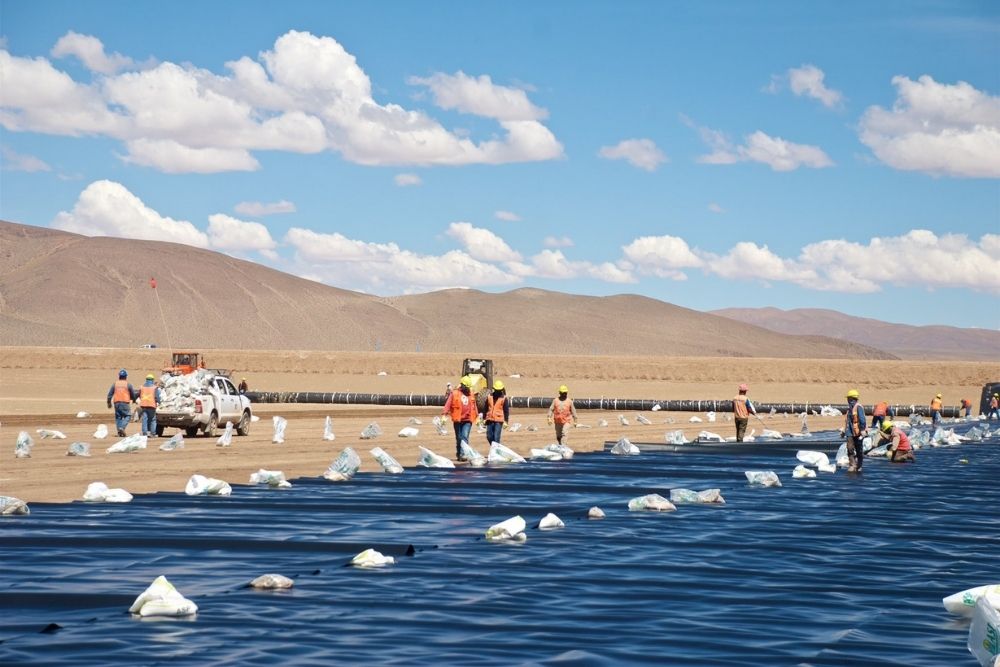
China’s lithium market has snapped back to life, but the speed of the rebound is starting to spook the very buyers it’s meant to reassure. Benchmark lithium carbonate futures in Guangzhou burst through 100,000 yuan/ton before easing, capping a near-20% jump this month, while spot prices have climbed to their highest since mid-2024.
The catalyst is a revival in demand expectations, not so much from passenger EVs, where growth has cooled, but from grid-scale energy storage systems that are booking larger orders and longer offtakes.
Trump tariffs on 14 nations signal U.S. geopolitical power play
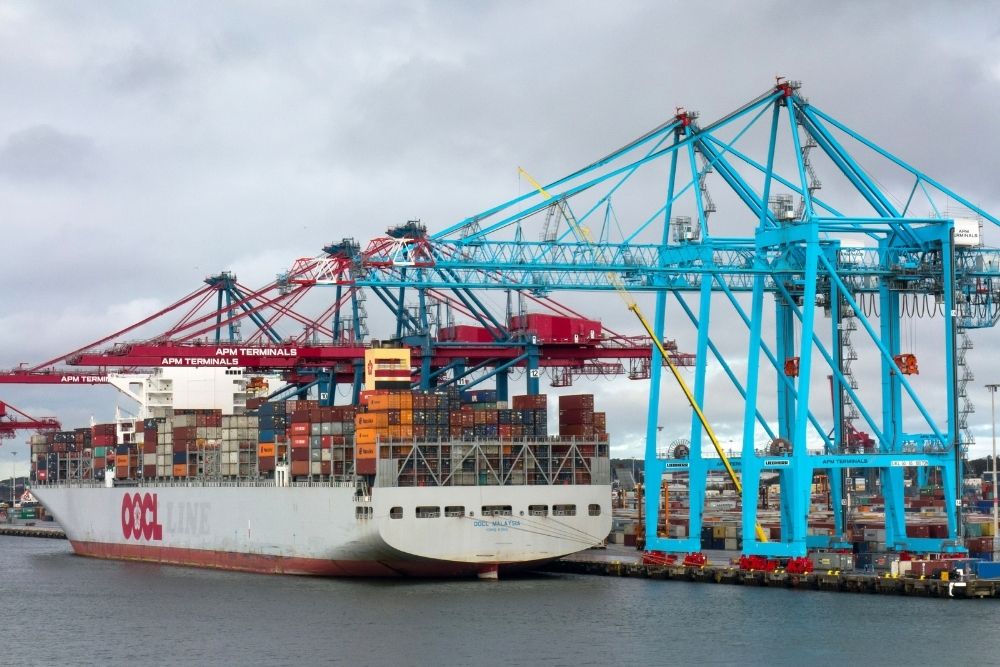
U.S. President Donald Trump has reignited fears of a worldwide trade shock by announcing sweeping new tariff measures that target 14 nations, ranging from strategic allies like Japan and South Korea to smaller trade partners across Africa and Asia. The move, unveiled Monday, intensifies the high-stakes drama surrounding the administration’s effort to recast America’s global trade relationships under Trump’s brand of “reciprocal” economic nationalism.
Under the executive order, tariffs of 25% will be imposed on virtually all goods imported from these countries starting August 1, with even steeper levies hitting others. The news sent U.S. equities tumbling, with the S&P 500 closing down nearly 0.8%, though equity markets in Asia proved more resilient.