
Southeast Asian firms looking at U.S. IPOs to replace Chinese companies
- September 19, 2023
- Posted by: Quatro Strategies
- Categories: Asia Pacific, Business & Politics, United States

Several Southeast Asian companies are contemplating initial public offerings (IPOs) in the United States, seizing the opportunity created by strong investor interest in emerging market growth, particularly in light of the pause in Chinese stock offerings. This marks a significant shift, especially as Chinese companies had halted U.S. IPOs due to heightened political tensions with Washington and increased scrutiny from the Beijing government. Now, companies from Southeast Asia are eyeing the U.S. market as an attractive avenue for their IPOs, potentially filling the void left by Chinese firms.
The Association of Southeast Asian Nations (ASEAN), which includes countries like Thailand, Singapore, Malaysia, and Vietnam, is seeing a resurgence in companies looking to go public in the U.S. ASEAN has been largely overshadowed by China’s influence, but with the world reopening after the pandemic and the ensuing economic fallout impacting Chinese competitors, ASEAN companies are stepping into the spotlight.
In particular, several Southeast Asian firms, including those in technology, logistics, mining, electric vehicles, and renewable energy sectors, are considering raising substantial capital through listings in the U.S. These companies are aiming to raise amounts ranging from $300 million to $1 billion, with valuations estimated between $1.5 billion and $8 billion.
Investors seeking exposure to emerging markets are finding Southeast Asia an attractive option due to the region’s strong economic growth and expanding population. For instance, Indonesia, the largest economy in Southeast Asia, has experienced accelerated growth, driven by robust household and government spending. This growth trajectory is encouraging for investors looking to diversify their portfolios with emerging market assets.
For the companies considering U.S. listings, there are several advantages, including access to a deep pool of capital and a global investor base. The U.S. market provides a vast platform for companies to attract substantial funding and gain visibility among international investors.
However, analysts caution that the expected uptick in Southeast Asian listings could face challenges related to share volatility and stringent investor scrutiny. Despite this, the potential for companies from ASEAN to make their mark in the U.S. market is significant, offering promising opportunities for both the companies and investors alike.
By QUATRO Strategies International Inc.
QUATRO Strategies International Inc. is the leading business insights and corporate strategy company based in Toronto, Ontario. Through our unique services, we counsel our clients on their key strategic issues, leveraging our deep industry expertise and using analytical rigor to help them make informed decisions to establish a competitive edge in the marketplace.
Interested in learning more?
Sign up for Top Insights Today

Top Insights Today delivers the latest insights straight to your inbox.
You will get daily industry insights on
Oil & Gas, Rare Earths & Commodities, Mining & Metals, EVs & Battery Technology, ESG & Renewable Energy, AI & Semiconductors, Aerospace & Defense, Sanctions & Regulation, Business & Politics.
Read more insights
EU seeks to finalize energy break with Russia in bold new roadmap
The European Commission is preparing to take a major step toward severing the EU’s long-standing dependence on Russian gas, with a proposal next month to legally ban new gas contracts with Russia by the end of 2025 and to phase out all existing imports by the end of 2027. This move, outlined in a draft “roadmap”, would mark the most ambitious effort yet to end the bloc’s reliance on Russian fossil fuels—a policy cornerstone since Moscow’s full-scale invasion of Ukraine in 2022.
The Commission’s draft document details a two-tiered strategy, with new gas contracts with Russia, including spot LNG purchases, would be prohibited by the end of 2025; and all existing imports, including under long-term contracts, would be banned by the end of 2027.
Hyundai to build $5B steel plant in Louisiana, add EV factory in Georgia
Hyundai is set to make a major splash in U.S. industrial and manufacturing policy with a $20 billion onshoring investment, including the construction of a $5 billion next-generation steel plant in Louisiana. The move is part of the South Korean conglomerate’s push to localize production and sidestep looming U.S. tariffs under President Donald Trump’s trade agenda.
The investment will be unveiled Monday at the White House during a joint announcement by President Trump, Hyundai Chairman Euisun Chung, and Louisiana Governor Jeff Landry. The new steel facility, which will employ approximately 1,500 workers, is expected to supply advanced steel for Hyundai’s electric vehicle (EV) production at its two existing U.S. auto plants in Alabama and Georgia.
ASEAN summit becomes stage for Trump’s Asia tour and U.S.-China talks
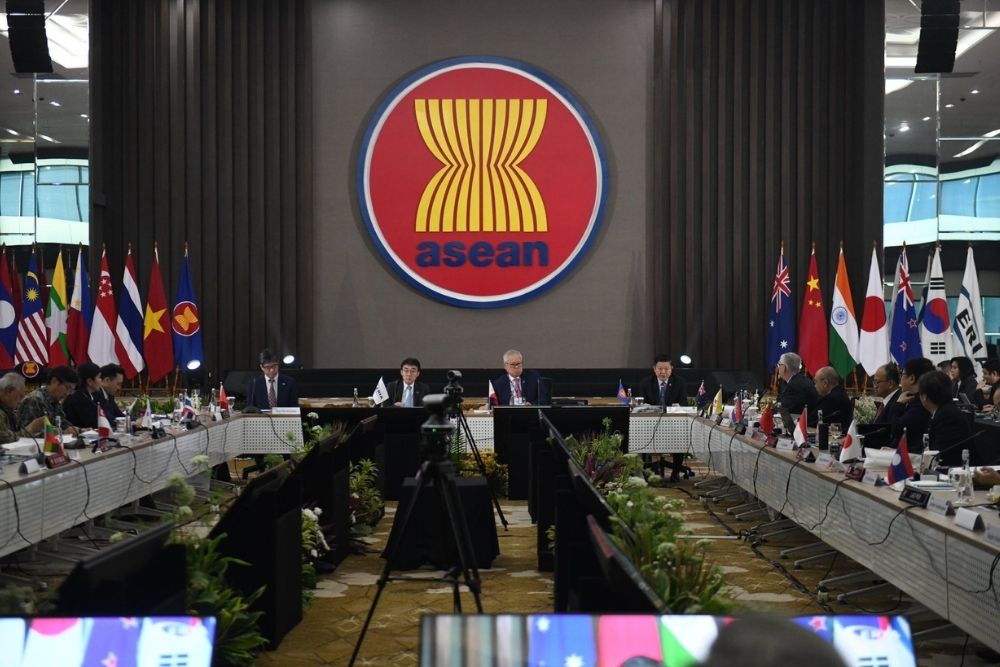
Southeast Asia’s annual leaders’ gathering in Kuala Lumpur has taken on unusual weight this year: it doubles as the launch pad for President Donald Trump’s five day swing through the region and unfolds in parallel with delicate U.S.-China talks meant to stop another escalation in their tariff fight.
ASEAN’s hosts are positioning the summit as a defense of trade multilateralism and a bid to widen the bloc’s diplomatic aperture, even as its members absorb the spillovers from Washington’s tariff salvos and Beijing’s counter-moves. The choreography underscores how the hub-and-spoke politics of great powers now run straight through ASEAN’s center stage.