
BlackRock to buy Exxon’s majority stake in Italian LNG terminal
- October 4, 2023
- Posted by: Quatro Strategies
- Categories: Europe, Oil & Gas, United States
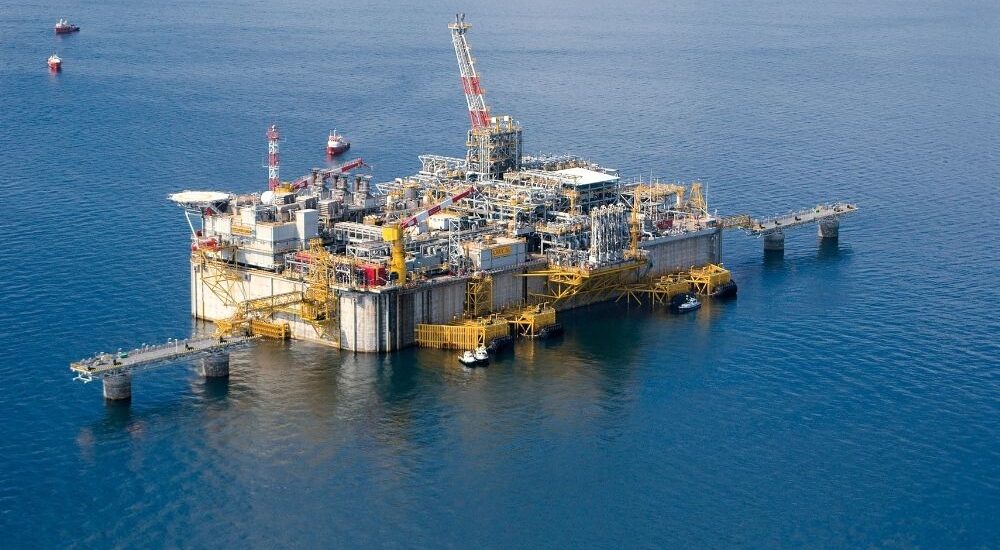
Exxon Mobil Corp has chosen BlackRock as the potential buyer for its majority stake in Italy’s main liquefied natural gas (LNG) import terminal, according to a statement by the U.S. oil producer. This decision comes as Italy is expected to increase its LNG imports to partly replace the gas it used to get via pipelines from Russia.
Exxon had announced in March that it was considering selling its 70.68% interest in the Adriatic LNG Terminal, which is located about 9 miles off the Veneto coastline. A subsidiary of QatarEnergy holds a 22% stake, and Italian gas grid operator Snam holds a 7.3% stake in the terminal.
Snam, having the first right of refusal, could potentially increase its current stake and secure governance rights on the energy infrastructure.
Several prospective buyers were interested in the stake sale, with the entire regasification terminal estimated to be valued at around 800 million euros ($881 million).
While Exxon confirmed BlackRock as the potential buyer, they emphasized that a final agreement had not yet been reached, and the terms of the deal were not disclosed.
QUATRO Strategies International Inc. is the leading business insights and corporate strategy company based in Toronto, Ontario. Through our unique services, we counsel our clients on their key strategic issues, leveraging our deep industry expertise and using analytical rigor to help them make informed decisions to establish a competitive edge in the marketplace.
Interested in learning more?
Sign up for Top Insights Today

Top Insights Today delivers the latest insights straight to your inbox.
You will get daily industry insights on
Oil & Gas, Rare Earths & Commodities, Mining & Metals, EVs & Battery Technology, ESG & Renewable Energy, AI & Semiconductors, Aerospace & Defense, Sanctions & Regulation, Business & Politics.
Read more insights
Germany mulls nationalizing Rosneft’s assets amidst Ukraine War
The German government is considering the possibility of nationalizing Rosneft’s German assets, including its stake in the Schwedt refinery, according to two government sources on Wednesday. Following Russia’s full-scale invasion of Ukraine, Berlin placed Rosneft’s German assets…
America’s LNG boom surges ahead with 90 MTPA of new capacity on deck
The U.S. liquefied natural gas (LNG) sector is entering a bold new phase of growth, with more than 90 million tonnes per annum (MTPA) of new export capacity expected to receive final investment decisions (FIDs) in 2025 — even amid heightened uncertainty surrounding President Donald Trump’s trade war and its impact on construction costs.
The U.S., already the world’s largest LNG exporter with 91.3 MTPA of capacity, is on track to triple its output before 2030. An additional 95.7 MTPA of capacity is already under construction. This pipeline of growth reflects confidence in long-term demand for U.S. gas globally, even as tariffs on steel, aluminum and other inputs threaten to drive up construction costs for new plants.
Oil markets brace for a violent deficit-to-surplus swing
The oil market’s whiplash trajectory is crystallized: the 2026 deficit forecast doubled to 1.5 million barrels per day as the war chokes the Gulf flows, followed by the projected swing to a 1.9-million-barrel surplus in 2027 as the recovering exports, the robust American production, and the structurally weaker Chinese demand converge upon a market the analysts expect to drown in the very barrels it now lacks.
The reversal chronology, the pre-war expectation of a 1.63-million-barrel 2026 surplus flipped to the deepening deficit and then flipped again toward the record-stock projections for 2027, renders in the forecast revisions the schizophrenia the physical market has lived, the Brent chart’s sixty-three percent March surge, the sharpest monthly rise since records began in 1988, and the twenty-eight percent July climb bracketing the ceasefire interlude’s collapse.