
Governments looking at lunar mining opportunities
- August 19, 2023
- Posted by: Quatro Strategies
- Categories: China, India, Mining & Metals, United States

The recent launch of a moon-landing spacecraft by Russia, alongside the concurrent efforts of major powers like the United States, China, and India, underscores a renewed global interest in lunar exploration. These nations are driven by a combination of scientific curiosity, potential resource extraction, technological advancement, and geopolitical competition.
The moon, located approximately 384,400 km (238,855 miles) from Earth, has garnered significant attention due to several factors:
Scientific Exploration: Studying the moon’s geology, composition, and history can provide insights into the early evolution of the solar system and our own planet. It offers a unique opportunity to learn more about planetary formation and processes.
Resource Potential: The moon is believed to contain valuable resources such as water ice, helium-3, and rare earth metals. Water can be converted into oxygen and hydrogen for life support and rocket fuel. Helium-3 has potential applications in nuclear fusion energy production, while rare earth metals are crucial for advanced technologies.
Technological Advancement: Lunar missions necessitate the development of innovative technologies in various fields, from propulsion and navigation to communication and life support. Advancements made during lunar exploration can have broader applications on Earth and in space.
Human Space Exploration: Establishing a human presence on the moon could serve as a stepping stone for future crewed missions to Mars and beyond. Lunar bases could provide critical experience in living and working in extraterrestrial environments.
Geopolitical Competition: Lunar exploration is seen as a demonstration of technological prowess and national prestige. Major powers strive to establish their leadership in space exploration, both for the benefits it offers and as a symbol of their global standing.
Commercial Opportunities: Private companies are also interested in lunar resources and potential economic activities, including space tourism, mining, and research. This aligns with the growing commercialization of space.
Legal and Governance Considerations: The regulatory framework for lunar exploration is complex and evolving. International agreements, such as the Outer Space Treaty and the Artemis Accords, aim to guide responsible and collaborative exploration. However, challenges remain in defining property rights and establishing clear governance mechanisms for space activities.
It’s important to note that while major powers are engaged in a competitive race to explore the moon, there are also opportunities for collaboration and mutual benefit. Joint missions, data sharing, and cooperative projects could advance scientific knowledge and technological capabilities for the collective good.
As technological capabilities continue to evolve and humanity’s understanding of the moon grows, lunar exploration is likely to remain a focal point for major powers and the global space community.
Interested in learning more?
Sign up for Top Insights Today

Top Insights Today delivers the latest insights straight to your inbox.
You will get daily industry insights on
Oil & Gas, Rare Earths & Commodities, Mining & Metals, EVs & Battery Technology, ESG & Renewable Energy, AI & Semiconductors, Aerospace & Defense, Sanctions & Regulation, Business & Politics.
Read more insights
U.S. moves to rewire global solar supply chain in bid to undermine China
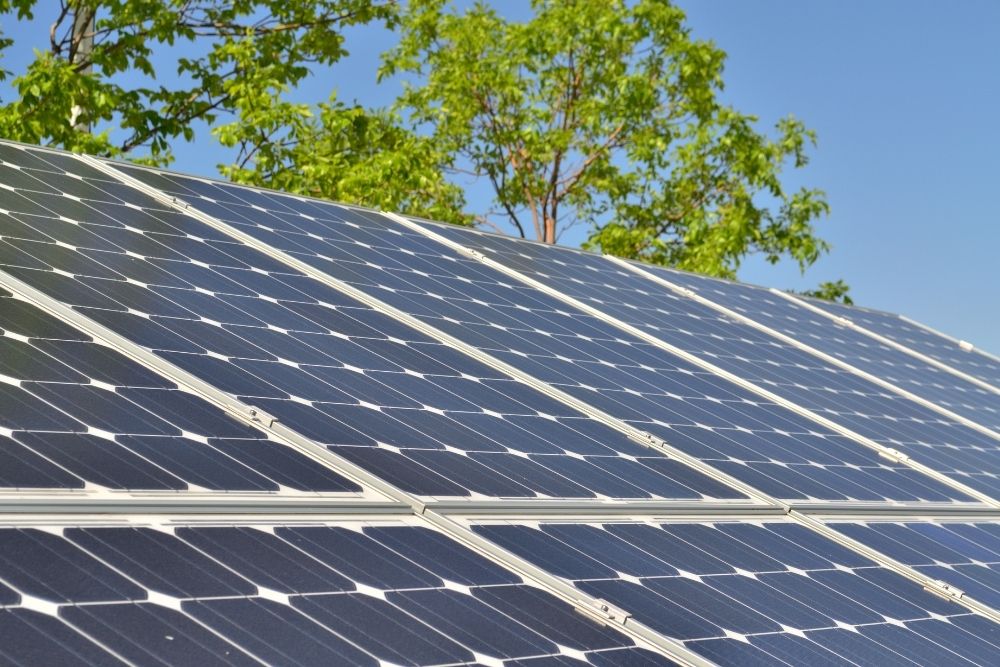
The recent passage of a sweeping tax-and-spending bill by the U.S. House of Representatives marks a major escalation in Washington’s long-standing effort to sever the country’s reliance on Chinese solar technology. The legislation — if ratified by the Senate and signed into law — would impose stringent restrictions on clean energy tax credits, making them contingent on a project’s complete detachment from China and other “foreign entities of concern.”
That means any project using materials or components sourced from China, or involving Chinese-linked ownership, could become ineligible for the financial incentives meant to accelerate America’s energy transition.

EU’s investigation into Chinese EV subsidies navigates unexpected terrain
The European Union’s (EU) investigation into Chinese support for electric vehicles (EVs) has taken an unexpected turn, as China’s expected retaliation against the probe has yet to materialize. This surprising development is attributed to significant pressure on China’s oversupplied…

Petronas to deliver first LNG Canada cargo to Japan
Malaysia’s state energy company Petroliam Nasional (Petronas) announced on Friday that the firm will deliver its first liquefied natural gas (LNG) cargo from the LNG Canada project to Japanese city gas provider Toho Gas in July. The shipment marks a milestone for Petronas, which holds a minority stake in LNG Canada, a major export project in British Columbia led by Shell.
Speaking at an energy conference in Tokyo, Shamsairi Ibrahim, Petronas’ vice president of LNG marketing and trading, also confirmed that the company’s third floating LNG project is scheduled to begin production in 2027, expanding its role as a global LNG supplier.