
Intel, Israel’s Tower Semiconductor enter into strategic partnership following failed merger
- September 6, 2023
- Posted by: Quatro Strategies
- Categories: AI & Semiconductors, Middle East, United States
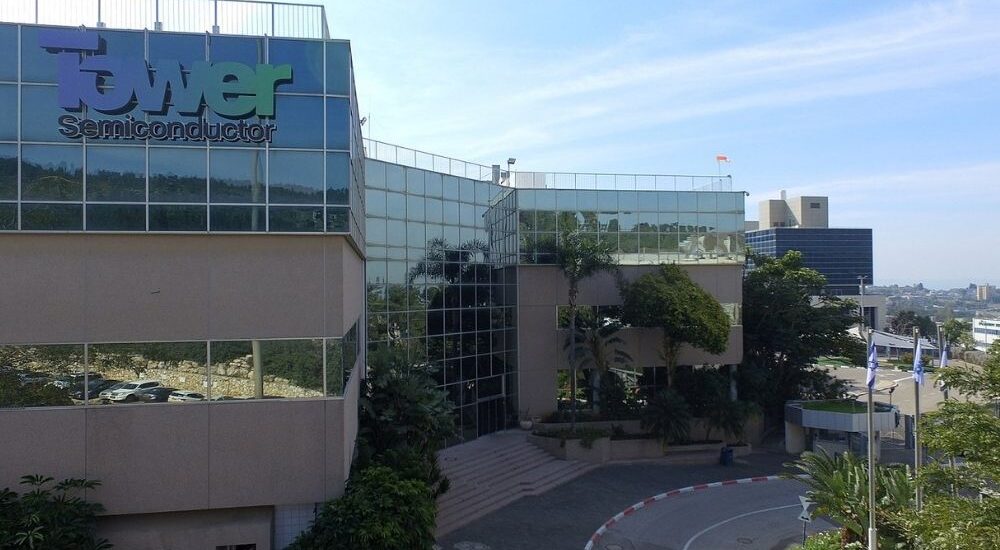
Intel and Tower Semiconductor have entered into a strategic partnership, following the termination of their proposed $5.4 billion merger due to regulatory challenges. Under this new agreement, Tower Semiconductor will invest $300 million in Intel’s manufacturing facility located in New Mexico. In return, Tower Semiconductor will acquire and own equipment and fixed assets to be deployed at this facility.
This partnership aims to bolster both companies’ positions in the semiconductor industry. Tower Semiconductor will gain access to a substantial production capacity of over 600,000 photo layers per month at the New Mexico facility. This expanded capacity will enable Tower Semiconductor to better meet the growing demand for next-generation 300mm chips, which are crucial for various applications, including advanced power management and radio frequency silicon on insulator (RF SOI) solutions.
Russell Ellwanger, CEO of Tower Semiconductor, sees this collaboration as an initial step toward multiple synergistic solutions with Intel. He noted that the collaboration would allow Tower Semiconductor to meet its customers’ demand roadmaps effectively, with full process flow qualification planned for 2024.
For Intel, this partnership enhances its foundry capabilities and competitive position in the semiconductor market. In 2021, Intel allocated $3.5 billion to its New Mexico facility and announced an additional $20 billion investment in a chip-making complex in Ohio in 2022. The company is making strategic moves to expand its foundry business, with a focus on advanced packaging solutions, to stay competitive with industry leader Taiwan Semiconductor Manufacturing Co. (TSMC).
During the second quarter of 2023, Intel’s foundry business reported robust revenue growth, increasing from $57 million in the previous year to $232 million. This growth was primarily driven by the adoption of advanced packaging techniques, where Intel can combine multiple chip components to create more powerful and efficient integrated circuits. The partnership with Tower Semiconductor is expected to further strengthen Intel’s position in the semiconductor foundry sector.
Interested in learning more?
Sign up for Top Insights Today

Top Insights Today delivers the latest insights straight to your inbox.
You will get daily industry insights on
Oil & Gas, Rare Earths & Commodities, Mining & Metals, EVs & Battery Technology, ESG & Renewable Energy, AI & Semiconductors, Aerospace & Defense, Sanctions & Regulation, Business & Politics.
Read more insights
Germany and Morocco forge alliance to boost renewable energy and hydrogen production
Germany has agreed to form a climate and energy alliance with Morocco to support the expansion of renewable energy and hydrogen production in the North African country, according to the German development ministry. This collaboration comes as Germany seeks to expand its reliance on hydrogen as a future energy source…

India accelerates plans for new strategic oil reserves
As global oil markets become increasingly vulnerable to geopolitical rifts and supply disruptions, India is taking significant steps to insulate itself by ramping up its emergency crude stockpiles. The country is actively exploring the development of three new strategic petroleum reserves (SPRs), a move that would fortify its long-term energy security architecture and bring it closer to meeting international norms for fuel safety nets.
India stands as the world’s third-largest oil importer and consumer, sourcing over 80% of its crude from abroad. This towering dependence has made the country perpetually sensitive to geopolitical tremors—from wars in the Middle East to sanctions-driven market shifts and transport chokepoints like the Strait of Hormuz.
Europe’s de-risking drive meets legacy chip reality in Nexperia ownership standoff
Europe’s push to “de-risk” from China is colliding with the hard physics of semiconductor supply chains, and the standoff around Nexperia has become a live test of whether Brussels and key member states can tighten technology control without triggering self-inflicted industrial disruption.
The dispute centers on a Dutch court decision that stripped effective control of Nexperia from its Chinese owner, Wingtech Technology, by placing ownership rights into a court-appointed trust and suspending Wingtech’s founder from executive authority.