
SQM awarded environmental certificate for Chile lithium mine
- September 7, 2023
- Posted by: Quatro Strategies
- Categories: Americas, ESG & Renewable Energy, Mining & Metals
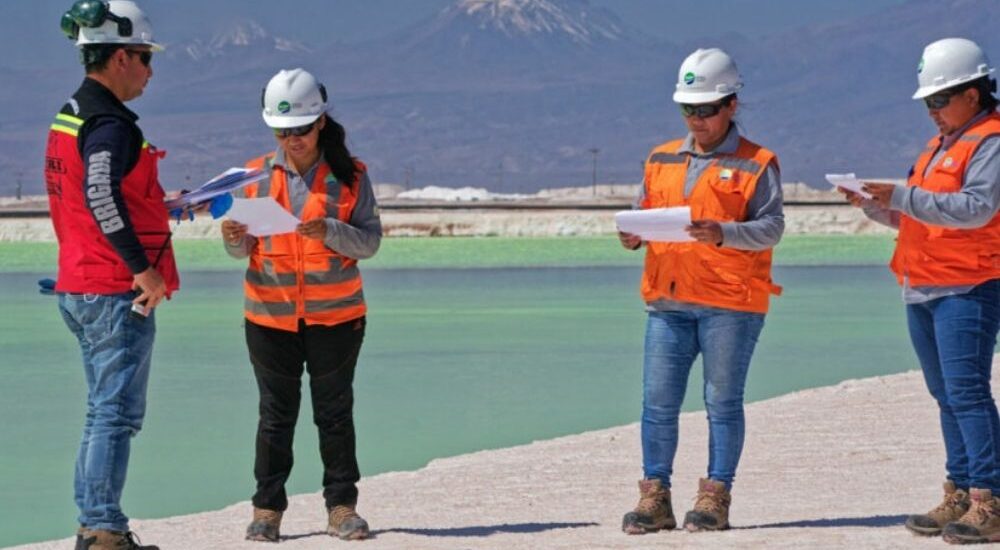
SQM, a major lithium producer, has announced that its operations in the Salar de Atacama salt flat in Chile have received IRMA (Initiative for Responsible Mining Assurance) certification. This certification measures the environmental and social performance of mine sites based on rigorous standards set by the IRMA.
SQM achieved a score of 75 out of a possible 100 on the IRMA scale, indicating strong performance in various areas. However, it received low marks for its security arrangements and emergency preparedness. On the positive side, the company received high marks for its respect for biodiversity, fair labor standards, and noise mitigation.
This certification makes SQM the second company in Chile to achieve IRMA certification, following Albemarle, another major lithium producer. Albemarle received a slightly lower overall ranking of 50, with low marks in areas like community health and safety but high marks for greenhouse gas emissions abatement, among other factors.
IRMA provides third-party verification and certification of mining practices to protect human rights, communities, and the environment along the supply chain. Companies like Ford and BMW have joined the initiative, and it is favored by many electric vehicle manufacturers to ensure responsible sourcing of critical battery materials.
SQM’s CEO, Ricardo Ramos, expressed the company’s commitment to transparency and improvement by sharing the results of the audit. IRMA certification is significant in the lithium industry as it demonstrates responsible mining practices, which are increasingly important as demand for lithium, a key component in electric vehicle batteries, continues to grow.
Interested in learning more?
Sign up for Top Insights Today

Top Insights Today delivers the latest insights straight to your inbox.
You will get daily industry insights on
Oil & Gas, Rare Earths & Commodities, Mining & Metals, EVs & Battery Technology, ESG & Renewable Energy, AI & Semiconductors, Aerospace & Defense, Sanctions & Regulation, Business & Politics.
Read more insights
Stellantis commits to largest-ever investment in Latin American automotive sector
Stellantis, the European carmaker, unveiled a significant 5-year investment strategy for Latin America, outlining plans to allocate a total of 5.6 billion euros between 2025 and 2030. This initiative represents the most substantial investment ever witnessed in both the Brazilian and South American automotive…
Sweden targets two new nuclear reactors by 2035 to enhance power generation
Sweden’s parliament has approved a bill that removes the previous cap of 10 nuclear reactors, allowing for the construction of more reactors than initially planned. This decision is part of Sweden’s efforts to enhance power generation and energy security. The new law also permits…

China rolls out coordinated stimulus to lift consumption without direct handouts
China’s leadership is trying to engineer a stronger, consumption-led start to 2026 by coupling fiscal money with directed credit in a single, coordinated push, an approach that reflects both urgency about near-term momentum and recognition that traditional, investment-heavy stimulus has diminishing returns.
At a State Council meeting chaired by Premier Li Qiang on Friday, the cabinet discussed implementing a package that blends budgetary tools and financial sector incentives to “expand effective demand,” with an explicit emphasis on lifting household consumption through cheaper credit, more service-sector financing, and an expanded supply of “high-quality services,”.