
Gokce (Dervisoglu) OkandanCreative Entrepreneurship

Areas of expertise
- Knowledge management
- Tacit knowledge
- Corporate culture conflicts
- Culture policy
- Strategic management support
- Social-cultural-creative entrepreneurship
Education
- Post Doc, Cultural Policy, Princeton University
- Ph.D., Management Organization, Istanbul University
- Design Management, Istanbul Bilgi University
- MA-Mag, Strategic Management, Istanbul/Inssbruck University
- B.A., Business Administration, Istanbul University
Gokce (Dervisoglu) Okandan started her academic career at Istanbul University, where she mostly concentrated on strategic management issues related to knowledge management. She continued her studies at Innsbruck University with Prof. Hans Hinterhuber with the support of an Austrian research scholarship and published the result as a on Strategic Knowledge Management in Turkish. During her Ph.D., she worked on the role of Corporate Support on Culture and the Arts and developed a scorecard for these activities, with the support of Copenhagen Business School Art and Leadership Center.
Gokce (Dervisoglu) Okandan has completed her post doctoral research at Princeton University Woodrow Wilson School Center for Arts Policy and Research as a Tübitak fellow and appointed as the Director of Cultural Management Graduate Program as well as Vice Director of Work Ethics Research Center and board member of Cultural Policy and Management Research Center.
Her research interest continues in creativity related issues such as art, design, especially in terms of innovation and sustainability as well as strategic thinking. She also acted as the pioneer academic actor in the foundation of YEKON- Turkey’s Creative Industries Association and has been working especially on creative entrepreneurship within the GEW Executive Committee and Istanbul Chamber of Industry Quality Board.
Latest Analyses & Insights on Gokce's expertise
-
EU tries to cushion energy pain without rewriting the market
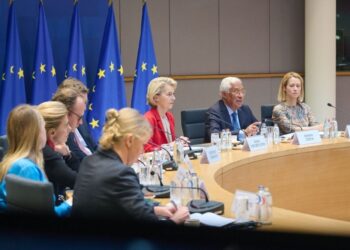
The European Union is responding to the Iran war’s energy shock with a familiar but difficult formula: temporary relief now, structural transition later. EU leaders on Thursday called for short-term measures to soften the impact of surging imported fuel and power prices, with electricity tax cuts, lower grid fees and state support all under discussion.
The European Council’s summit conclusions also asked for a toolbox of targeted temporary measures to address the recent price spike and for concrete actions to lower electricity prices while preserving fair competition and investment incentives.
March 20, 2026 -
Iran conflict pushes Trump to relax a core protectionist shipping law
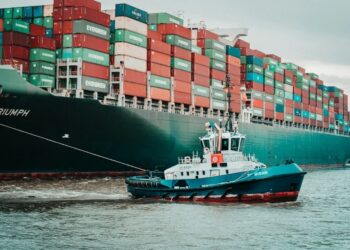
The Jones Act waiver shows how quickly the Trump administration has moved from ideological preference to crisis pragmatism under the pressure of the Iran war. Washington has granted a 60-day waiver of the century-old law, temporarily allowing foreign-flagged ships to carry fuel, fertilizer and other goods between U.S. ports in response to higher prices and supply disruptions linked to the conflict.
The move is significant not because it will dramatically reduce costs on its own, but because it signals that the administration now sees domestic shipping constraints as one of the bottlenecks worsening the economic fallout from the war.
March 19, 2026 -
UK hardens steel trade defenses in strategic industry shift
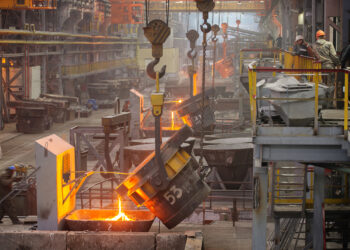
Britain is preparing to harden its steel trade defenses in what looks like a significant shift toward a more openly protectionist industrial policy. The government is expected to cut import quotas for many steel products and raise tariffs on shipments outside those limits to 50%, roughly bringing the UK into line with the European Union and the United States.
The move would form part of a broader steel strategy expected shortly from the government, which has already made clear that it sees the survival of domestic steelmaking as a strategic priority rather than simply a matter of market efficiency.
March 17, 2026