
Gokhan TaymazManaging Director / Corporate Advisor

areas of expertise
- Global Business Environment Analysis
- Strategic Planning and Execution
- Government Relations
- Public Policy Support
- Corporate Resiliency
- Market Penetration
- Strategic Communications
- Knowledge Management
education
- Executive Master of Business Administration, University of Oxford
- MA, Government Relations and Political Communication, Laureate Bilgi University
- Senior Level Executive Programs, NATO School Oberammergau, Germany
- Knowledge Management
- Political Analysis
- Strategic Planning
- Crisis Management
- Strategic Communications and Micro Targeting
- BS, Aerospace Engineering, Istanbul Technical University
Gokhan Taymaz is a globally recognized executive advisor with over 25 years of international experience at the nexus of investments, private sector growth, and geopolitics. He is renowned for guiding Fortune 500 companies, institutional investors, and high-growth enterprises through complex regulatory environments and volatile geopolitical landscapes.
Known for his ability to bridge public-private interests, Gokhan has a proven track record of shaping market-entry strategies, re-aligning investment portfolios, and facilitating high-stakes negotiations in sectors ranging from energy and infrastructure to technology and industrial manufacturing.
A trusted strategic advisor to chairpersons, boards, and investment committees, Gokhan has led transformative initiatives that mobilize capital, drive cross-border expansion, and unlock long-term value across diverse markets. His career spans key advisory roles in multinational corporations and global institutions, where he has consistently aligned commercial strategies with emerging political and economic realities.
Latest insights & analysis on Gökhan's area of expertise
-
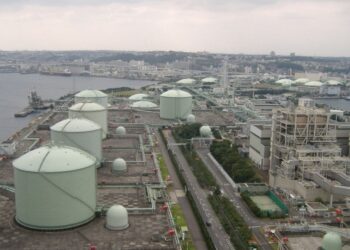
Iran conflict exposes the cost of Europe’s uneven energy transition
Europe’s power-price divergence in 2026 is revealing a hard truth about the continent’s energy transition: the countries that remain most dependent on gas are once again the ones absorbing the worst of an external shock. Wholesale electricity prices in Hungary, Italy and Romania have all risen by at least 12% from last year’s average levels, while Spain and Portugal have recorded declines over the same period.
That gap is not accidental. It reflects the very different structures of national power systems and shows that the U.S.-Israeli war on Iran is hitting Europe unevenly, with the most gas-reliant economies suffering the largest cost increases.
March 19, 2026 -
Europe’s carbon market becomes the new front line of the crisis
Europe’s carbon market has become the central battleground in the EU’s attempt to contain the economic fallout from the Iran war, and Tuesday’s sharp price drop showed just how seriously traders are taking the prospect of political intervention.
The benchmark EU carbon contract fell more than 5% intraday after Commission President Ursula von der Leyen told EU leaders the bloc was considering releasing more emissions permits through the market’s reserve system, moderating the planned phase-down of free allowances for industry, and using a review due in July to rethink some of the supply tightening scheduled after 2030. The contract later traded around €66.33 a ton after touching €64.93, its lowest level since April 2025.
March 18, 2026 -

Iran conflict rewrites energy transition as a resilience imperative
The Strait of Hormuz shock is exactly the kind of “fat tail” event that energy systems built around liquid fuels are structurally unable to hedge. It is not just a price spike; it is a logistics-and-insurance failure that rapidly becomes a political crisis because gasoline and diesel sit directly in the consumer’s face and under the freight system.
Electrification is one of the few strategies that doesn’t merely diversify suppliers or build bigger stockpiles, but shrinks the exposed surface area of the economy to oil chokepoints altogether. Governments keep treating Hormuz as an occasional crisis to be managed with emergency releases, when it should be treated as a recurring systemic risk that merits permanent risk reduction.
March 13, 2026