
TotalEnergies acquires 40% stake in Norway CO2 storage project
- August 22, 2023
- Posted by: Quatro Strategies
- Categories: ESG & Renewable Energy, Europe
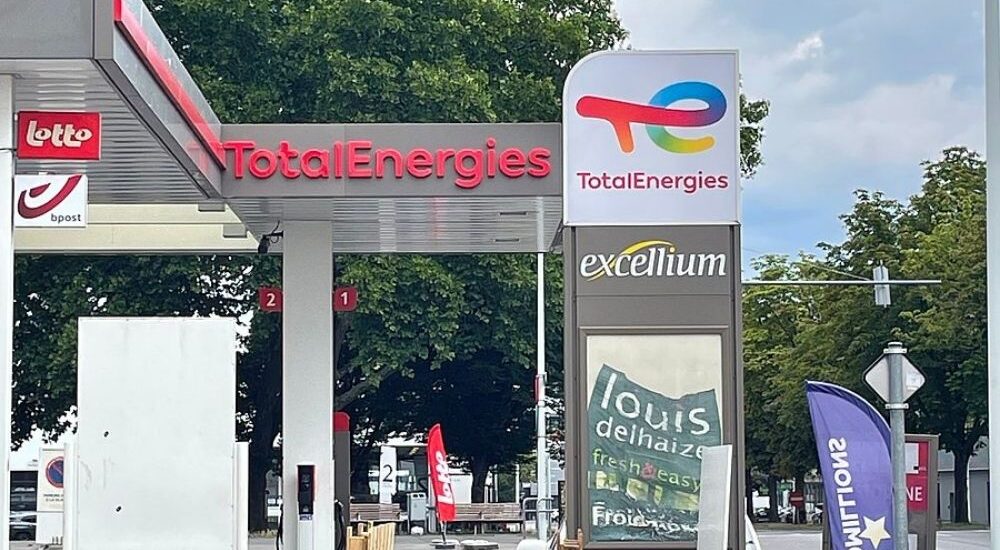
TotalEnergies, the French energy major, has entered into an agreement to acquire a 40% participating interest held by CapeOmega Carbon Storage AS, a subsidiary of CapeOmega AS, in the CO2 storage exploration license ExL004, also known as the “Luna” project. ExL004 covers an area of 453 square kilometers and is located 120 km offshore Bergen in 200 meters of water depth. The license is adjacent to the site of the Northern Lights CO2 storage project, in which TotalEnergies already holds a 33% participating interest. The first phase of the Northern Lights project is set to begin in 2024.
The Luna project is operated by Wintershall DEA Norge AS, which holds a 60% participating interest. The acquisition is contingent upon satisfying customary conditions, including obtaining final approvals from relevant government authorities.
This acquisition is viewed as a significant step for TotalEnergies to expand its carbon capture and storage (CCS) capabilities. The Luna project’s exploration area, if successful, could potentially provide storage capacity for several hundred million tons of CO2 emissions from hard-to-abate industries in Europe. TotalEnergies is focused on a systematic approach to carbon emissions reduction, first by avoiding and then by reducing emissions. The company is developing industrial projects for carbon storage to address residual emissions.
“This transaction is an important milestone to grow our CO2 storage offering: subject to a successful exploration, this area could enable the storage of several hundred million tons of CO2 from hard-to-abate industries in Europe,” said Arnaud Le Foll, Senior Vice-President New Business – Carbon Neutrality at TotalEnergies.
“With the Northern Lights start-up in 2024 and other projects under development in the Netherlands, Denmark and the UK, TotalEnergies is building a world-class carbon storage portfolio across the North Sea. Norway will play a leading role in this portfolio thanks to its large geological storages and supportive government policies.”
With projects like Northern Lights in Norway, Aramis in the Netherlands, and Bifrost in Denmark, TotalEnergies aims to contribute to the substantial decarbonization of European businesses. The company’s comprehensive portfolio of projects across the North Sea reflects its commitment to carbon neutrality and aligns with supportive government policies in the region.
Interested in learning more?
Sign up for Top Insights Today

Top Insights Today delivers the latest insights straight to your inbox.
You will get daily industry insights on
Oil & Gas, Rare Earths & Commodities, Mining & Metals, EVs & Battery Technology, ESG & Renewable Energy, AI & Semiconductors, Aerospace & Defense, Sanctions & Regulation, Business & Politics.
Read more insights
Oil futures decline as OPEC+ signals production boost starting late 2024
Oil futures prices have hit their lowest point in four months, with calendar spreads also declining, after OPEC+ ministers indicated plans to start increasing production from the fourth quarter of 2024. Front-month Brent futures settled at $78 per barrel on June 3, following the OPEC+ ministerial meeting on June 2…
European gas markets retreat as Trump tariffs weigh on global demand
European natural gas prices slipped on Monday, pressured by concerns that energy demand growth is falling short of expectations while supply prospects continue to improve. The region’s benchmark Dutch front-month futures dropped as much as 2.1% before trimming losses, trading down 0.7% at €32.84 per megawatt-hour by late morning in Amsterdam.
The pullback follows a turbulent April in which European gas futures shed more than 20%, primarily due to fears that escalating global trade tensions — fueled by U.S. President Donald Trump’s sweeping tariff campaign — will curb industrial activity and drag down energy consumption across major markets. While the price drop has reignited LNG demand in Asia, which competes with Europe for cargoes, concerns over a broader economic slowdown continue to weigh on sentiment.
EU blinks on 2035 engine ban as it tries to defend carmakers
The European Commission has signaled a major recalibration of its flagship road-transport decarbonisation strategy by proposing to step back from the EU’s de facto requirement that all new cars and vans sold from 2035 be “zero-emission” at the tailpipe.
In its place, the Commission is advancing a framework that would still impose a very deep emissions reduction by 2035, but would permit a residual share of new vehicles that are not fully electric to remain in the market, provided the sector compensates for the remaining emissions through specified forms of “offset-like” compliance.