
Argentina’s presidential frontrunner could disrupt country’s commodity sectors
- August 18, 2023
- Posted by: Quatro Strategies
- Categories: Americas, Mining & Metals

Javier Milei, the candidate leading the race for Argentina’s presidency, could potentially disrupt the country’s major commodity industries if elected. Argentina is a significant exporter of crops, beef, lithium, and other resources. Milei’s proposed policies include scrapping taxes on farm exports, which would make Argentine agricultural products more competitive globally. He has also advocated for adopting the US dollar as the country’s currency, aiming to stabilize the economy and international trade.
Milei’s support is particularly strong in agricultural regions like the Pampas farm belt, where farmers are looking for policies that promote growth and production. However, concerns exist about his ability to effectively govern, implement radical policies, and navigate challenges posed by powerful trade unions and social leaders.
In addition to his focus on agriculture, Milei’s campaign manifesto mentions promoting investments in oil and lithium sectors. He plans to re-privatize YPF SA, the state-run oil company, to boost competition and development in the shale-rich Vaca Muerta region. His approach aims to increase competition by lowering export barriers and removing price caps on fuel.
Milei’s stance on lithium is less clear, but he has expressed skepticism about nationalizing the metal or interfering with its supply and prices. His commitment to free markets could mean less direct state support for a local battery industry, instead relying on tax cuts and more flexible labor laws to encourage value-added manufacturing within Argentina.
Some observers believe that other candidates might be better suited to maintaining the social cohesion necessary for investments, particularly in sectors like mining. Milei’s radical proposals have sparked division, with supporters seeing his ideas as necessary changes and opponents expressing concerns about their feasibility and potential impact on stability.
Interested in learning more?
Sign up for Top Insights Today

Top Insights Today delivers the latest insights straight to your inbox.
You'll get daily industry insights on
Energy, Cleantech, Oil & Gas, Mining, Defense, Aviation, Construction, Transportation, Online Retail, Bigtech, Finance and Politics of Business
Read more insights
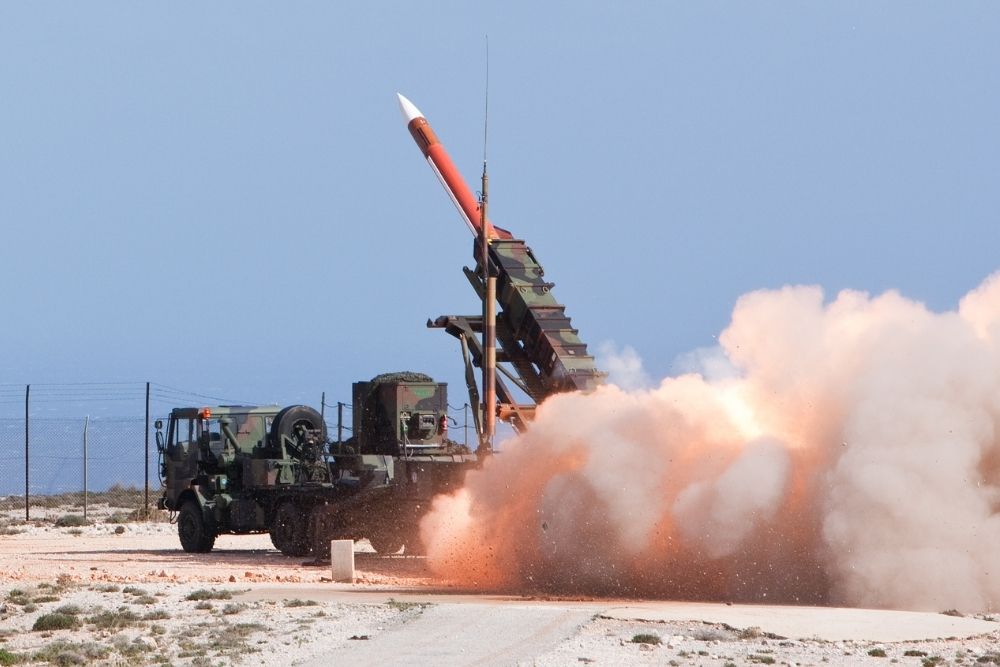
Lockheed halves Patriot costs for the drone warfare era
Lockheed Martin has announced a lower-cost Patriot interceptor that would cost less than half as much as its four-million-dollar PAC-3 MSE missiles, a response to the cost-per-kill arithmetic that the era of the mass drone and missile warfare has made unsustainable and to the startup competition that promises the cheaper weapons at scale.
The PAC-3 Adapted Capability Effector, or ACE, unveiled at Farnborough with the initial production possible within thirty-six months and the development shared with the American and European industry partners, marks the incumbent giant’s concession to the economic logic that the Ukrainian air defense, the Gulf missile exchanges, and the two-trillion-dollar rearmament wave have jointly established: the interceptors costing millions cannot indefinitely counter the threats costing thousands.

U.S. LNG boom highlights Europe’s strategic energy shift under Trump
U.S. liquefied natural gas (LNG) exports have hit record levels in early 2025, surging more than 20% from the same period last year. From January through April, the U.S. exported 34.6 million metric tons, the highest ever for that window. European buyers accounted for 77% of that total, with imports rising nearly 50% year-on-year as countries moved to refill depleted storage and support gas-fired power generation, which reached its highest level since 2021.
France, the UK, and the Netherlands led purchases, making up about 35% of all U.S. LNG shipments. France, in particular, set a new record with 4.8 million tons imported. Other key buyers included Turkey, Spain, Italy, and Poland, all of which saw a spike in gas-fired electricity output due to reduced wind and hydropower.

U.S. selects 31 regional tech hubs that will receive $500 million funding
The Biden administration has announced the selection of 31 U.S. regional technology hubs from a pool of 370 applicants. These selected areas are now eligible for a total of $500 million in federal funding, aimed at stimulating innovation across various sectors. This effort aligns…