
U.S., Chile sign agreement to develop energy transition partnership
- August 18, 2023
- Posted by: Quatro Strategies
- Categories: Americas, ESG & Renewable Energy, United States
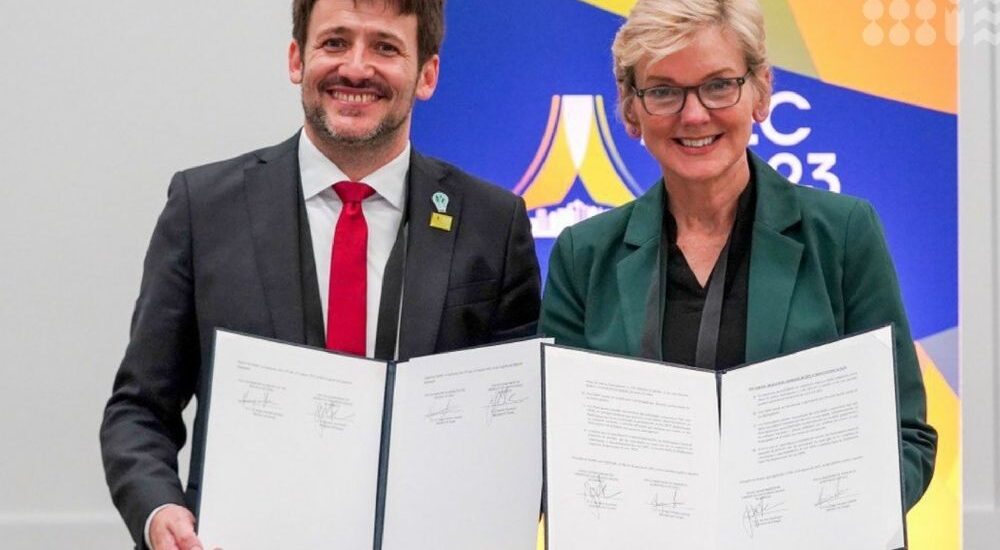
Chile and the United States have entered into an initial agreement aimed at fostering technical assistance and information sharing to facilitate the energy transition. The agreement was signed by Chile’s Energy Minister Diego Pardow and US Energy Secretary Jennifer Granholm.
The agreement is expected to facilitate collaboration in various areas related to the energy transition, including technological exchange and the development of green hydrogen. This partnership comes as Chile aims to become a global leader in exporting green hydrogen by 2040 and strives to achieve carbon neutrality by 2050.
The agreement covers a range of topics, including research and development, decarbonization, grid modernization, hydrogen production, critical minerals, energy justice, and the Net Zero World initiative. It sets the stage for annual meetings between senior officials from both countries to monitor progress, address challenges, and identify new opportunities in these areas.
Chile’s commitment to green hydrogen aligns with its broader sustainability goals and its position as a global player in the transition to renewable and clean energy sources. This collaboration with the US could bring technological advancements and expertise to accelerate Chile’s efforts in achieving its energy and environmental objectives.
Interested in learning more?
Sign up for Top Insights Today

Top Insights Today delivers the latest insights straight to your inbox.
You'll get daily industry insights on
Energy, Cleantech, Oil & Gas, Mining, Defense, Aviation, Construction, Transportation, Online Retail, Bigtech, Finance and Politics of Business
Read more insights

U.S. and allies race to break China’s rare-earth grip
A low-key announcement from South Korea’s JS Link earlier this month could prove more geopolitically consequential than it appeared. The company said it would invest $223 million to build a permanent magnet plant in Georgia, a relatively modest outlay by industrial standards, but one aimed squarely at dismantling one of China’s most entrenched chokepoints in global supply chains.
These high-performance rare-earth magnets, especially neodymium-iron-boron (NdFeB) magnets, are indispensable in everything from smartphones and wind turbines to electric vehicles, fighter jets, and precision missiles. For decades, China has dominated every link of their supply chain; mining, refining, alloying, and magnet manufacturing, and has used that dominance as leverage in trade disputes.

EU leaders explore measures to bolster defense industry amid geopolitical uncertainties
The European Union is exploring strategies to prioritize the defense industry’s access to crucial materials during crises and to enhance stability in contracting to support the sector. Charles Michel, President of the European Council, intends to raise concerns voiced by the defense industry during the…
Saudi Arabia could extend oil output cuts into 2024
Saudi Arabia is expected to continue its additional voluntary supply cuts well into 2024, possibly extending them to at least the first quarter or even the first half of the year. These voluntary cuts are part of the broader efforts by the Organization of the Petroleum Exporting Countries and…