
China fines U.S. due diligence firm Mintz Group for $1.5 million
- August 22, 2023
- Posted by: Quatro Strategies
- Categories: Business & Politics, China, Sanctions & Regulation, United States
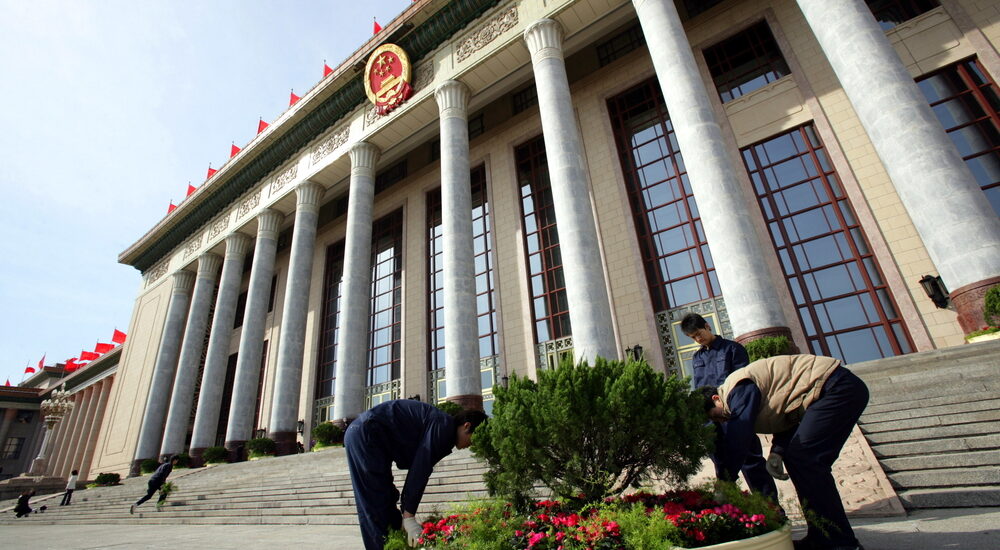
China has fined U.S. firm Mintz Group approximately $1.5 million for conducting “unapproved statistical work,” according to a notice from the Beijing Municipal Bureau of Statistics. The penalty was imposed after Chinese authorities raided Mintz Group’s Beijing office, raising concerns about China’s openness to foreign investment. The bureau stated that Mintz Group had carried out “foreign-related statistical investigations” without obtaining the necessary approvals. The company was found to have conducted 37 such investigations between March 2019 and July 2022.
As a result of the violation, the bureau confiscated around 5.34 million yuan ($1.5 million) of Mintz Group’s “illegal proceeds” and imposed an equivalent administrative penalty. Mintz Group has the option to appeal the ruling within 60 days and file an administrative suit within six months.
Mintz Group provides various services, including background checks on potential business partners and new hires, as well as fact gathering for legal cases and internal investigations. The firm maintains that it is licensed to conduct legitimate business activities in China and has always operated lawfully.
The raid on Mintz Group’s office in March was part of a broader crackdown on consultancy and due diligence firms in China. This crackdown also affected other companies, including Bain & Company’s Shanghai office and Capvision Partners. The intensified regulatory actions have raised concerns among foreign business groups about the impact on investor confidence in China.
China’s regulatory moves align with President Xi Jinping’s emphasis on placing national security at the forefront of the country’s priorities. Beijing recently updated its anti-espionage law, expanding the definition of spying and prohibiting the transfer of information related to national security. Additionally, China has introduced various legal amendments aimed at restricting foreign access to its data and enhancing data security measures.
Interested in learning more?
Sign up for Top Insights Today

Top Insights Today delivers the latest insights straight to your inbox.
You will get daily industry insights on
Oil & Gas, Rare Earths & Commodities, Mining & Metals, EVs & Battery Technology, ESG & Renewable Energy, AI & Semiconductors, Aerospace & Defense, Sanctions & Regulation, Business & Politics.
Read more insights
EU-China trade tensions move from warning to confrontation
The European Union is preparing its citizens and businesses for the possibility of a trade war with China as Brussels weighs new restrictive measures aimed at rebalancing an economic relationship that the European Commission has now officially declared unsustainable.
The shift represents a hardening of European resolve after years of internal division and hesitation, driven by the growing recognition that the bloc’s economic survival as a competitive power depends on confronting the structural imbalances in its relationship with Beijing, even at the risk of the retaliation that China has explicitly threatened.
Swedish steelmaker SSAB increases investment for fossil-free mill to €4.5 billion
Swedish steelmaker SSAB has announced a significant increase in its investment for building a fossil-free mini-mill in Lulea, Sweden. The investment now stands at 4.5 billion euros ($4.83 billion), which is higher than initially expected due to inflation and higher contingencies. SSAB, being the largest…

China’s chokehold on chips, metals and drone parts undercuts Western war planning
Western militaries are discovering that their “arsenal of democracy” is built on Chinese parts. A decade ago, when army officers were told to “build drone capability” for their battalions with small pots of regimental money, nobody hesitated: you went online and bought cheap, robust quadcopters from Chinese manufacturers. They were good, plentiful and absurdly cheap compared with Western equivalents. It felt like smart improvisation, not a strategic vulnerability.
Fast forward to late 2025 and that improvisation now looks like a structural dependence. Western defence establishments have belatedly realised that a huge share of the unmanned systems they rely on, or the components inside them, trace back to China. In a short, high-intensity war, that dependency is merely uncomfortable. In a long war against China itself, it could be catastrophic.