
China intends to support Africa’s industrialization
- August 25, 2023
- Posted by: Quatro Strategies
- Categories: Africa, Business & Politics, China
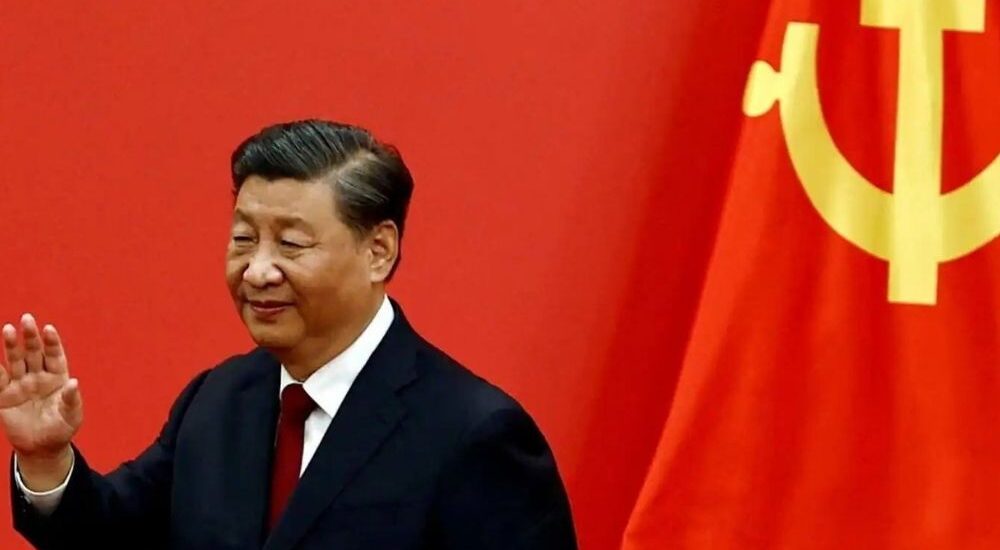
Chinese President Xi Jinping conveyed China’s commitment to supporting Africa’s industrialization and agricultural modernization during a meeting with African leaders on the sidelines of the BRICS summit. Xi emphasized China’s intention to leverage its resources and business initiatives to assist Africa in developing its manufacturing sector, achieving industrialization, and promoting economic diversification. However, specific details about the initiatives were not provided.
The announcement was made as the BRICS summit concluded and involved discussions with leaders and ministers from various African nations, including Libya, Nigeria, Senegal, and Zambia. The summit also saw the admission of six new countries, including Egypt and Ethiopia, into the BRICS group, which comprises Brazil, Russia, India, China, and South Africa.
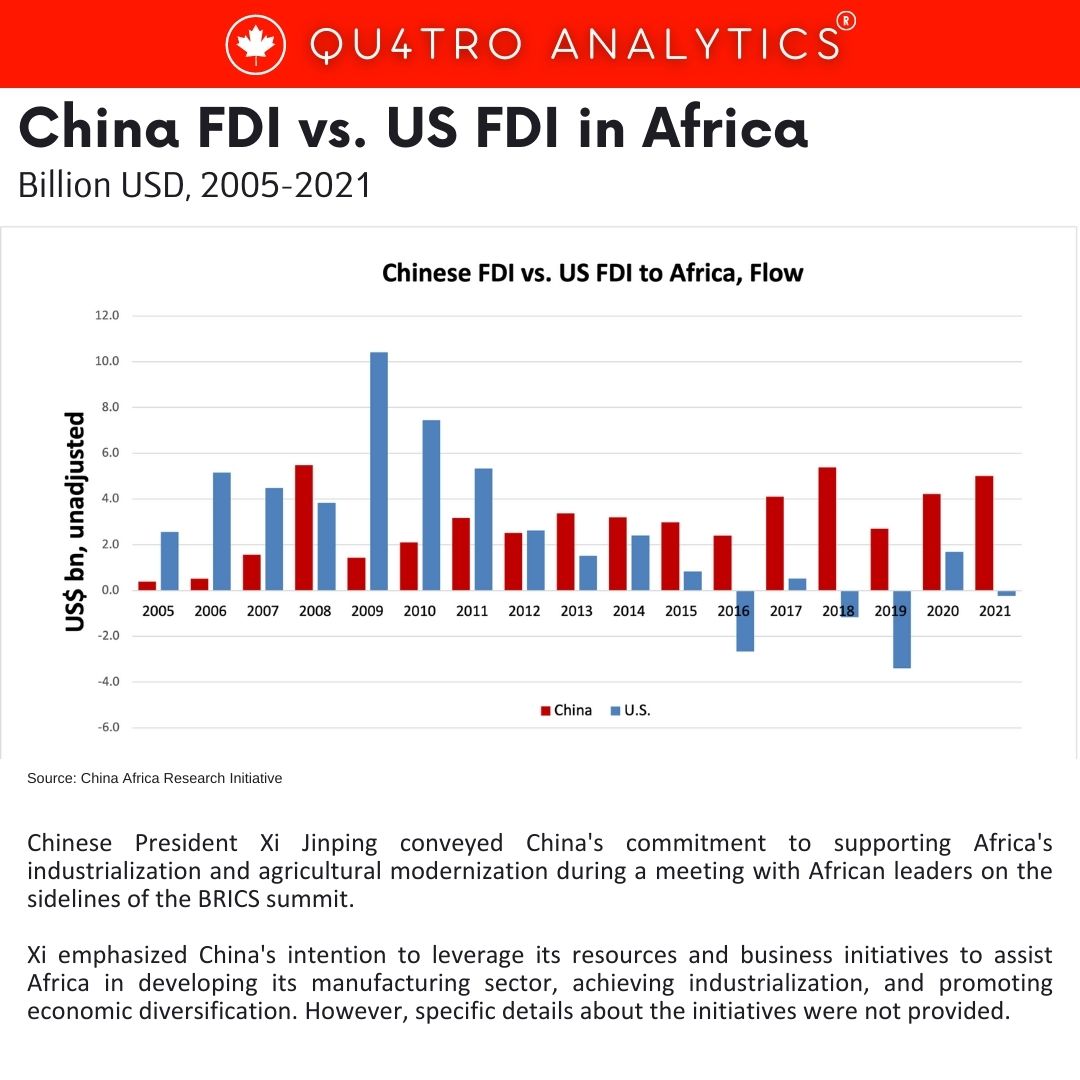 China’s diplomat in Africa, Wu Peng, had earlier indicated that African countries were interested in shifting China’s focus from infrastructure development in Africa to local industrialization. China’s state-run Xinhua news agency indicated that the country intends to expand the export of African agricultural products to China and support Africa’s efforts to achieve food self-sufficiency.
It’s worth noting that China’s funding for African infrastructure projects had already decreased in recent years. Analysts observed that China’s grant and loan commitments for African infrastructure projects had dropped significantly over the years, declining from $88 billion in 2009 to $24 billion in 2021. This shift could reflect a changing focus in China-Africa cooperation.
Observers also highlighted the potential for Chinese companies to relocate factories to Africa due to overcapacity concerns in China. Some experts pointed out that many companies are already establishing their presence in African industrial zones, particularly in countries like Ethiopia and Kenya. This trend aligns with China’s emphasis on supporting Africa’s industrialization and economic diversification while benefiting from the continent’s emerging manufacturing potential.
Interested in learning more?
Sign up for Top Insights Today

Top Insights Today delivers the latest insights straight to your inbox.
You will get daily industry insights on
Oil & Gas, Rare Earths & Commodities, Mining & Metals, EVs & Battery Technology, ESG & Renewable Energy, AI & Semiconductors, Aerospace & Defense, Sanctions & Regulation, Business & Politics.
Read more insights
European energy security at risk amidst Red Sea shipping disruptions
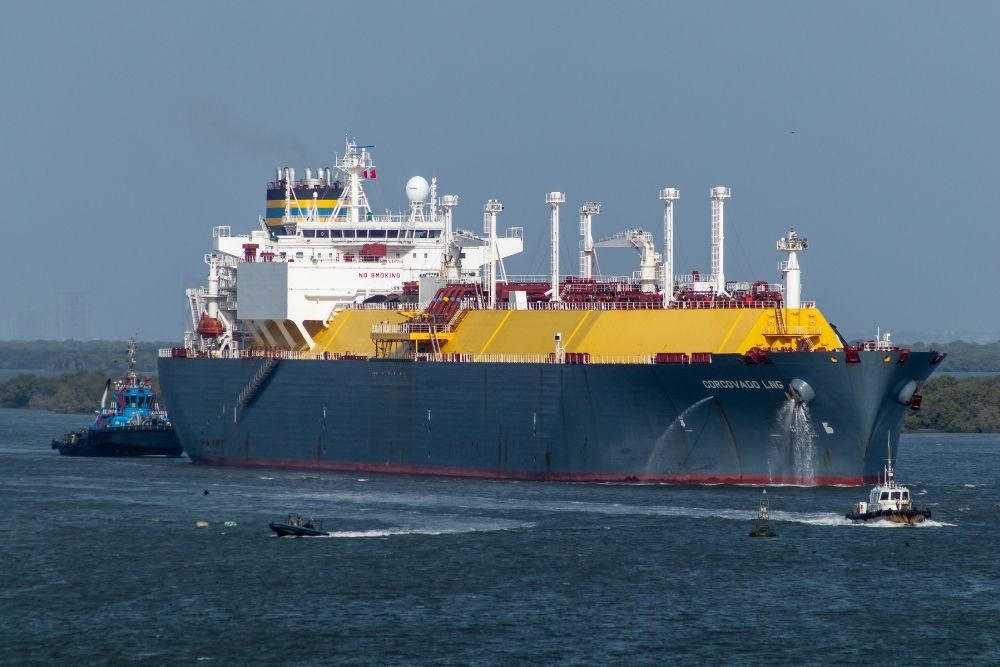
The conflict in the Red Sea, involving missile and drone attacks by Yemen’s Houthi rebels, is disrupting a crucial trade route and posing a threat to energy supplies for Europe. These attacks, occurring amidst Israel’s conflict with Hamas, have prompted concerns about the future of energy shipments…
Mercedes-Benz bets on American manufacturing to navigate tariff risks
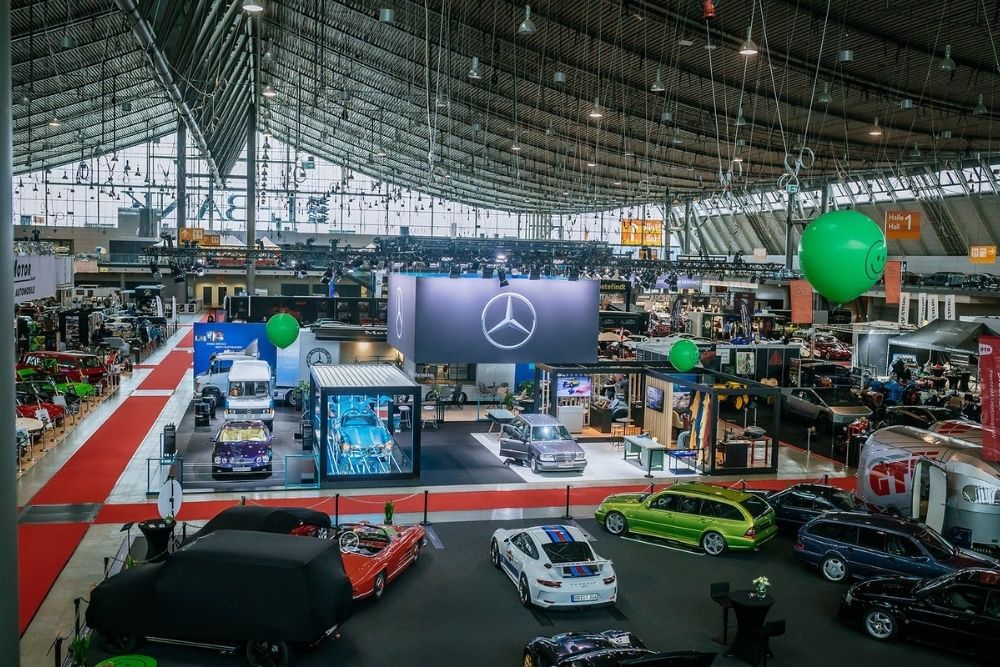
Mercedes-Benz announced on Thursday that it will begin producing a new vehicle at its Tuscaloosa, Alabama, plant in 2027, as part of a broader strategy to strengthen its U.S. presence amid escalating trade tensions. The company did not reveal which model will be added, saying only that it belongs to a “core vehicle segment” and reflects Mercedes’ deepening commitment to the American market.
The move follows President Donald Trump’s imposition of a sweeping 25% tariff on automotive imports, a policy that has rattled global carmakers and disrupted production planning. Although Trump softened some of the tariff measures this week, the broader impact on supply chains and investment strategies remains significant.
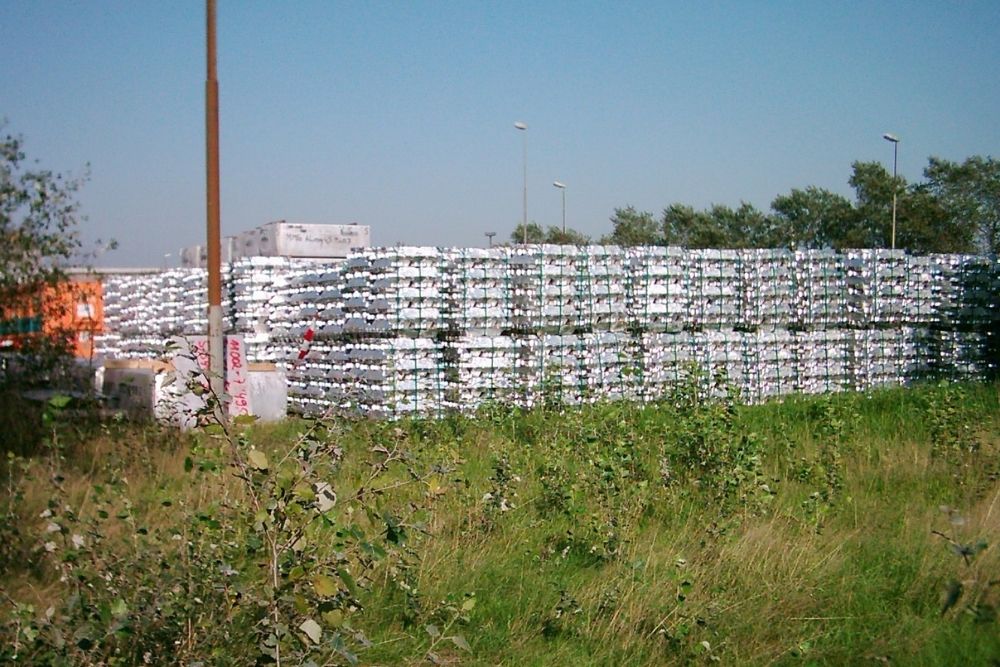
Power, carbon, and geopolitics are rewiring the global aluminium market
Metals are stealing the headlines, but the story behind the rally is shifting. Gold has vaulted to new heights, silver and platinum have sprinted higher, and copper’s multiyear strength has already re-ordered supply chains. Yet aluminum, the workhorse that quietly underpins transport, power, packaging and construction, has lagged investor enthusiasm.
That mismatch may not last. A metal once defined by surplus is running into hard constraints, and those constraints are structural: electricity scarcity, carbon policy, and a global industrial retooling that increasingly prefers light, strong, and corrosion-resistant materials.