
U.S.-Russian JV cancels plan to build gas turbines in Russia under GE license
- August 31, 2023
- Posted by: Quatro Strategies
- Categories: Europe, Oil & Gas, Sanctions & Regulation, United States
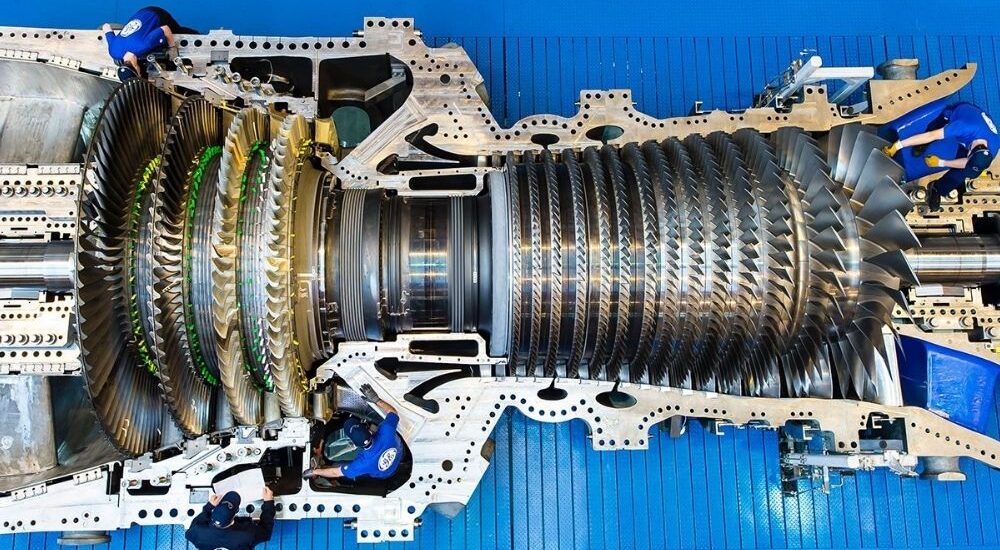
A Russian-U.S. joint venture called Russian Gas Turbines (RGT) has announced its decision to abandon plans for building gas turbines in Russia under a license from General Electric (GE). InterRAO, a state-controlled Russian energy holding company and one of the partners in the joint venture, stated that the move was due to the U.S. government’s ban on GE’s partnership continuation.
The joint venture was established as part of Russia’s efforts to domestically produce medium and large-capacity gas turbines for power plants. InterRAO, which owns around 51% of RGT, had acquired the rights from GE in 2020 to produce two turbine classes.
However, GE suspended its operations in Russia following Moscow’s military operation in Ukraine last year. While GE continued to provide essential medical equipment and support existing power services in the region, its activities related to the gas turbine venture were halted.
InterRAO’s CEO, Boris Kovalchuk, mentioned that the U.S. government’s ban on the partnership continuation with GE had led to the joint venture’s decision. He also stated that InterRAO now needs to discuss financial and corporate matters with the partners, including the option to buy out GE’s stake in the venture.
This development underscores how geopolitical tensions and sanctions can impact international business collaborations, especially in the energy and technology sectors. The joint venture’s decision to abandon the gas turbine project highlights the challenges posed by such geopolitical factors on technological and industrial initiatives.
Interested in learning more?
Sign up for Top Insights Today

Top Insights Today delivers the latest insights straight to your inbox.
You will get daily industry insights on
Oil & Gas, Rare Earths & Commodities, Mining & Metals, EVs & Battery Technology, ESG & Renewable Energy, AI & Semiconductors, Aerospace & Defense, Sanctions & Regulation, Business & Politics.
Read more insights
Asia’s May LNG imports rise, driven by increased demand in India and Pakistan
In May, Asia’s imports of liquefied natural gas (LNG) exhibited divergent trends, with a notable increase in purchases by typically price-sensitive countries like India, contrasted with a softer demand in developed economies such as Japan and South Korea. Asia is expected to receive around 23.61 million metric tons…

Systemic deflation in China poses risks to global economic stability
China’s economic rebound in 2025 is showing signs of resilience — particularly in trade and industrial activity — but deflation is emerging as an entrenched and systemic challenge that could weigh down its recovery trajectory. While economists have marginally upgraded GDP and export forecasts following a temporary easing in the U.S.-China tariff conflict, they are sounding fresh alarm bells about persistent price declines that reflect deeper structural weaknesses in China’s domestic economy.
China’s GDP growth for 2025 is now expected to hit 4.5%, up from a previous estimate of 4.2%. This modest optimism is driven by stronger-than-expected trade and industrial production figures — trends largely fueled by a 90-day suspension of retaliatory tariffs agreed upon by Washington and Beijing. As firms rush to complete shipments ahead of potential tariff reinstatements, export volumes are forecast to rise 1.1%, reversing April’s projection of a 1% decline.
Russia bans diesel and gasoline exports amid fuel crunch
Russia has implemented a significant and immediate ban on the export of gasoline and diesel to countries outside a specific group of ex-Soviet states. This move is aimed at stabilizing the domestic fuel market and reducing prices for consumers.