
Argentina finds $1 billion investor for inactive potash mine
- September 5, 2023
- Posted by: Quatro Strategies
- Categories: Americas, Mining & Metals, Rare Earths & Commodities
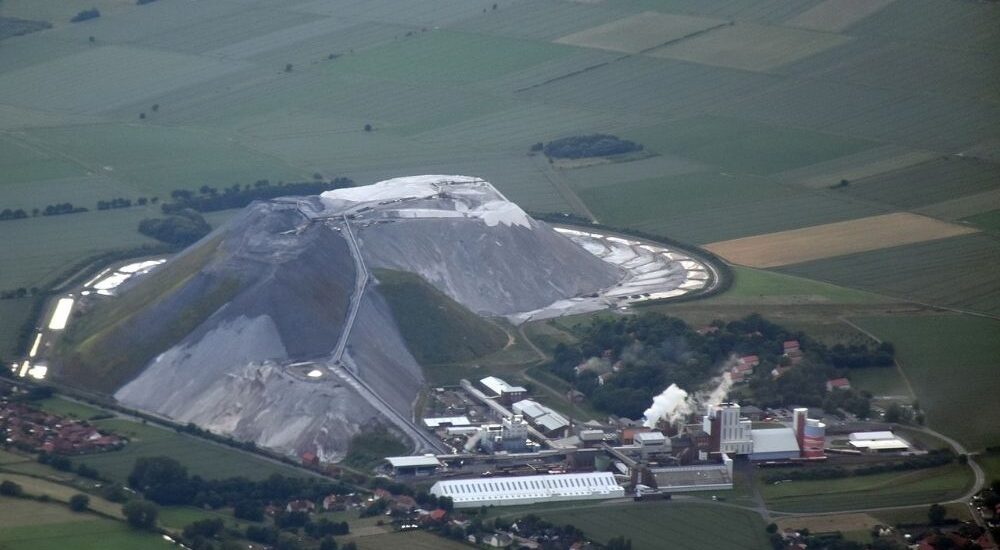
Authorities in Argentina’s Mendoza province have completed the selection process for a $1 billion investor to assist in the development of a potash mine, according to Governor Rodolfo Suarez. This marks a significant milestone for the Rio Colorado potash mine project, which had been shelved by Brazil’s Vale SA over a decade ago amid falling potash prices and a lack of tax concessions from the Argentine government.
Suarez announced the conclusion of the bid selection process on social media platform X (formerly Twitter). Following the selection, authorities will move forward with final negotiations to draft a contract with the chosen bidder. The selection process reportedly attracted interest from over 30 national and international companies.
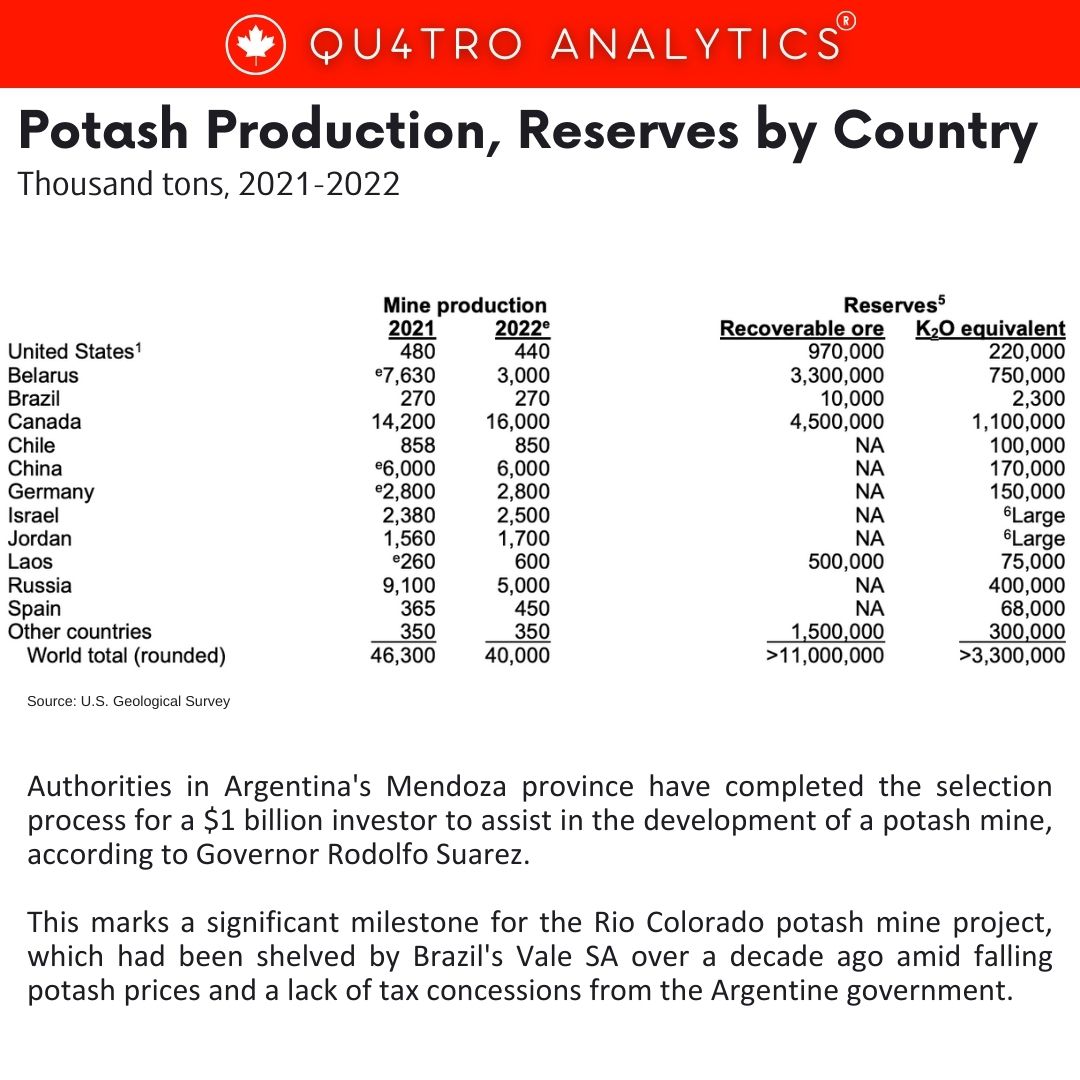 The development of the Rio Colorado mine is anticipated to have a construction period of approximately five years, with an expected annual production capacity of 1.5 million metric tons. Suarez expressed optimism about the project’s potential impact, stating that its reactivation would double the province’s exports.
Before Vale’s decision to halt the project in December 2012, the Brazilian mining company had invested $2.2 billion in the mine, completing 45% of the works. Argentina, known for its strong agricultural sector, has been actively working to attract global mining firms by offering tax incentives and assurances of security.
Interested in learning more?
Sign up for Top Insights Today

Top Insights Today delivers the latest insights straight to your inbox.
You will get daily industry insights on
Oil & Gas, Rare Earths & Commodities, Mining & Metals, EVs & Battery Technology, ESG & Renewable Energy, AI & Semiconductors, Aerospace & Defense, Sanctions & Regulation, Business & Politics.
Read more insights
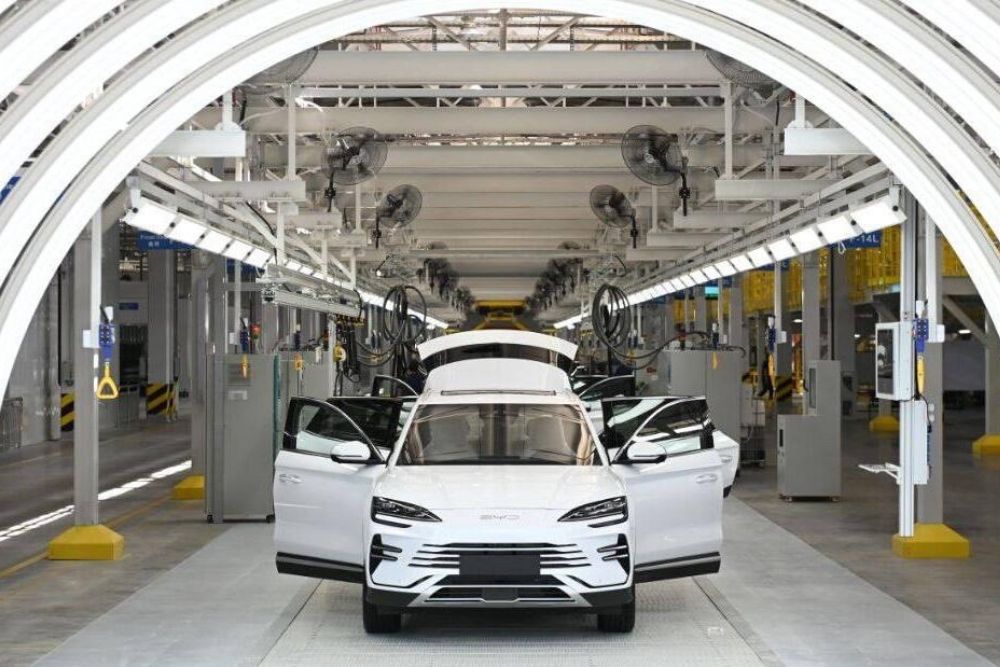
China’s new energy vehicle export growth slows amid new EU tariffs
The prospect of European tariffs has significantly impacted China’s growth in exports of electric and plug-in hybrid cars, cutting 20-30 percentage points off in recent months. This comes after the European Union introduced provisional tariffs of up to 37.6% on China-made electric vehicles (EVs) last week, aiming to protect…
Germany’s weak March industry data point to a harder second quarter
Germany’s March industrial data suggest the country entered the second quarter in a weaker position than headline first-quarter GDP growth implied, and that matters because the full force of the Iran war had not yet hit industry. Official figures showed industrial production fell 0.7% from February, against expectations for a rise, driven mainly by weaker energy output and lower machinery and equipment manufacturing.
At the same time, exports rose 0.5%, but imports jumped 5.1%, with China remaining Germany’s largest source of imports. Exports to the U.S., Germany’s most important export market, fell sharply by 7.9%, and the trade surplus shrank to €14.3 billion from €19.6 billion.
ADNOC swaps U.S. LPG to India as China tariffs reshape global energy flows
Abu Dhabi National Oil Company (ADNOC) will begin substituting some of its liquefied petroleum gas (LPG) exports to India with cheaper U.S. cargoes starting in June, as shifting trade dynamics from the U.S.-China tariff war reshape global energy flows. This adjustment allows ADNOC to redirect more of its own Middle Eastern LPG supply to China, where buyers are now paying higher premiums due to the imposition of steep Chinese tariffs on U.S. LPG imports.
For India, the world’s second-largest LPG importer, the swap offers the benefit of lower-cost fuel, easing import costs amid broader inflationary pressures. India sources over 80% of its LPG imports from Middle Eastern producers like Saudi Arabia, the UAE, Qatar, and Kuwait through long-term annual contracts.