
Tesla asks for tax incentives from Australia to boost EV supply chain
- September 7, 2023
- Posted by: Quatro Strategies
- Categories: Asia Pacific, Business & Politics, EVs & Battery Technology
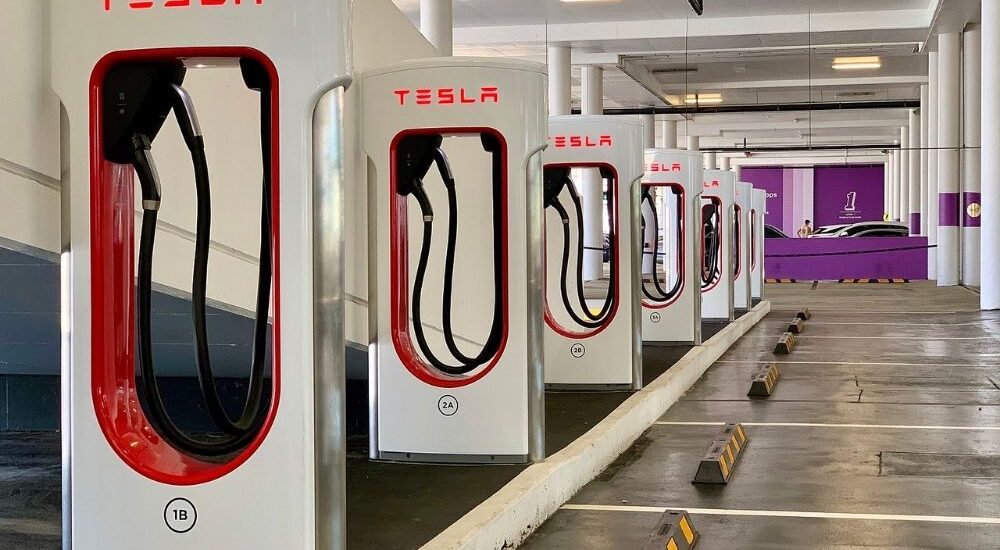
Tesla Chair Robyn Denholm has suggested that Australia should provide tax incentives to develop the country into a battery mineral processing hub. Denholm stated that Australia can do more than just being a “dig and ship” nation. She cited the Biden administration’s Inflation Reduction Act, which provides tax credits to producers, as a “proven mechanism” for attracting the necessary investment.
Australia aims to disrupt China’s dominance in the battery supply chain and released a Critical Minerals Strategy in June. This strategy includes a goal to attract AUD 500 million ($320 million) in foreign investment for projects crucial to the energy transition.
Denholm emphasized that Australia should act quickly to avoid missing the opportunity, as other countries with fewer mineral resources might leapfrog Australia in capturing the most valuable parts of the battery supply chain.
Tesla has been increasing its investments in Australian minerals. In 2023, the company spent over AUD 4.3 billion, more than triple the AUD 1.3 billion it spent in 2021. While Australia produces more than half of the world’s lithium, the majority of it is shipped to China for downstream processing into battery-grade chemicals. Denholm suggested that Australia needs 30 more lithium refining projects to compete on the global stage.
Tesla’s vision is to establish supply chains in every major region, co-located with manufacturing operations. This would help reduce dependence on a single production base, such as China, which currently plays a crucial role in Tesla’s global output.
Interested in learning more?
Sign up for Top Insights Today

Top Insights Today delivers the latest insights straight to your inbox.
You will get daily industry insights on
Oil & Gas, Rare Earths & Commodities, Mining & Metals, EVs & Battery Technology, ESG & Renewable Energy, AI & Semiconductors, Aerospace & Defense, Sanctions & Regulation, Business & Politics.
Read more insights

Reasoning models are the new AI hype, and a hidden energy crisis
Most of the companies at the forefront of artificial intelligence are racing to build systems that don’t just autocomplete text, but emulate something closer to human-style thinking: breaking problems into steps, checking intermediate results, and revising answers. Those “reasoning” models are becoming the new standard for hard tasks in science, coding and maths. But fresh research shows that this leap in capability comes with a steep hidden cost: energy.
When researchers put these models under the microscope, they found that reasoning systems burned, on average, around one hundred times more electricity to answer a thousand text prompts than simpler alternatives that either lack explicit reasoning features or have them switched off.

EU escalates trade actions against Chinese imports in EV, clean tech sectors
The European Commission (EC) has intensified its scrutiny of imports from China, particularly in the clean tech and electric vehicle (EV) sectors, as part of a broader strategy to combat what it perceives as unfair competition and market distortions due to Chinese subsidies. One of the most significant actions involves the…
Chevron faces challenges amid Venezuela’s threats to annex oil-rich region
Chevron is confronted with significant challenges in Venezuela as President Nicolás Maduro threatens to annex the disputed Essequibo region, known for its oil-rich reserves. This region is claimed by neighboring Guyana. The potential consequences of Maduro’s threat include the…