
Uranium demand for nuclear reactors expected to double by 2040
- September 8, 2023
- Posted by: Quatro Strategies
- Categories: Mining & Metals, Rare Earths & Commodities
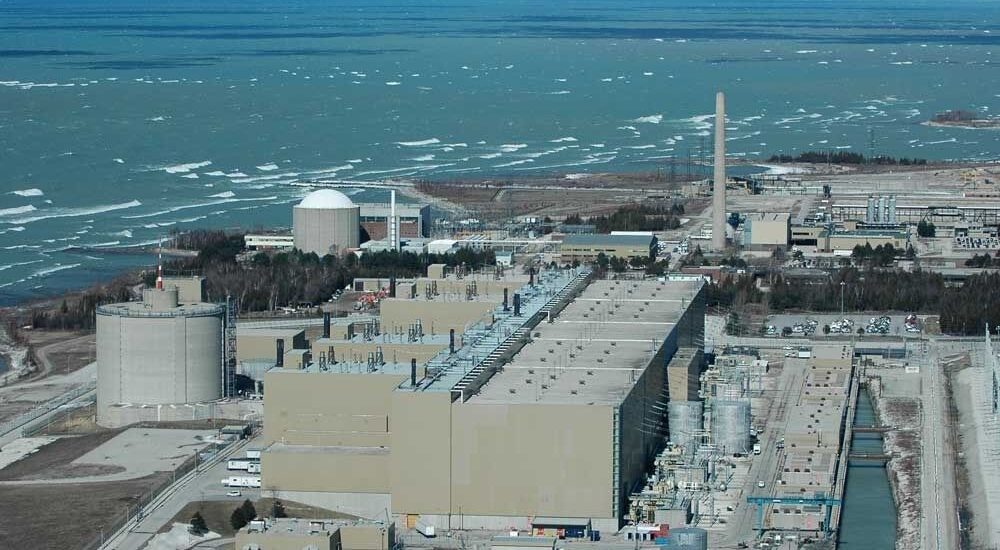
The World Nuclear Association (WNA) has released a report stating that demand for uranium in nuclear reactors is expected to increase by 28% by 2030 and nearly double by 2040 as governments expand their nuclear power capacity to meet zero-carbon goals. The report, titled the Nuclear Fuel Report, also noted that interest in nuclear power has grown since Russia’s invasion of Ukraine, with many nations seeking alternatives to Moscow’s energy supplies.
The report highlights that, “From the beginning of the next decade, planned mines and prospective mines, in addition to increasing quantities of unspecified supply, will need to be brought into production.” Global uranium production had declined by 25% from 2016 to 2020 but slightly recovered to 49,355 tonnes in 2021.
The Fukushima Daiichi nuclear disaster in Japan in 2011 led to the closure of numerous reactors worldwide. However, global nuclear capacity at the end of June 2023 was 391 gigawatts of electricity (GWe) from 437 units, with an additional 64 GWe under construction. Nuclear capacity is projected to increase by 14% by 2030 and surge by 76% to reach 686 GWe by 2040.
 This capacity expansion will come from both new reactors, primarily planned in China and India, and the extension of the operating lifetimes of existing plants. The report highlights that several countries with significant reactor fleets, such as Canada, France, Japan, Russia, and Ukraine, are allowing existing plants to operate for up to 60 years, with the USA allowing up to 80 years.
Small modular reactors (SMRs), which are easier and more cost-effective to build, are also gaining traction. The WNA report forecasts that demand for uranium for nuclear plants will rise to 83,840 tonnes by 2030 and 130,000 tonnes by 2040, up from 65,650 tonnes in 2023.
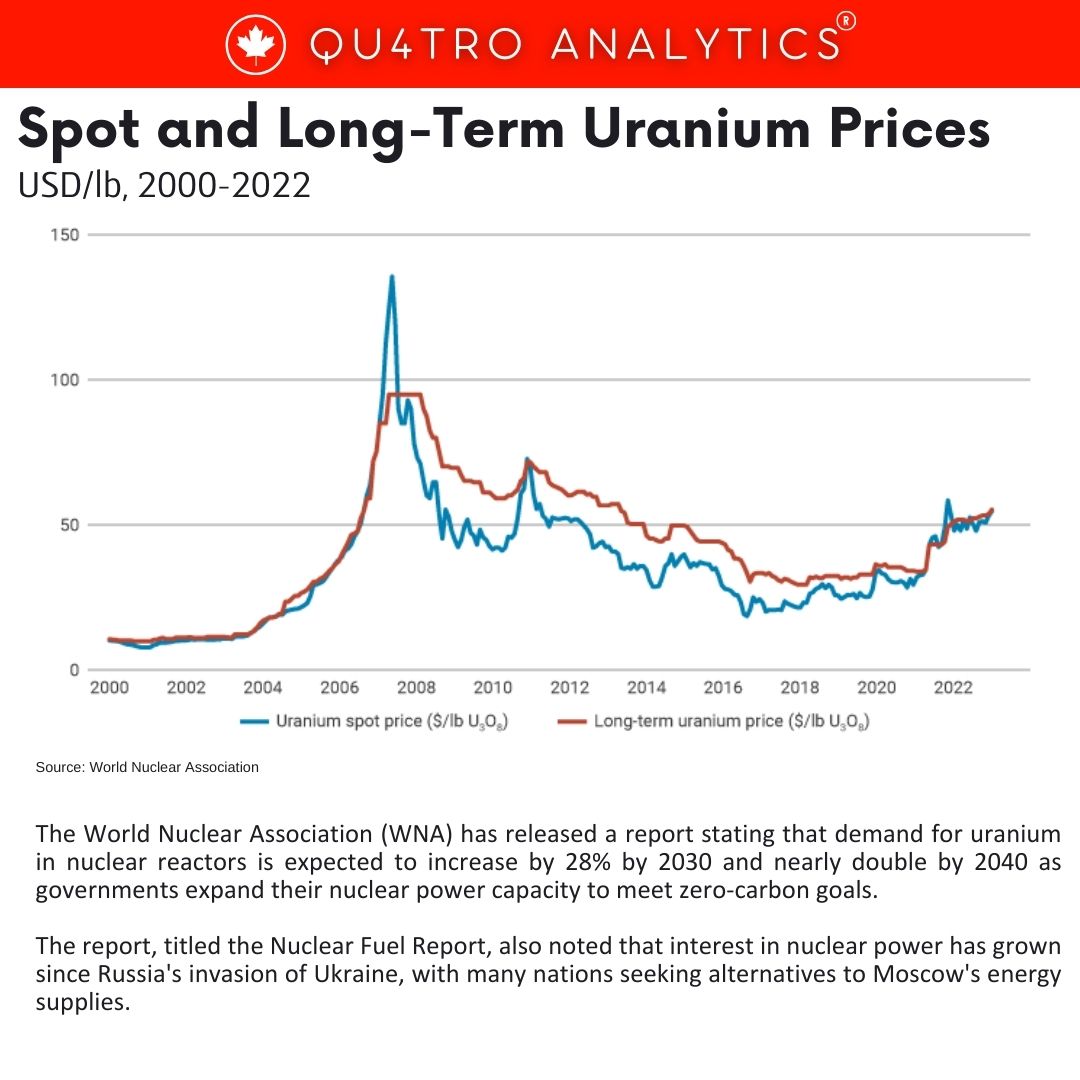
The spot price of uranium has more than doubled over the past three years, although it remains significantly below its peak of $140 per pound in 2007. As of this week, uranium is trading at $60.75 per pound, up from $56.25 a month ago, according to market research firm and consultancy UxC.
Interested in learning more?
Sign up for Top Insights Today

Top Insights Today delivers the latest insights straight to your inbox.
You will get daily industry insights on
Oil & Gas, Rare Earths & Commodities, Mining & Metals, EVs & Battery Technology, ESG & Renewable Energy, AI & Semiconductors, Aerospace & Defense, Sanctions & Regulation, Business & Politics.
Read more insights

Delek’s Big Spring Refinery chosen for US DOE’s carbon capture pilot project
Delek US Holdings has revealed that the U.S. Department of Energy has chosen its Big Spring refinery as the site for a pilot carbon capture project, and the department is set to provide up to $95 million in federal funding to support the project’s development. This initiative is part of a broader effort…

Malaysia unveils strategic roadmap to boost natural gas industry
Malaysia’s Economy Minister, Rafizi Ramli, has unveiled plans to introduce a strategic roadmap aimed at strengthening the country’s natural gas industry, which currently contributes 52 billion ringgit ($11.7 billion) to the national GDP. The initiative seeks to attract more investment into the sector, reinforcing its role in Malaysia’s economic growth…
Indian steelmakers wary of Chinese imports surge post US tariff hikes
India’s steel industry, already grappling with challenges posed by cheaper imports, is now concerned about a potential surge in shipments from China following the United States’ imposition of tariffs on Chinese steel. U.S. President Joe Biden recently announced significant tariff hikes on various Chinese imports…