
Stellantis planning to expand battery manufacturing capacity to 400 GWh
- September 13, 2023
- Posted by: Quatro Strategies
- Categories: Europe, EVs & Battery Technology, United States
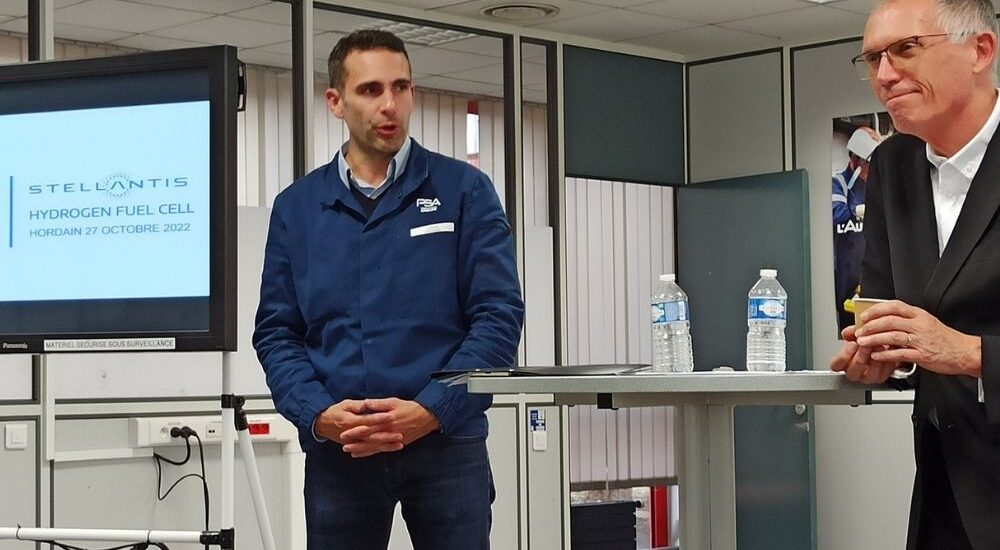
Stellantis, the global automaker, is planning to significantly expand its battery-building capacity to 400 gigawatt-hours (GWh) to meet the growing demand for electric vehicles (EVs). This expansion is part of the company’s efforts to secure key supplies of materials and chemicals needed for battery production. Micky Bly, Stellantis Senior Vice President and Head of Global Propulsion Systems, revealed these plans during the inauguration of the company’s new Battery Technology Center in Turin, Italy.
Stellantis has already announced plans for approximately 250 GWh of battery capacity across various locations globally. To meet the growing demand for EVs, the company now believes it needs to increase its battery capacity to 400 GWh. Bly mentioned that Stellantis has committed to delivering six gigafactories worldwide, but it’s unclear whether this expansion to 400 GWh will involve building additional gigafactories beyond those already announced.
Earlier this year, Stellantis inaugurated its first European gigafactory in France, with plans for additional gigafactories in Germany and Italy, all through its ACC joint venture with Mercedes and TotalEnergies. The company also has three more facilities planned in the United States and Canada.
As part of this expansion, Stellantis has invested €40 million ($43 million) in its Battery Technology Center in Turin, Italy. This center will focus on in-house testing and development of EV battery packs for the company’s upcoming vehicles. The center is expected to employ more than 100 people, primarily retrained Stellantis workers. A similar facility for North America is being built in Windsor, Canada. These investments and expansions reflect Stellantis’ commitment to accelerating its electrification efforts to meet the growing demand for electric vehicles worldwide.
Interested in learning more?
Sign up for Top Insights Today

Top Insights Today delivers the latest insights straight to your inbox.
You will get daily industry insights on
Oil & Gas, Rare Earths & Commodities, Mining & Metals, EVs & Battery Technology, ESG & Renewable Energy, AI & Semiconductors, Aerospace & Defense, Sanctions & Regulation, Business & Politics.
Read more insights
Metals’ perfect storm mints record trader profits as policy splits markets
Metal traders just lived through their dream scenario: volatile fundamentals, policy shocks that split regional prices wide open, and a conveyor belt of supply hiccups across base and precious metals. The result is a banner year for the big houses.
The long-established leaders capitalized first by moving metal into the right jurisdiction at the right moment, arbitraging dislocations that were almost mechanical once the politics set them up. Newer entrants from the energy world did make money, but they discovered that metals reward deep physical networks, optionality in contracts, and muscle memory about how quickly a squeeze can morph from paper to warehouses and back again.
Nigeria’s Dangote Refinery receives first cargo of 1 million barrels of crude oil
The Dangote oil refinery in Nigeria has reached a significant milestone with the receipt of its first cargo of 1 million barrels of crude oil from Shell International Trading and Shipping Co (STASCO). This development brings the long-anticipated project closer to its operational phase after…
Data centers rise from the ashes of Europe’s fossil fuel fleet
Some of Europe’s old coal and gas-fired power stations, long destined for decommissioning under climate targets, are finding a new lease on life, not as energy producers, but as data centres powering the AI revolution. Global tech giants like Microsoft and Amazon are partnering with major European utilities to repurpose these brownfield industrial sites into digital infrastructure hubs, leveraging their existing power grid access and water cooling facilities.
This strategic repurposing marks a convergence of industrial decarbonisation with the explosive growth of artificial intelligence, cloud computing, and digital services. It also underscores a shifting energy and geopolitical landscape, in which Europe seeks both to meet climate goals and to position itself competitively against the U.S. and Asia in the global digital economy.