
Stellantis planning to expand battery manufacturing capacity to 400 GWh
- September 13, 2023
- Posted by: Quatro Strategies
- Categories: Europe, EVs & Battery Technology, United States
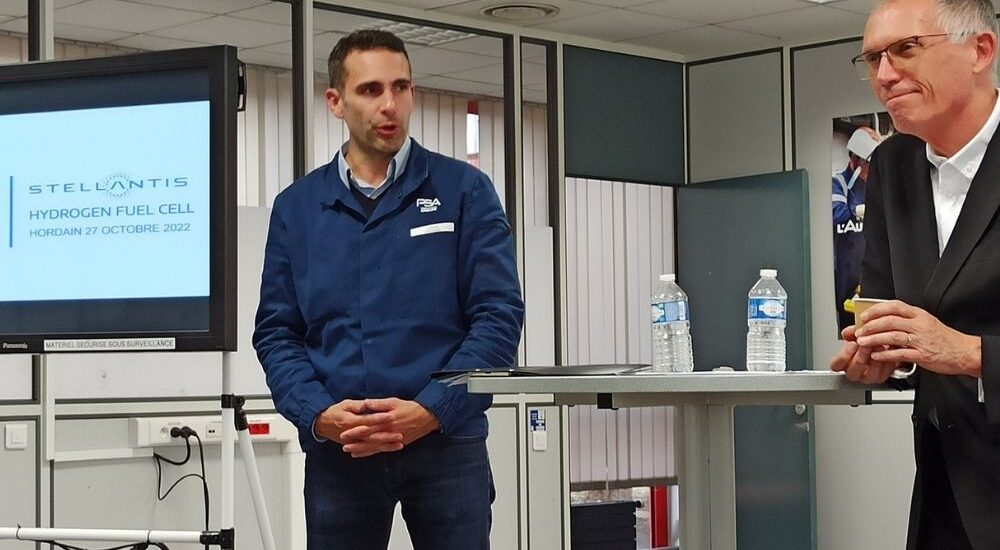
Stellantis, the global automaker, is planning to significantly expand its battery-building capacity to 400 gigawatt-hours (GWh) to meet the growing demand for electric vehicles (EVs). This expansion is part of the company’s efforts to secure key supplies of materials and chemicals needed for battery production. Micky Bly, Stellantis Senior Vice President and Head of Global Propulsion Systems, revealed these plans during the inauguration of the company’s new Battery Technology Center in Turin, Italy.
Stellantis has already announced plans for approximately 250 GWh of battery capacity across various locations globally. To meet the growing demand for EVs, the company now believes it needs to increase its battery capacity to 400 GWh. Bly mentioned that Stellantis has committed to delivering six gigafactories worldwide, but it’s unclear whether this expansion to 400 GWh will involve building additional gigafactories beyond those already announced.
Earlier this year, Stellantis inaugurated its first European gigafactory in France, with plans for additional gigafactories in Germany and Italy, all through its ACC joint venture with Mercedes and TotalEnergies. The company also has three more facilities planned in the United States and Canada.
As part of this expansion, Stellantis has invested €40 million ($43 million) in its Battery Technology Center in Turin, Italy. This center will focus on in-house testing and development of EV battery packs for the company’s upcoming vehicles. The center is expected to employ more than 100 people, primarily retrained Stellantis workers. A similar facility for North America is being built in Windsor, Canada. These investments and expansions reflect Stellantis’ commitment to accelerating its electrification efforts to meet the growing demand for electric vehicles worldwide.
Interested in learning more?
Sign up for Top Insights Today

Top Insights Today delivers the latest insights straight to your inbox.
You will get daily industry insights on
Oil & Gas, Rare Earths & Commodities, Mining & Metals, EVs & Battery Technology, ESG & Renewable Energy, AI & Semiconductors, Aerospace & Defense, Sanctions & Regulation, Business & Politics.
Read more insights
Foreign automakers and suppliers shift focus amidst China challenges
The trend of automakers and suppliers scaling back their operations in China, as demonstrated by Japanese parts maker Nidec Corp.’s recent announcement, is seen as a pragmatic response to the challenging and often unprofitable conditions in the world’s largest car market. Nidec Corp., which produces…
Beijing threatens to replay rare-earth card against Japanese manufacturers
China is again signaling that it may weaponize rare earth supply against Japan, an implicit reminder that, despite more than a decade of diversification efforts since the 2010 embargo episode, Japanese manufacturing remains exposed where it matters most: the “heavy” rare earths used in high-performance permanent magnets.
The immediate backdrop is political. Beijing has already tightened the atmosphere by announcing restrictions on “dual-use” exports to Japan tied to military end users or uses that could strengthen Japan’s military capacity, and the rare earth licensing system is being discussed in the same coercive register.
Trump expands domestic mining drive to challenge China
The Trump administration has added 10 new U.S. mining projects to a federal fast-track list, expanding efforts to boost domestic production of critical minerals like copper, palladium, uranium, and titanium dioxide. These projects have been granted FAST-41 status, a federal permitting initiative created in 2015 to speed up reviews for major infrastructure and energy developments.
This move builds on the 10 mining projects added last month, bringing the total to 20. All are publicly listed on a federal permitting dashboard, allowing progress to be transparently tracked.