
U.S. intends to bolster influence in the Pacific with second leaders summit
- September 25, 2023
- Posted by: Quatro Strategies
- Categories: Asia Pacific, Business & Politics, United States
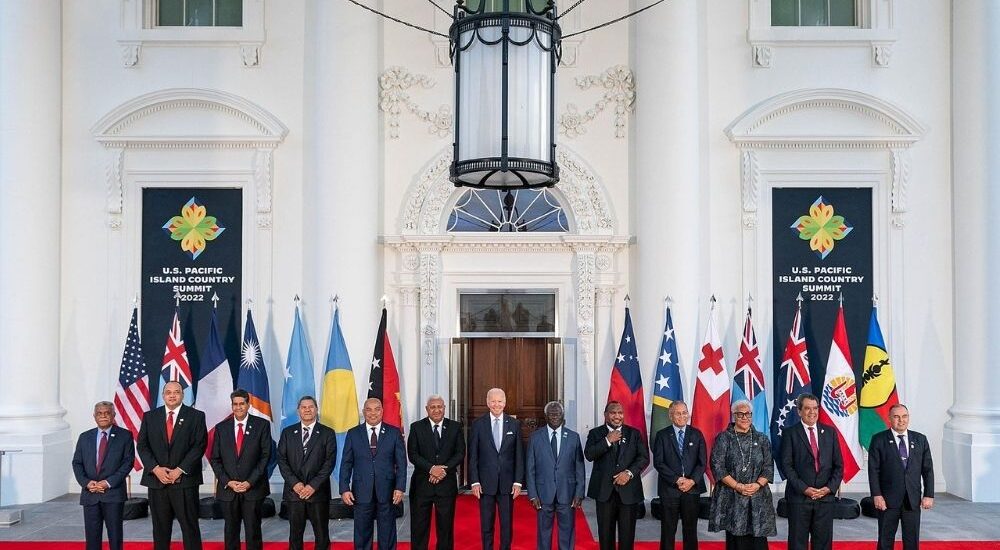
President Joe Biden’s upcoming summit with Pacific island leaders is a significant part of the U.S.’s effort to strengthen its influence and counter China’s growing presence in the region, which the U.S. has long considered its strategic domain. The meeting is set to span three days and is expected to involve a range of initiatives to deepen ties and provide support to the Pacific island nations.
In the previous summit held a year ago, the U.S. government pledged to support Pacific island nations in resisting China’s “economic coercion.” The Pacific island leaders and the U.S. administration collectively emphasized the shared vision for a region where democracy can flourish and the importance of standing up to undue influence and unfair practices.
This year’s summit will concentrate on various priorities, including climate change, economic growth, sustainable development, public health, and countering illegal fishing. Furthermore, the U.S. will extend official recognition to the Cook Islands and Niue during this summit, showcasing its intent to engage more closely with the Pacific nations.
However, some challenges have emerged in the lead-up to the summit. Solomon Islands Prime Minister Manasseh Sogavare, who has been strengthening his country’s ties with China, will not be attending. This comes as a disappointment to the U.S., which has been working to enhance relations and cooperation with the Pacific nations to counterbalance China’s increasing influence.
Despite the U.S. committing to investing over $810 million in expanded programs to aid the Pacific islands, there have been concerns about the actual progress and implementation of these promises. Some Pacific island nations are cautiously welcoming the U.S.’s re-engagement with the region, hoping for enhanced security without further militarization or geopolitical tensions.
The U.S. is striving to strike a balance between supporting Pacific nations, countering China’s influence, and maintaining stability and cooperation in the region. This summit marks a critical step in the U.S.’s renewed engagement with the Pacific, signaling a determination to bolster relationships and secure its strategic interests in the region.
By QUATRO Strategies International Inc.
QUATRO Strategies International Inc. is the leading business insights and corporate strategy company based in Toronto, Ontario. Through our unique services, we counsel our clients on their key strategic issues, leveraging our deep industry expertise and using analytical rigor to help them make informed decisions to establish a competitive edge in the marketplace.
Interested in learning more?
Sign up for Top Insights Today

Top Insights Today delivers the latest insights straight to your inbox.
You will get daily industry insights on
Oil & Gas, Rare Earths & Commodities, Mining & Metals, EVs & Battery Technology, ESG & Renewable Energy, AI & Semiconductors, Aerospace & Defense, Sanctions & Regulation, Business & Politics.
Read more insights

Australia’s Fortescue to receive preliminary license for Brazil green hydrogen plant
Australian mining and energy company Fortescue is on track to receive a preliminary license for the establishment of a green hydrogen plant in Brazil by September. This significant development signals progress in the emerging green hydrogen market in Latin America.
Trump uses tariff leverage to secure $350B South Korea investment deal
The newly announced trade deal between the United States and South Korea marks a significant moment in the evolving global trade order, reflecting both the transactional nature of President Donald Trump’s second-term strategy and the geopolitical realignments underway in Asia.
By agreeing to reduce tariffs on South Korean imports to 15%, down from a threatened 25%, Trump has provided temporary relief to one of America’s key Asian allies while securing a high-profile victory in his broader campaign to extract greater economic concessions from trading partners.

U.S. eyes chip-value tariff that could reshape electronics supply chains
Washington is weighing a tariff experiment that would tax foreign electronics by the silicon inside them, not just by where they’re made. Under the concept circulating inside the administration, imported devices, from kettles and toothbrushes to laptops and servers, would face an extra duty calculated as a percentage of the estimated value of their semiconductor content.
The White House frames the move as another lever in a broader reshoring drive, alongside tax cuts, deregulation, and a friendlier energy policy. The political logic is simple: if chips are “essential to national and economic security,” then tilting the playing field against goods reliant on foreign semiconductors should pull production toward U.S. soil.