
Australia’s Pacific Nickel Mines starts operations at Solomon Islands nickel project
- October 3, 2023
- Posted by: Quatro Strategies
- Categories: Asia Pacific, Mining & Metals, Rare Earths & Commodities
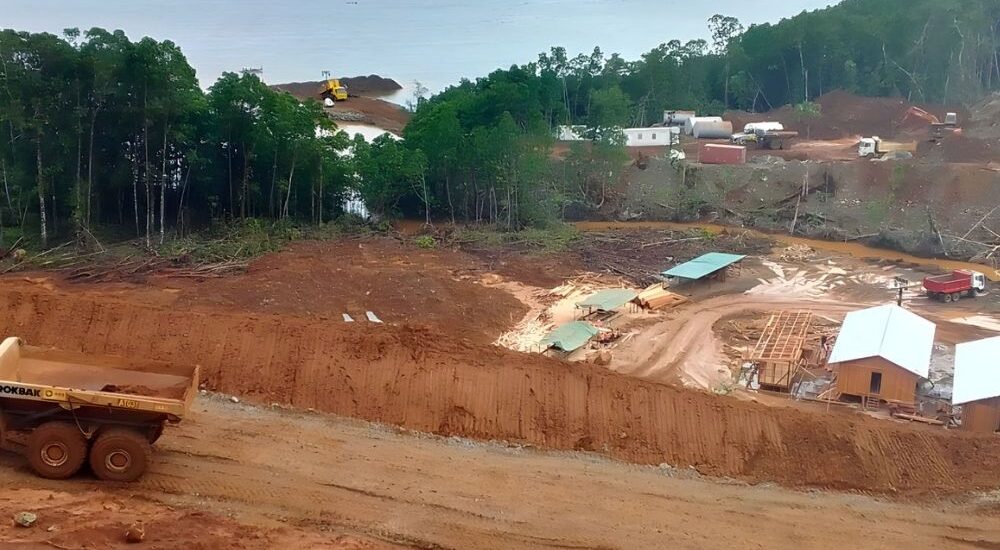
Pacific Nickel Mines, an Australian mining company, has embarked on nickel ore mining operations at its Kolosori project situated on Isabel Island within the Solomon Islands. The mining operation focuses on saprolite nickel ore and adopts a shallow open-pit approach. Anticipated production levels are impressive, with the capacity to yield up to 1.5 million wet metric tonnes (wmt) of nickel ore annually, contingent upon port throughput. Pacific Nickel has estimated the total operating costs to hover around $31 per wmt.
One of the significant aspects of this endeavor is a six-year offtake agreement Pacific Nickel signed with Glencore, a Switzerland-based mining and trading entity. The agreement encompasses the entire production output of the mine over the six-year duration, solidifying a strategic partnership.
This offtake agreement operates on a take-or-pay basis, implicating penalties for Glencore if it fails to meet its delivery obligations. The prices for the ore received by Pacific Nickel will be linked to specified 1.5% direct shipping nickel ore benchmarks, subject to adjustments based on ore quality and potential penalty payments. However, the precise details and specifications of these benchmarks have not been disclosed.
The Kolosori project is backed by a $22 million loan agreement inked in 2022 between Pacific Nickel Mines and Glencore, further fortifying the financial foundation of the mining venture. This loan agreement involves a three-year repayment obligation that Pacific Nickel Mines will initiate after the first shipment.
Importantly, the repayment schedule exempts wet season months from any scheduled repayments, providing flexibility and accounting for operational dynamics. Pacific Nickel Mines holds a controlling 80% stake in the Kolosori project, while the remaining 20% ownership is attributed to local associated landowners.
In March, the company received a crucial export permit from the Solomon Islands’ Ministry of Mines, Energy, and Rural Electrification, valid for three years with an option for renewal. This permit signifies a crucial regulatory milestone facilitating the shipment and trade of nickel ore from the project.
QUATRO Strategies International Inc. is the leading business insights and corporate strategy company based in Toronto, Ontario. Through our unique services, we counsel our clients on their key strategic issues, leveraging our deep industry expertise and using analytical rigor to help them make informed decisions to establish a competitive edge in the marketplace.
Interested in learning more?
Sign up for Top Insights Today

Top Insights Today delivers the latest insights straight to your inbox.
You will get daily industry insights on
Oil & Gas, Rare Earths & Commodities, Mining & Metals, EVs & Battery Technology, ESG & Renewable Energy, AI & Semiconductors, Aerospace & Defense, Sanctions & Regulation, Business & Politics.
Read more insights
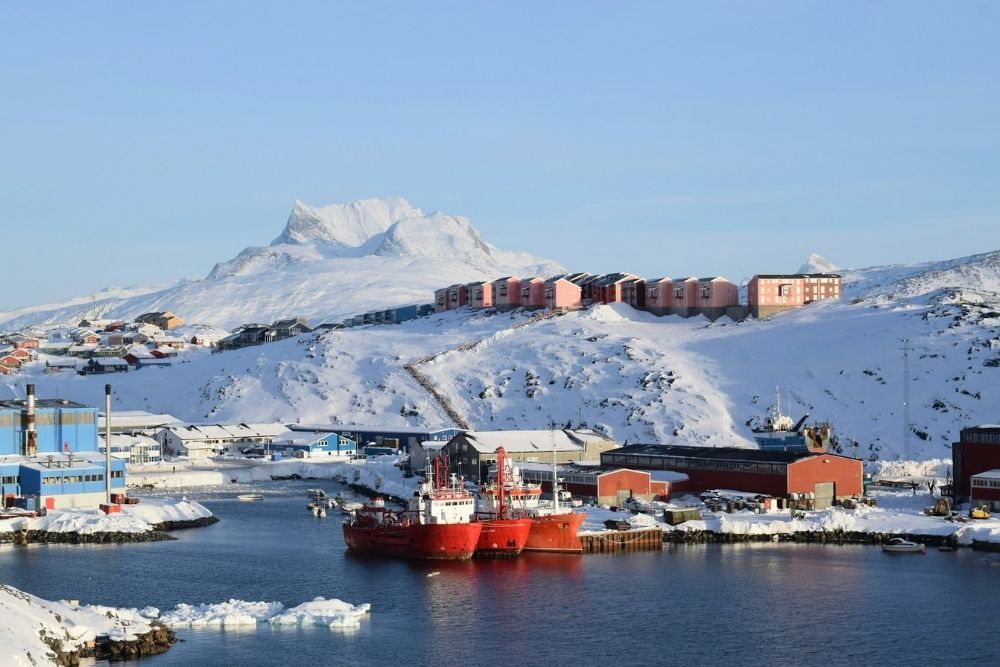
Japan’s rare earth search reaches Greenland
Japan is preparing to send a delegation to Greenland this summer to evaluate possible rare earth extraction, in the latest step of Tokyo’s sustained effort to diversify its critical mineral supply chains away from Chinese dominance. The visit would include officials from the Ministry of Economy, Trade and Industry, trading companies, and the Japan Organization for Metals and Energy Security, who would hold talks with local government officials about the Arctic island’s potentially rich rare earth reserves.
The mission fits squarely within the comprehensive Japanese strategy to secure alternative rare earth supplies documented throughout the analysis of the critical minerals competition. Japan, having endured China’s cutoff of heavy rare earth exports for months as retaliation for the Taiwan dispute, has powerful motivation to develop sources of supply outside Chinese control.

Scandinavia could be key to ease the West’s reliance on Chinese critical minerals
One year after the passage of the Inflation Reduction Act (IRA), the United States still relies on China for critical minerals, materials, and components used in clean energy technologies. The act, aimed at reducing inflation, led to a shift in policy from decoupling the U.S. economy…
Beijing opts for steel gradualism, with stricter swaps, no shock cuts
Beijing is signaling evolution rather than shock therapy for its steel sector. The direction of travel is toward fewer, better, and cleaner tons, but the authorities are choosing pacing over abrupt cuts. The latest guidance around the five-year plan leans heavily on boosting domestic consumption and innovation across the economy, while the campaign against wasteful duplication, what Chinese policymakers call “anti-involution”, received a lighter touch than many had anticipated.
Instead of ordering sweeping shutdowns, regulators are tightening the rulebook so that any new capacity must be more than offset by closures elsewhere, with a 1.5-to-1 requirement that becomes stricter if the additions are greenfield and somewhat looser when they involve modernizing existing plants.