
Australia earmarks five lithium mines for Indian companies
- August 21, 2023
- Posted by: Quatro Strategies
- Categories: Asia Pacific, India, Mining & Metals
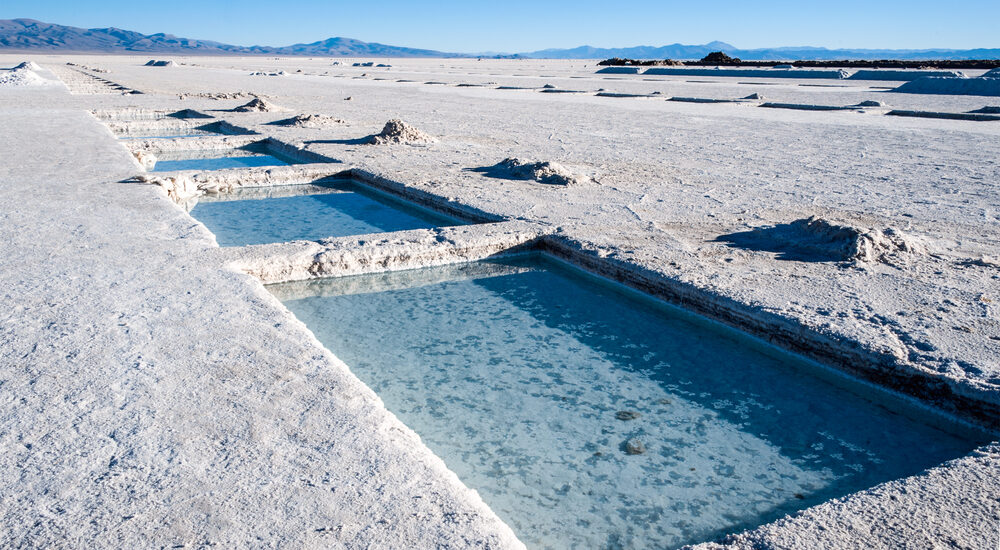
Australian authorities have identified at least five mines containing lithium and cobalt, and these resources have been earmarked for Indian entities, led by the state-owned Khanij Bidesh India (KABIL). KABIL is a joint venture involving state-run entities like NALCO, Hindustan Copper, and the Mineral Exploration Corporation. This development is a positive step for India’s efforts to secure essential minerals from abroad.
The collaboration between India and Australia, initiated after the Covid-19 outbreak, aims to establish a resilient supply chain and reduce dependency on China. The Economic Cooperation and Trade Agreement (ECTA), supported by KABIL and Australia’s Critical Minerals Office, is gaining momentum in this regard. Discussions for a dedicated chapter on critical minerals are expected to occur during an upcoming full free trade agreement (FTA) between the two countries.
India is also exploring similar opportunities in other countries like Mongolia, Argentina, and Chile, focusing on minerals such as copper and lithium. The Indian government is considering potential FTAs with Peru and Chile to secure critical minerals. In addition to securing the supply of these minerals, India is also taking steps to enhance domestic processing capabilities, particularly in areas where China dominates.
To support the processing of these minerals, India is inviting laboratories to contribute their expertise in developing technologies for mineral processing used in battery manufacturing. Recent amendments to the Mines and Minerals Act are expected to boost domestic mining efforts, with a focus on exploration and development. India’s investment in domestic mining is comparatively lower, and these efforts aim to increase investment and secure critical mineral resources for the nation’s energy transition and economic development.
Interested in learning more?
Sign up for Top Insights Today

Top Insights Today delivers the latest insights straight to your inbox.
You will get daily industry insights on
Oil & Gas, Rare Earths & Commodities, Mining & Metals, EVs & Battery Technology, ESG & Renewable Energy, AI & Semiconductors, Aerospace & Defense, Sanctions & Regulation, Business & Politics.
Read more insights
Copper Market at Risk of Deficit as Panama and Peru Supply Issues Escalate
The global copper market faces potential disruptions as reduced supply from major producers, Panama and Peru, could tip the market from surplus to deficit in 2024 or, at the very least, tighten oversupply. The uncertainty arises from a recent ruling by Panama’s top court, declaring…
Saudi Arabia attracts significant foreign investment in latest Aramco share sale
Over a year ago, Saudi Arabia began preparations to sell a new tranche of state oil giant Aramco shares, aiming to attract foreign investment crucial for the country’s ambitious economic transformation. The efforts, spearheaded by CEO Amin Nasser, have yielded significant results. Over half of the $11.2 billion in Aramco shares…
U.S. clears coal project to boost supply for Japan, South Korea
The U.S. Interior Department has approved an expansion plan for Signal Peak Energy’s coal operations in Montana, advancing President Donald Trump’s broader agenda to accelerate fossil fuel development under the banner of national energy security.
The decision allows Signal Peak to extract up to 22.8 million metric tons of federally owned coal, in addition to 34.5 million metric tons of coal from adjacent private lands. The expansion will extend the life of the Bull Mountains mine by approximately nine years, enhancing coal exports primarily destined for Japan and South Korea.