
Australia, EU set to resume talks on free trade agreement
- August 31, 2023
- Posted by: Quatro Strategies
- Categories: Asia Pacific, Business & Politics, Europe, Mining & Metals
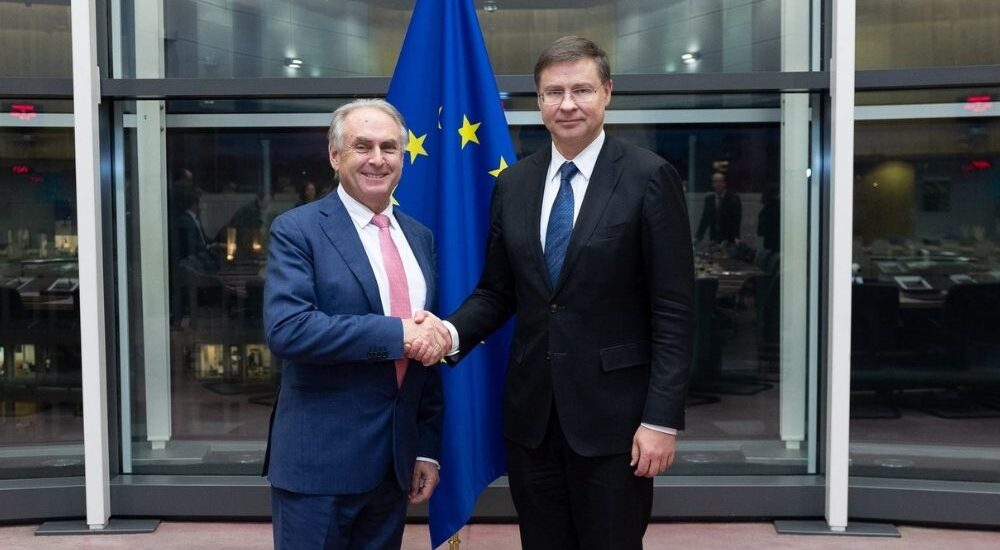
Australia and the European Union are set to resume negotiations on a free trade agreement that was stalled in July due to disagreements over market access for Australian agricultural exports. Australian Trade Minister Don Farrell and EU Commissioner Valdis Dombrovskis are scheduled to hold talks via teleconference to address the differences in their positions. The aim is to bridge the gap and potentially finalize the free trade agreement that has been under negotiation for more than five years.
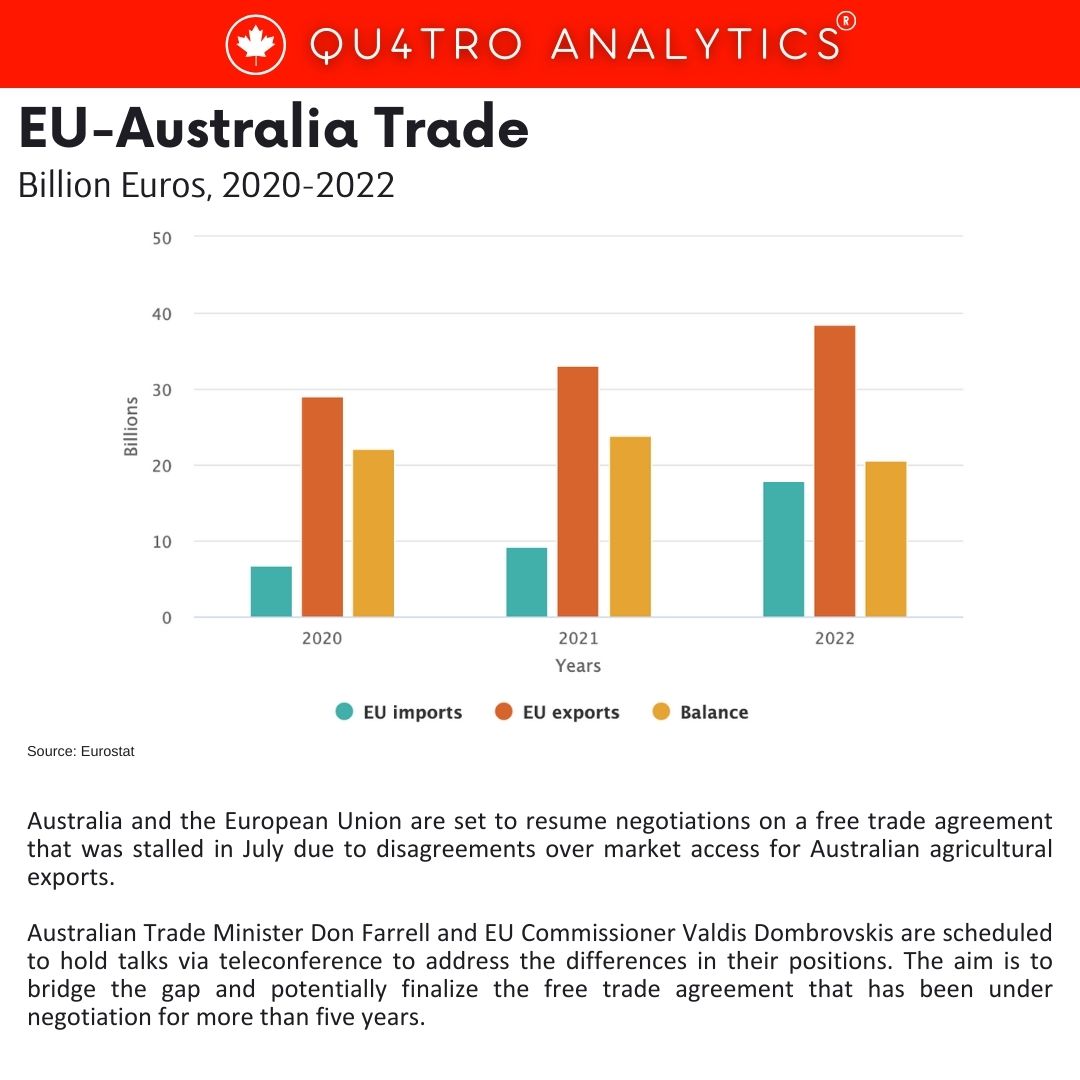
Trade in goods between the EU and Australia was significant last year, totaling €56.4 billion ($62.1 billion). However, discussions on the free trade agreement have faced challenges, particularly regarding the level of access for Australian agricultural products like beef, dairy, and sugar into the European market. Geographic indicators for certain produce items, such as prosecco and brie, have also been points of contention.
 Australia has sought greater concessions from the EU in return for its demands. Meanwhile, EU negotiators have expressed difficulties in agreeing on import quotas for Australian agricultural goods.
The resumption of negotiations comes after the previous stalemate dashed hopes of finalizing the agreement earlier in the year. Despite the challenges, both sides have expressed determination to continue the negotiations and find a mutually beneficial resolution.
The EU is particularly interested in this agreement due to its potential for greater access to Australia’s substantial reserves of critical minerals like lithium. These minerals are essential for high-tech manufacturing and the global transition to green energy sources.
Interested in learning more?
Sign up for Top Insights Today

Top Insights Today delivers the latest insights straight to your inbox.
You will get daily industry insights on
Oil & Gas, Rare Earths & Commodities, Mining & Metals, EVs & Battery Technology, ESG & Renewable Energy, AI & Semiconductors, Aerospace & Defense, Sanctions & Regulation, Business & Politics.
Read more insights
Europe sets legal course to cut Russian fossil fuels by 2028
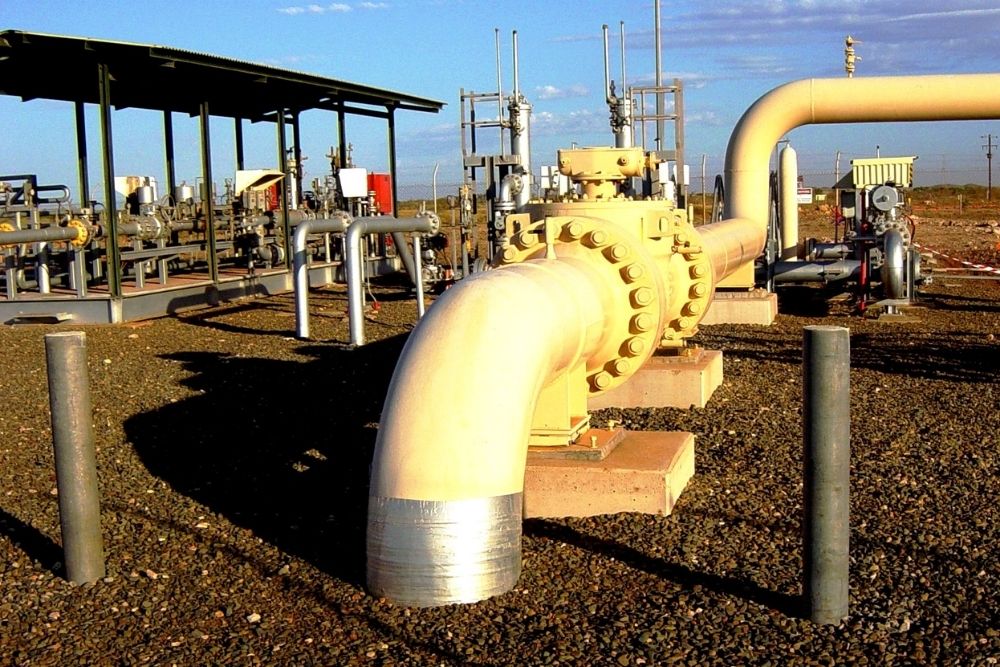
European governments have taken the first political step toward a legally binding exit from Russian fossil fuels by 2028, moving a long-debated strategy from rhetoric into the legislative lane. In a closed-door meeting on Wednesday, Oct. 8, EU ambassadors agreed to forward a draft law that would end Russian oil and gas imports on a staged timetable, sending it to energy ministers for a vote on October 20.
Diplomats said support is broad, with only a few holdouts questioning elements of the plan, a signal that the measure is likely to clear this next hurdle and then head into negotiations with the European Parliament to finalize the text. The political intent is explicit: starve the Kremlin of energy revenues that have underwritten its war on Ukraine.
U.S. pressures Vietnam to cut Chinese tech in exports
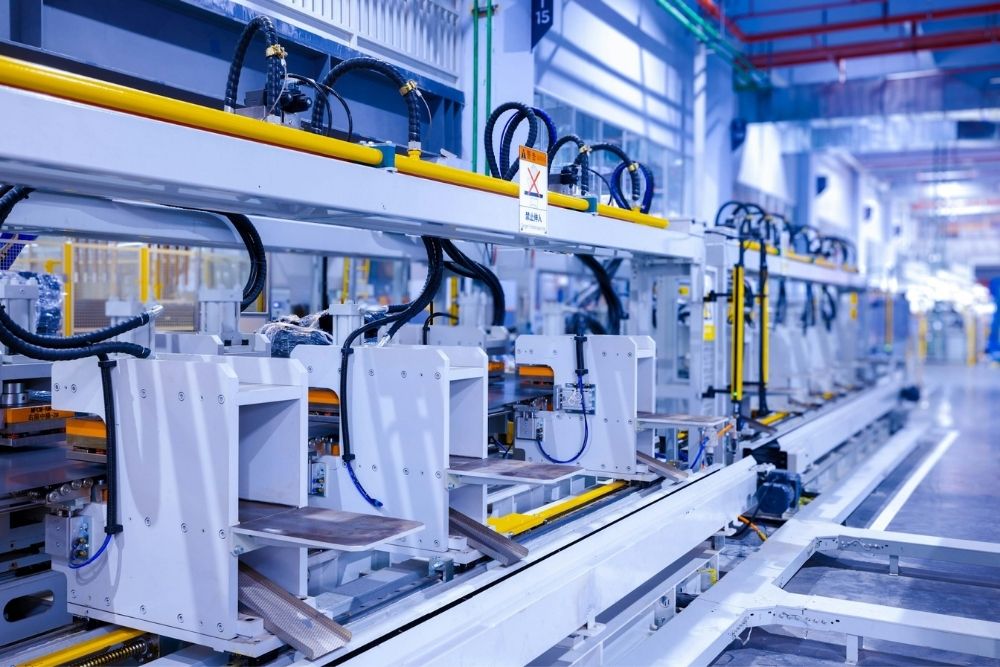
As trade tensions with China deepen, the United States is pressuring Vietnam to reduce its reliance on Chinese technology in electronics and devices assembled in the country and exported to America. The push comes as the Trump administration threatens to impose steep 46% tariffs on a range of Vietnamese exports — a move that could jeopardize Vietnam’s export-driven economy, particularly its booming electronics sector.
The deadline for a deal is July 8, and while progress has been reported in recent talks, major issues remain unresolved. U.S. negotiators are urging Vietnam to scale back the use of Chinese-made high-tech components in products assembled for American companies, including Apple, Samsung, Google, and Meta, whose contractors operate extensive facilities in the Southeast Asian nation.
China’s recovery stalls as output and spending weaken
China’s economy showed renewed signs of strain in August as both industrial output and retail sales slowed to their weakest growth rates since last year, fueling debate over whether Beijing will need to deploy more aggressive stimulus to prevent a sharper downturn.
The latest data highlight how fragile the post-pandemic recovery remains, with domestic demand eroded by property-sector turmoil and household caution, while manufacturers await clarity on trade policy as U.S. President Donald Trump pursues unpredictable tariff strategies.