
Chile’s public-private model attracts more than 50 lithium miners
- August 21, 2023
- Posted by: Quatro Strategies
- Categories: Americas, Mining & Metals, Sanctions & Regulation

More than 50 global companies are actively pursuing lithium deals under Chile’s new public-private model for the sector. Traditionally, US-based Albemarle and Chile-based Sociedad Quimica y Minera de Chile (SQM) have dominated the Atacama salt flat, which accounts for 30% of global lithium production. The new model proposed by President Gabriel Boric involves the state having a controlling stake in strategic operations, while private firms retain control of non-strategic projects. The government also plans to negotiate with Albemarle and SQM for larger stakes in their existing contracts, overseen by state-owned copper producer Codelco.
President Boric sees Chile’s lithium reserves as a significant opportunity for economic development and sustainable growth. However, his plan requires approval from the National Congress of Chile, where he lacks a majority, meaning potential changes before approval. Boric’s government aims to establish a new national lithium company through legislation, which could take a substantial portion of his four-year term.
Under the proposed policy, private entities can participate in the lithium industry, but only as minority partners in joint ventures with the State. This approach aims to incentivize the exploration of other salt flats in addition to the Atacama, diversifying lithium sources and expanding production.
SQM, in particular, faces risks, as its contract for extracting lithium in the Atacama salt flat expires in 2030. While Boric assures that existing contracts will be respected, the balance between competing interests remains unclear.
Chile’s push for state control in key sectors reflects a broader wave of nationalization and protectionism in Latin America, exemplified by Mexico’s reforms in the energy and power sectors. While these measures aim to secure national interests, they also raise concerns about maintaining a balance between economic growth, foreign investment, and local development.
Interested in learning more?
Sign up for Top Insights Today

Top Insights Today delivers the latest insights straight to your inbox.
You will get daily industry insights on
Oil & Gas, Rare Earths & Commodities, Mining & Metals, EVs & Battery Technology, ESG & Renewable Energy, AI & Semiconductors, Aerospace & Defense, Sanctions & Regulation, Business & Politics.
Read more insights
American companies navigate choppy waters in China, decade-long bond tested
The relationship between American companies and China is facing significant challenges, leading to a slowdown in American firms’ activities in the country. Several factors contribute to this stalling of the decades-long push by American companies into China. Increasing tensions between…
ADNOC Gas commits $5 billion to first phase of Rich gas expansion
ADNOC Gas, the natural gas arm of the UAE’s state energy giant, has approved a major new phase of investment in its Rich Gas Development (RGD) Project, committing $5 billion to upgrade and expand key infrastructure as the company seeks to scale up gas production and liquefaction capacity amid rising global demand.
In a statement released Tuesday, the company confirmed that final investment decisions (FIDs) have been taken on the initial phase of the RGD initiative, with contracts awarded to UK-based engineering and oilfield service companies including Wood Group, Petrofac, and Kent. These contracts will focus on expanding gas processing units and enhancing operational efficiency across ADNOC’s flagship onshore and offshore assets.
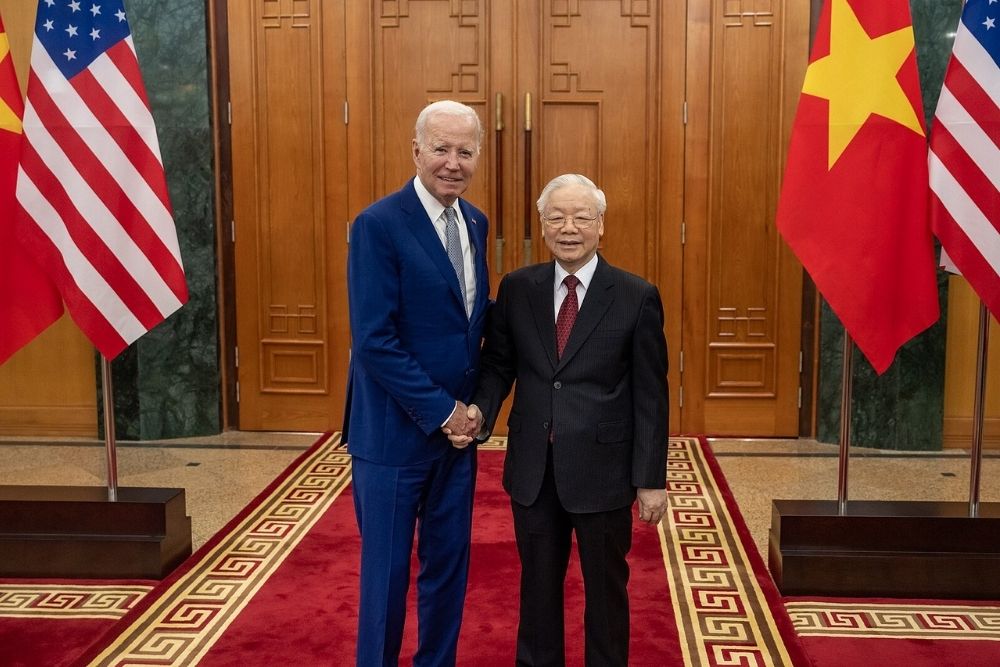
U.S. considering historic arms deal with Vietnam
The Biden administration is engaging in talks with Vietnam over what could materialize into the largest arms transfer in history between the two erstwhile Cold War rivals. This potential landmark deal could mark a significant development in the increasingly strategic partnership between Washington and Hanoi.