
China’s Ant Group venturing into financial AI
- September 12, 2023
- Posted by: Quatro Strategies
- Categories: AI & Semiconductors, China
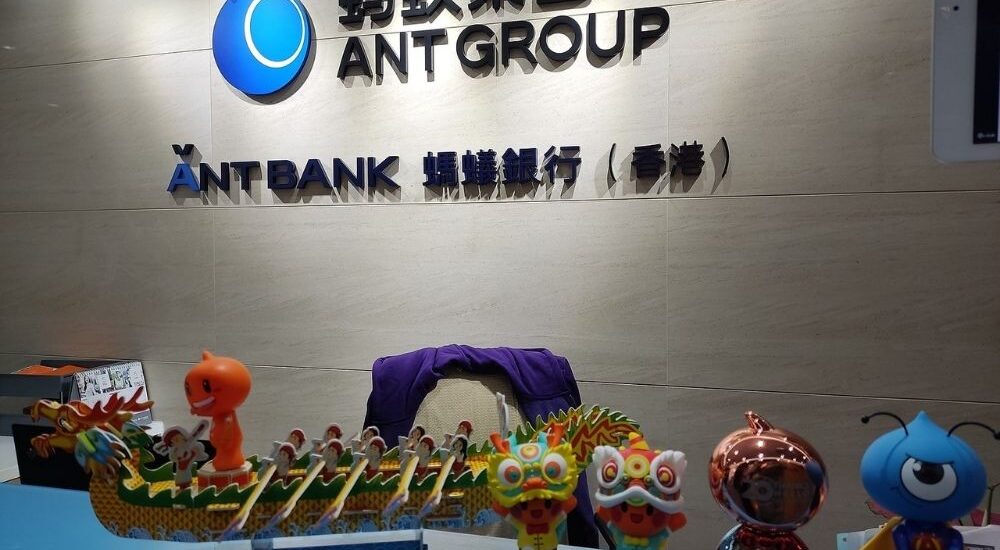
Ant Group, China’s leading fintech company, has revealed its foray into the field of financial artificial intelligence (AI). The company, founded by billionaire Jack Ma, is now testing consumer and professional applications for this new AI model. This development is significant, given that Ant Group is China’s largest fintech firm, boasting more than one billion users worldwide for its Alipay payment app.
The move by Ant Group into financial AI aligns with the broader trend of companies in China exploring AI technologies. Earlier in the week, tech giants Tencent and Xiaomi also announced AI-related initiatives, while Ant’s affiliate, Alibaba, made a similar announcement in April.
Ant Group has initiated closed tests of two applications designed for its wealth management and insurance platforms. The first application, known as Zhixiaobao 2.0, offers financial advice to consumers and has the capability to match the average financial professional in market analysis and reasoning.
However, it will only be made available to the public once it receives regulatory approval, as China has strict regulations that require companies to undergo security assessments before releasing AI products.
The second application, Zhixiaozhu 1.0, is tailored for financial professionals and can perform tasks such as investment analysis and information extraction. Ant Group is actively pursuing regulatory clearance to launch this application as well.
These moves into AI underscore the growing importance of AI technologies in the financial sector and the competitive landscape among tech companies in China to harness the potential of AI to enhance their financial services offerings.
Interested in learning more?
Sign up for Top Insights Today

Top Insights Today delivers the latest insights straight to your inbox.
You will get daily industry insights on
Oil & Gas, Rare Earths & Commodities, Mining & Metals, EVs & Battery Technology, ESG & Renewable Energy, AI & Semiconductors, Aerospace & Defense, Sanctions & Regulation, Business & Politics.
Read more insights

Russia delivers first LNG cargo via the Arctic Sea to China
Russian energy giant Gazprom made a significant milestone by delivering its first liquefied natural gas (LNG) cargo via the Arctic Northern Sea Route to China. This development comes a month after the initial delivery.
LME abandons green nickel contract, shifts focus to low carbon index
The London Metal Exchange (LME) has decided against launching a separate “green” nickel contract due to concerns about market size, but it is collaborating with its partner to develop an index price that will reflect the demand for low carbon nickel. This decision comes amid growing calls for a…

Fuel shock gives Europe’s EV market a needed jolt
Europe’s electric-vehicle market is getting a powerful and badly needed lift from the Iran war’s fuel-price shock. After a disappointing period in which EV adoption lagged automakers’ expectations and forced companies such as Volkswagen and Stellantis to take large writedowns, higher petrol and diesel prices are changing consumer calculations.
New fully electric registrations across 16 major European markets rose 34% year on year in April, while a separate dataset for 15 countries showed 201,541 new BEV registrations, up 34.1%, after an even stronger March.