
China’s Sinopec chooses Aramco over Shell for investment
- August 29, 2023
- Posted by: Quatro Strategies
- Categories: China, Middle East, Oil & Gas
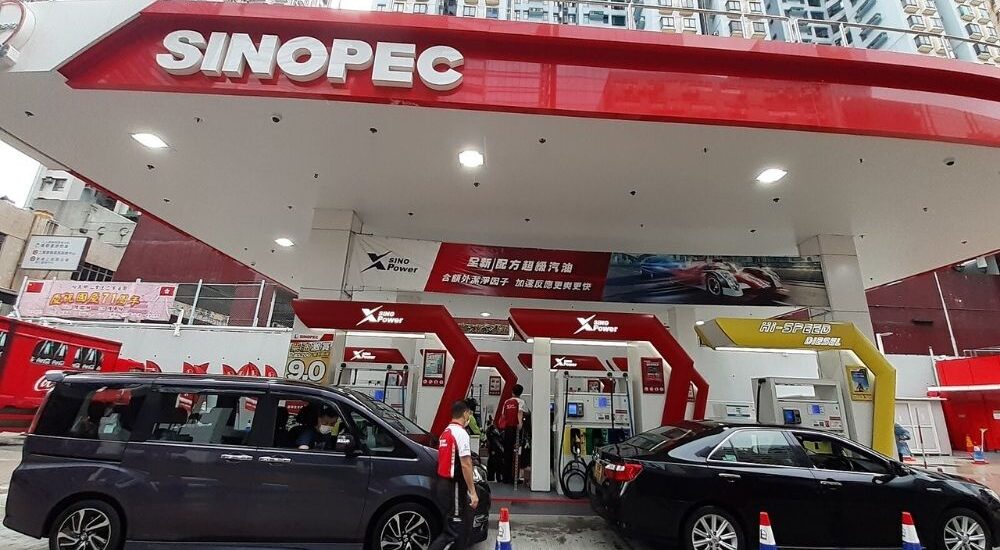
China’s major oil refiner, Sinopec Corp., has announced its decision not to acquire Shell Plc’s refinery and petrochemical plant in Singapore. Instead, Sinopec is focusing its investment efforts on Saudi Aramco’s Jafurah natural gas project in partnership with TotalEnergies. Sinopec operates in the oil and gas as well as chemical sectors, engaging in exploration and development of oil fields, crude oil and natural gas production, refining, and sale of petroleum products across China, Singapore, and internationally.
Saudi Aramco, the state-owned oil company of Saudi Arabia, is currently evaluating proposals from Sinopec and TotalEnergies for a stake in its Jafurah shale gas development project, which carries an estimated value of around $10 billion. The Jafurah gas field is anticipated to produce about 2 billion cubic feet of gas per day by 2030, requiring a total investment of $24 billion.
The Jafurah gas field, located in Saudi Arabia, is one of the largest shale gas developments globally. It is estimated to hold 200 trillion cubic feet of gas reserves. Saudi Aramco embarked on this significant gas field development project as part of its plans to diversify its energy portfolio and transition to cleaner sources of fuel. The company aims to achieve natural gas production from Jafurah by 2024 and attain a sales gas output of 2.2 billion cubic feet per day by 2036, coupled with the production of 425 million cubic feet per day of ethane.
Saudi Aramco’s approach to the gas field’s output is innovative. Instead of exporting the gas as liquefied natural gas (LNG), the company has opted to convert it into blue hydrogen. Blue hydrogen is produced from natural gas through processes like Steam Methane Reforming (SMR) or Auto Thermal Reforming (ATR), with the CO2 emissions generated captured and stored. This move aligns with the company’s sustainability goals by reducing greenhouse gas emissions and transitioning toward cleaner energy solutions.
Interested in learning more?
Sign up for Top Insights Today

Top Insights Today delivers the latest insights straight to your inbox.
You will get daily industry insights on
Oil & Gas, Rare Earths & Commodities, Mining & Metals, EVs & Battery Technology, ESG & Renewable Energy, AI & Semiconductors, Aerospace & Defense, Sanctions & Regulation, Business & Politics.
Read more insights

Arctic oil push marks U.S. pivot to energy security over climate commitments
The Trump administration has launched an aggressive push to revive large-scale oil drilling in one of the most environmentally sensitive and resource-rich regions of the United States — the National Petroleum Reserve-Alaska (NPR-A) — setting the stage for another high-stakes battle over energy development in the Arctic.
Interior Secretary Doug Burgum announced Sunday that the administration plans to overturn a 2024 Biden-era rule that had restricted oil and gas development across 13 million acres of the 23-million-acre NPR-A. That rule had designated vast swaths of the Indiana-sized reserve as “special areas” due to their ecological significance, while permanently prohibiting leasing on 10.6 million acres.

Europe’s fiscal architecture faces its hardest political test yet
Europe returns from a difficult summer to an autumn that will test whether its fiscal architecture survives contact with an energy shock, a hawkish central bank and elections in all three of its largest economies. The budget season that begins in September is normally a routine parliamentary exercise.
This year it arrives with French borrowing costs at their highest since 2009, the ECB tightening into a war-driven inflation spike, and political fragmentation making agreement in Paris, Rome and Berlin genuinely uncertain.

Guyana’s oil market attracts multinational giants
More than 20 major companies, including Exxon Mobil, a unit of Saudi Aramco, BP, and Shell, have submitted bids to compete for a contract to market Guyana’s share of oil production. This 12-month contract enables the country to export its portion of crude produced offshore by a consortium…