
China’s Zijin halts acquisition activities amid high costs, geopolitical tensions
- August 31, 2023
- Posted by: Quatro Strategies
- Categories: China, Mining & Metals, Rare Earths & Commodities
Zijin Mining Group, a prominent Chinese copper and gold mining company, has put the brakes on its acquisition activities due to factors such as high project valuations and geopolitical tensions. Although the company is still exploring merger and acquisition opportunities, its pace of deals has slowed down in comparison to previous years.
Zijin Mining has been known for its aggressive acquisition strategy, having acquired a series of copper and gold mines globally to support its ambitious production goals. Additionally, the company has expanded into the lithium sector to establish a presence in the battery metals market for electric vehicles.
The company’s current approach reflects the challenges it faces, including intense competition for projects and elevated project premiums. This, combined with relatively high metals prices, has prompted Zijin Mining to exercise greater caution in its acquisitions.
Given the existing geopolitical and economic landscape, Zijin Mining intends to increase its investments within China and neighboring countries. The company aims to focus on significant projects that could have a substantial impact on its overall performance. Zijin Mining’s emphasis will remain on gold, copper, zinc, and new energy minerals.
While lithium prices have experienced a significant decline recently, Zijin Mining remains optimistic. The company’s lithium projects are still profitable even in the face of such price fluctuations, and its overall strategy seems to account for potential market volatility.
Interested in learning more?
Sign up for Top Insights Today

Top Insights Today delivers the latest insights straight to your inbox.
You will get daily industry insights on
Oil & Gas, Rare Earths & Commodities, Mining & Metals, EVs & Battery Technology, ESG & Renewable Energy, AI & Semiconductors, Aerospace & Defense, Sanctions & Regulation, Business & Politics.
Read more insights
TotalEnergies acquires 40% stake in Norway CO2 storage project
TotalEnergies, the French energy major, has entered into an agreement to acquire a 40% participating interest held by CapeOmega Carbon Storage AS, a subsidiary of CapeOmega AS, in the CO2 storage exploration license ExL004, also known as the “Luna” project. ExL004 covers an area of 453 square kilometers and is located 120 km offshore Bergen in 200 meters of water depth. The license is adjacent to the site of the Northern Lights CO2 storage project, in which TotalEnergies already holds a 33% participating interest. The first phase of the Northern Lights project is set to begin in 2024.
Germany’s budget crisis threatens support for domestic solar manufacturers
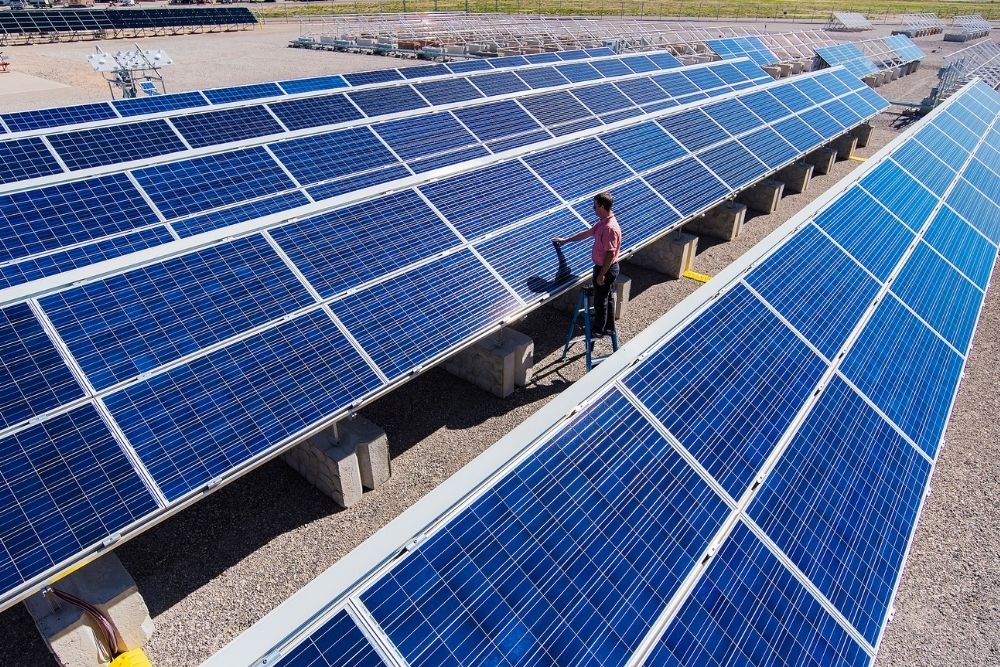
Germany’s budget crisis is posing a significant threat to planned government support for its domestic solar manufacturers, potentially jeopardizing the revival of an industry that was once a global leader. Germany aims to produce 80% of its electricity from renewable sources, but it has…

Germany weighs defense-style borrowing to harden its power grid
Germany is moving toward treating parts of its energy system as a defense-adjacent asset class, not just a civilian utility problem. After a run of sabotage and disruption incidents that exposed how quickly local outages can cascade into wider economic and social stress, the government is now debating whether to finance “war-proofing” measures for grids and other energy infrastructure by stretching the same borrowing carve-out that was created to accelerate defense spending.
The idea under discussion is a dedicated resilience fund that could reach €2 billion, a plan that reportedly fell out of the December budget package because of fiscal tightness but has been pulled back onto the agenda for coalition-level talks in the chancellery.