
Chinese solar supplier GCL in talks with Saudi Arabia to open first overseas plant
- September 5, 2023
- Posted by: Quatro Strategies
- Categories: Business & Politics, China, ESG & Renewable Energy, Middle East
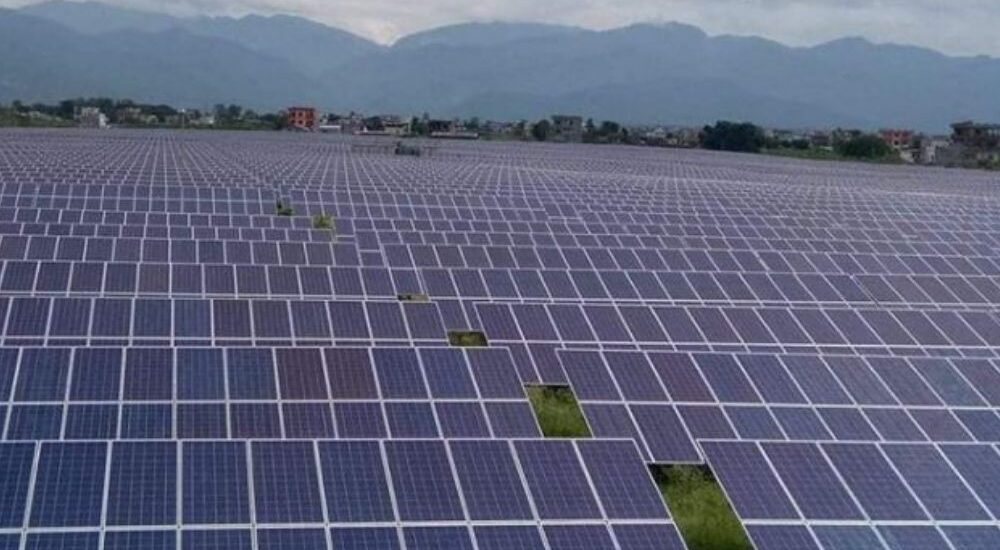
China’s GCL Technology Holdings is in advanced discussions with Saudi Arabia about constructing its first overseas factory as both nations work to expand their energy cooperation. GCL Technology, the world’s second-largest producer of polysilicon, a vital component in solar panels, is considering the establishment of a Middle East plant with an annual production capacity of 120,000 tons, according to Joint CEO Lan Tianshi. The company could begin operations as early as 2025, he stated. Lan added that Saudi Arabia’s extensive sunlight resources could facilitate its transition from an oil producer to a solar energy generator.
Saudi Arabia’s robust infrastructure and industrial manufacturing expertise make it an appealing location for GCL Technology to expand. The company has already filed for registration in the nation, formed a local team of about twelve people, and entered into discussions with local government authorities and the royal commission. While GCL Technology is contemplating establishing outposts in other countries, the Saudi Arabia project is the most advanced at this point.
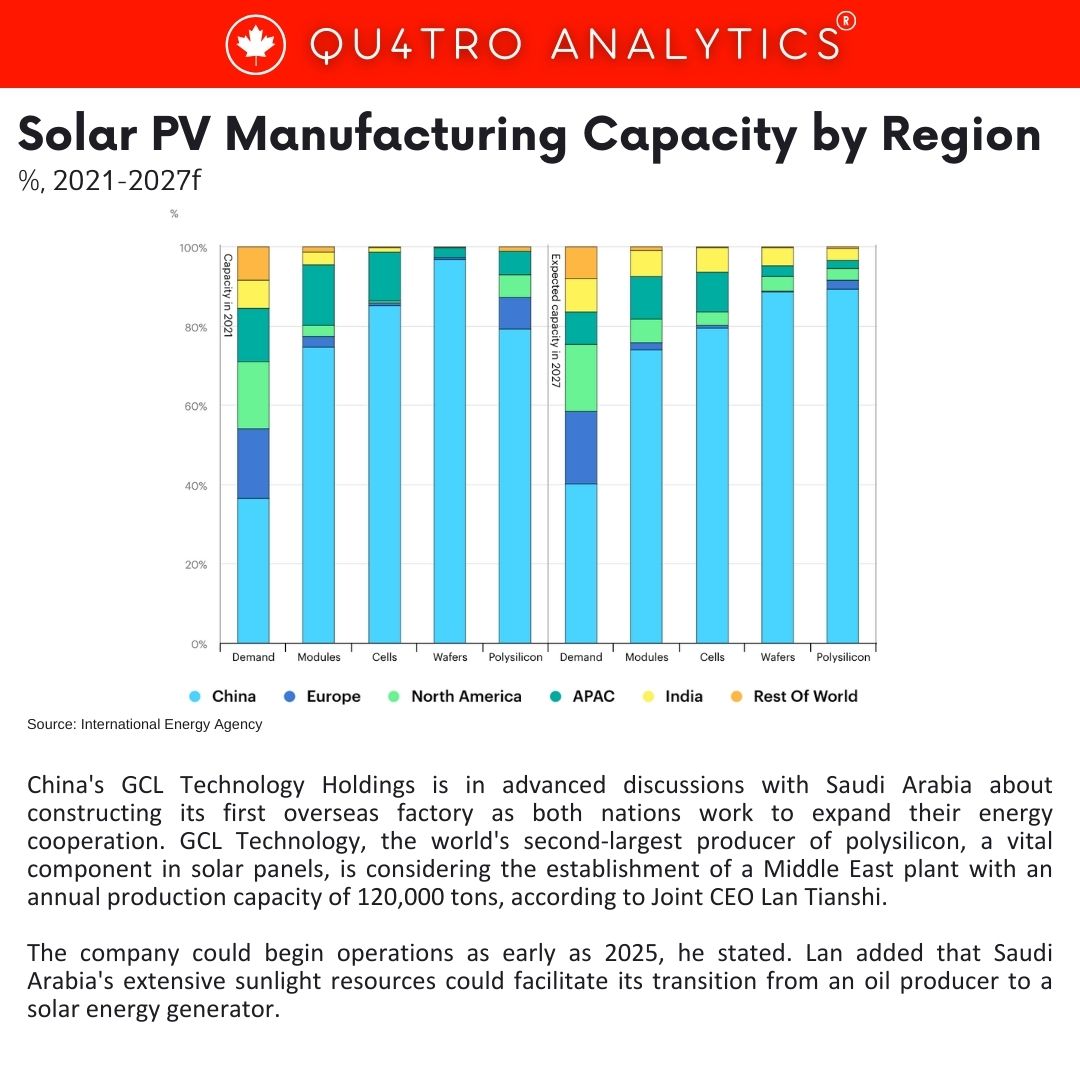 China and Saudi Arabia have been increasing their energy cooperation, with President Xi Jinping visiting Riyadh in December. Furthermore, at last month’s BRICS forum, China invited Saudi Arabia and other leading oil exporters to join the group. Lan and other GCL Technology executives have made visits to both Saudi Arabia and Qatar. The company is eager to accelerate implementation in both locations. Additionally, the firm has examined the possibility of expanding into Mexico, to serve the North American market, as well as Australia.
At present, Chinese solar companies are grappling with shrinking profit margins as a result of fierce competition. Lan anticipates a wave of consolidation in the solar supply chain, with only five to ten companies ultimately surviving. Polysilicon prices have plummeted since the beginning of the year, prompting numerous producers to discontinue operations in June. BloombergNEF forecasts a significant oversupply of the material in the second half of the year. Despite the challenges, lower solar prices have boosted demand both in China and abroad, with the country poised to install a record capacity this year, potentially reaching 140 gigawatts, according to the China Photovoltaic Industry Association.
By establishing new infrastructure in Saudi Arabia, GCL Technology would be able to tap into the nation’s large potential market and the higher prices that polysilicon commands overseas. The Middle East offers a more accessible gateway for the material to reach consumers in Africa and Europe.
Interested in learning more?
Sign up for Top Insights Today

Top Insights Today delivers the latest insights straight to your inbox.
You will get daily industry insights on
Oil & Gas, Rare Earths & Commodities, Mining & Metals, EVs & Battery Technology, ESG & Renewable Energy, AI & Semiconductors, Aerospace & Defense, Sanctions & Regulation, Business & Politics.
Read more insights
US utilities forge major power deals with data centers as AI and data needs surge
U.S. utilities are increasingly securing substantial supply agreements with data-center operators, driven by the rapid expansion of artificial intelligence and data processing needs. These deals signify a notable shift in the energy landscape, as data centers become a significant consumer of electricity…
Adani Group enters metals refining with launch of $1.2 billion copper smelter
Indian billionaire Gautam Adani has commenced operations at the first unit of his $1.2 billion copper smelter, marking his entry into metals refining. Adani Enterprises Ltd., the flagship company of Adani Group, announced the commissioning of the unit located in the western state of Gujarat…
China’s rare earth monopoly forces West into industrial policy revival
Western governments are finally confronting an uncomfortable truth: China holds a near-monopoly over rare earth refining, giving it immense leverage over global supply chains in industries ranging from green tech to defense. While the West is scrambling to diversify sources of these critical materials, the real challenge lies not in mining the raw ores—which are geologically abundant—but in the capital- and pollution-intensive process of refining them.
As geopolitical tensions deepen and the strategic value of rare earths becomes ever more apparent, policymakers are coming to terms with the fact that breaking Beijing’s stranglehold will require public subsidies, industrial policy coordination, and state-backed price guarantees.