
ConocoPhillips signs 15-year LNG deal with Dutch natural gas hub
- September 15, 2023
- Posted by: Quatro Strategies
- Categories: Europe, Oil & Gas, United States
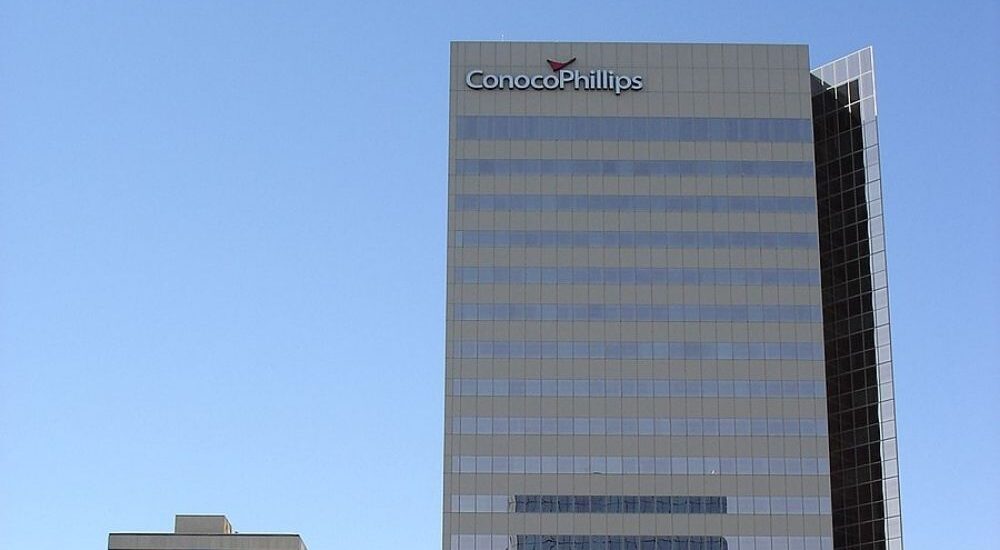
ConocoPhillips, a major player in the oil industry, has recently inked a notable 15-year liquefied natural gas (LNG) throughput agreement with Gate Terminal B.V. in the Netherlands. This arrangement, set to commence in 2031, is strategically focused on securing additional regasification capacity within Europe, thereby expanding and fortifying ConocoPhillips’ global footprint in the LNG market. The deal entails a throughput capacity of 1.5 million tonnes per annum of natural gas, a significant volume that underscores the company’s commitment to the LNG sector.
The partnership with Gate Terminal B.V., situated at the Port of Rotterdam, is pivotal in advancing ConocoPhillips’ LNG presence, building upon similar LNG agreements forged by the company since 2022, spanning across Germany, Mexico, and Qatar. These endeavors underscore ConocoPhillips’ concerted efforts to diversify its energy portfolio and pivot towards a more balanced and sustainable model that encompasses LNG, a pivotal component in the evolving global energy landscape.
Bill Bullock, the Chief Financial Officer of ConocoPhillips, emphasized the strategic importance of expanding their LNG footprint through agreements like this. He reiterated that such initiatives further enhance their portfolio, promoting balance, diversification, and attractiveness as they continue to execute their global LNG strategy. Notably, this expansion aligns with ConocoPhillips’ objective to diversify its energy portfolio and venture into cleaner and more sustainable energy sources.
In August, ConocoPhillips also solidified a significant 20-year agreement to receive a collective 2.2 million tons of LNG annually from Mexico Pacific’s Saguaro export facility on the west coast of Mexico. These strategic moves underline the company’s position and commitment in the LNG market, with additional interests and offtake agreements in LNG projects in Qatar, Australia, and the U.S. Gulf Coast’s Port Arthur LNG Phase 1 project, showcasing their far-reaching influence and involvement in the global LNG landscape.
Interested in learning more?
Sign up for Top Insights Today

Top Insights Today delivers the latest insights straight to your inbox.
You will get daily industry insights on
Oil & Gas, Rare Earths & Commodities, Mining & Metals, EVs & Battery Technology, ESG & Renewable Energy, AI & Semiconductors, Aerospace & Defense, Sanctions & Regulation, Business & Politics.
Read more insights
Guangdong’s power price spike exposes China’s LNG vulnerability
Guangdong, China’s most commercially important manufacturing province, is being hit by a sharp rise in electricity prices as disruptions in Middle Eastern gas supply ripple into its power system. The province, whose economy is roughly comparable in scale to South Korea’s, relies more heavily than any other part of China on gas-fired generation.
That dependence has become a liability at a moment when conflict around the Persian Gulf has curtailed fuel shipments and driven up the cost of imported liquefied natural gas. In mid-April, spot electricity prices in Guangdong surged to their highest level in three years, briefly reaching almost 680 yuan per megawatt-hour, far above the roughly 350 yuan average seen the previous month.
From steel to cement, EU’s carbon levy rewrites global export rules
Europe is about to hardwire carbon costs into the price of imports. In less than three months, the EU will flip the switch on its Carbon Border Adjustment Mechanism, a first-of-its-kind levy that makes foreign steel, cement, aluminum, fertilizers, and hydrogen carry the same carbon price European producers face at home.
The mechanics are blunt by design: importers must buy CBAM certificates linked to the EU carbon market, paying the prevailing EU ETS price for the embedded emissions in each shipment. In policy terms, Brussels is exporting its carbon discipline, closing the gap that encouraged “carbon leakage,” where smokestack industries shifted production to jurisdictions with looser rules and then sold back into Europe.
EU considers diluting methane emissions rules
The European Union is weighing changes to its landmark methane emissions law, as pressure mounts from industry players and member states who fear the regulation could jeopardize critical natural gas imports—especially from the United States. A draft document circulating among EU energy ministers indicates that the bloc may ask the European Commission to revisit and potentially streamline the methane rules, which came into force this year.
At stake is the EU’s attempt to balance its ambitious climate agenda with its immediate energy security needs—especially as it shifts away from Russian pipeline gas and deepens its reliance on seaborne liquefied natural gas (LNG), primarily from the U.S.