
Contractual disagreement mires Cleveland-Cliffs’ acquisition of U.S. Steel
- September 21, 2023
- Posted by: Quatro Strategies
- Categories: Mining & Metals, United States
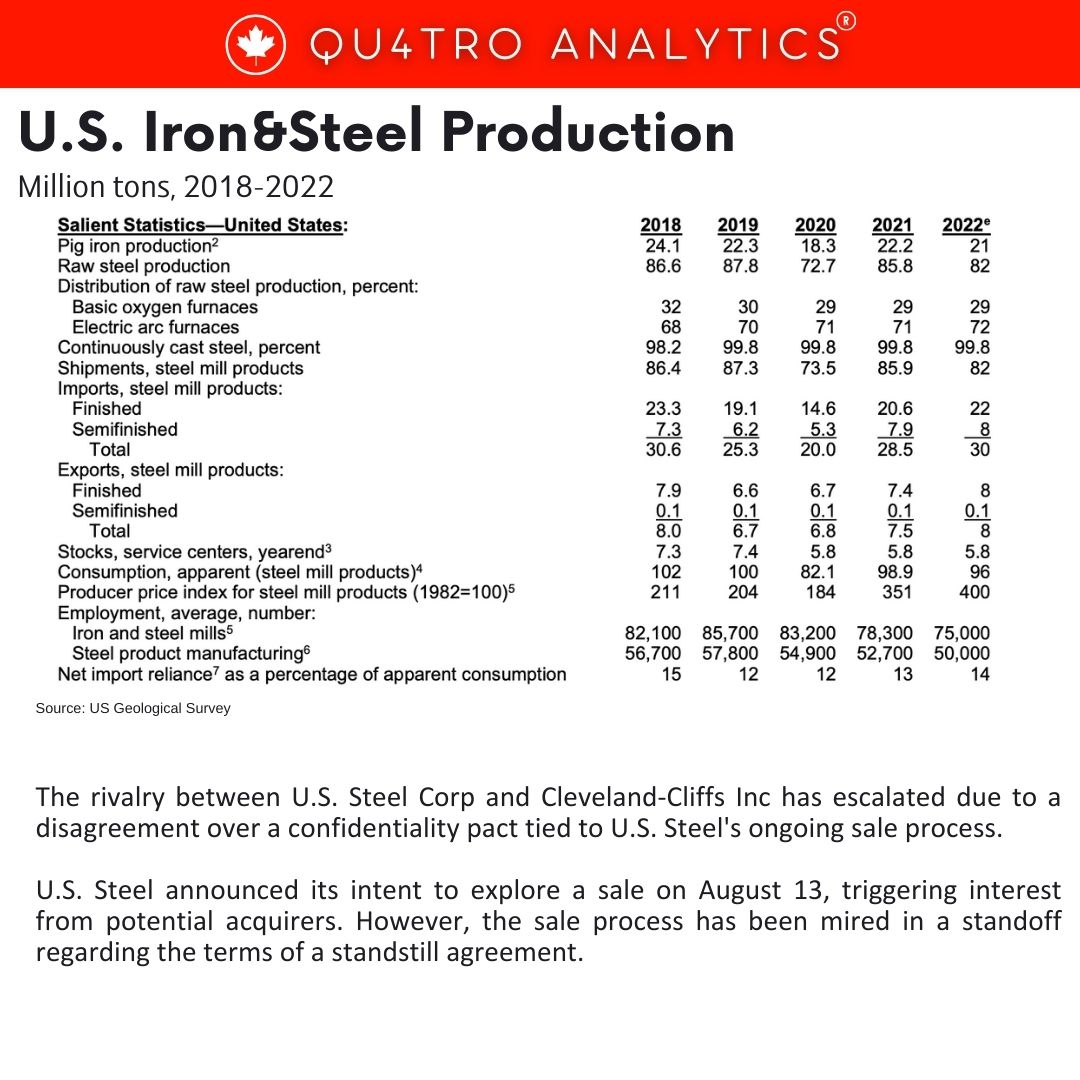
The rivalry between U.S. Steel Corp and Cleveland-Cliffs Inc has escalated due to a disagreement over a confidentiality pact tied to U.S. Steel’s ongoing sale process. U.S. Steel announced its intent to explore a sale on August 13, triggering interest from potential acquirers. However, the sale process has been mired in a standoff regarding the terms of a standstill agreement.
U.S. Steel is demanding that Cleveland-Cliffs sign a six-month standstill agreement, preventing the latter from challenging U.S. Steel’s board of directors. In return, U.S. Steel would allow Cleveland-Cliffs to conduct due diligence and participate in the sale process. Cleveland-Cliffs, however, is reluctant to sign this agreement, aiming to keep its options open as it pursues the acquisition.
Cleveland-Cliffs has presented a significant portion of its $7.1 billion offer in stock to U.S. Steel and secured commitment letters from major banks to fund its bid. Despite this, U.S. Steel has not allowed access to its books for due diligence. U.S. Steel claims all bidders are being granted access on the same terms.
 The situation is pivotal for both companies. If successful, Cleveland-Cliffs would break into the world’s top 10 steel producers, a significant feat given the predominantly Asian presence in this domain. Cleveland-Cliffs’ commitment to maintaining U.S. Steel’s blast furnaces has garnered support from the United Steelworkers union, critical in this industry.
U.S. Steel has been transitioning to electric arc furnaces due to cost-effectiveness and environmental considerations, while Cleveland-Cliffs emphasizes maintaining blast furnaces for certain steel production needs. Recently, U.S. Steel forecasted a third-quarter profit exceeding Wall Street estimates, buoyed by reduced raw material costs and higher prices for flat-rolled products. However, the ongoing United Auto Workers strike has weighed on both U.S. Steel and Cleveland-Cliffs due to their significant ties with major automakers. The outcome of this dispute could reshape the steel industry landscape in the United States.
By QUATRO Strategies International Inc.
QUATRO Strategies International Inc. is the leading business insights and corporate strategy company based in Toronto, Ontario. Through our unique services, we counsel our clients on their key strategic issues, leveraging our deep industry expertise and using analytical rigor to help them make informed decisions to establish a competitive edge in the marketplace.
Interested in learning more?
Sign up for Top Insights Today

Top Insights Today delivers the latest insights straight to your inbox.
You will get daily industry insights on
Oil & Gas, Rare Earths & Commodities, Mining & Metals, EVs & Battery Technology, ESG & Renewable Energy, AI & Semiconductors, Aerospace & Defense, Sanctions & Regulation, Business & Politics.
Read more insights
Heavy rare earth bottleneck undermines Western magnet revival
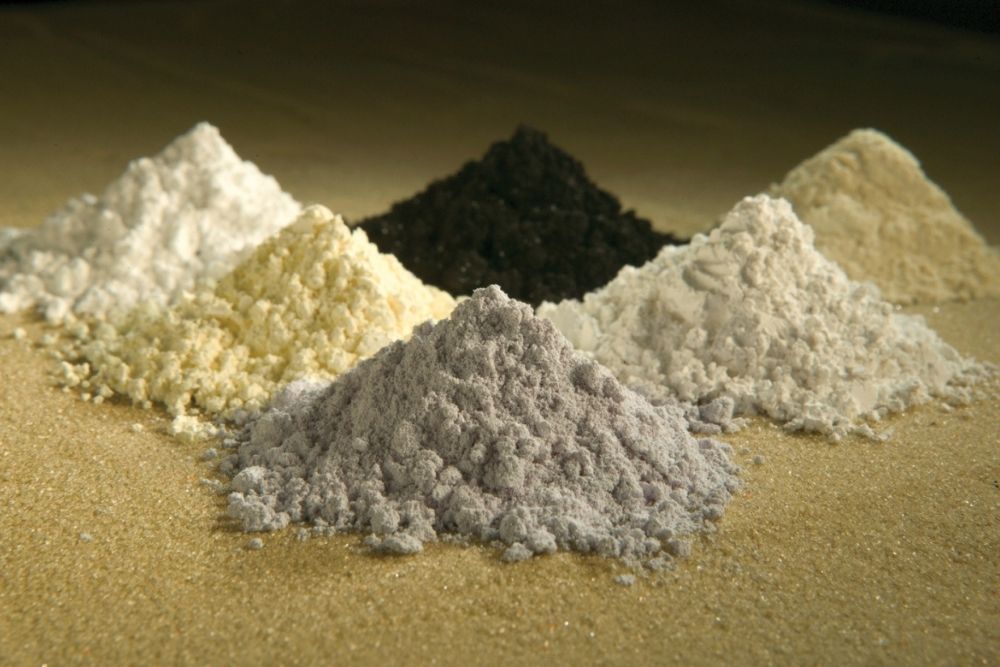
The West’s plan to rebuild a rare earth magnet industry without China has run into its most stubborn choke point: the heavy rare earths that make high performance magnets actually work in heat and at speed. MP Materials is the flagship of Washington’s strategy, mining at Mountain Pass, adding separation, and moving into magnets with multi-billion dollar federal backing and an Apple offtake.
It has ramped processed output of light elements, the neodymium-praseodymium that form the backbone of NdFeB magnets. But the physics of traction motors and high-load turbines doesn’t bend to industrial policy. To keep magnets coercive at 120-140°C in an EV motor, or in compact defense actuators, you need trace additions of dysprosium and terbium.
Iran conflict drive diesel spike, renewing fears over Europe’s energy security
The ongoing Iran conflict has triggered a sharp surge in global diesel prices, outpacing the rise in crude oil and exposing the fragility of Europe’s diesel-dependent energy system. While refiners in the region are temporarily benefitting from higher margins, the broader market outlook is increasingly volatile due to geopolitical tensions and a complex policy environment.
Since the outbreak of hostilities on June 13, Brent crude has climbed by over 10%, breaching $76 per barrel, as investors weigh the risk of Middle East supply disruptions—particularly in the Strait of Hormuz, a vital chokepoint for global oil flows. Around 20% of the world’s crude and refined products pass through this narrow waterway.

Volkswagen, Umicore JV chooses Poland as location for new EV battery parts plant
Volkswagen’s PowerCo and Belgian materials firm Umicore have selected Poland as the location for their first factory for auto battery parts, a part of their $2.9 billion joint venture known as Ionway. This move aligns with the broader trend in the automotive industry, where European automakers are bringing…