
Exxon and partners to spend $12.93 billion for sixth Guyana offshore oil project
- August 22, 2023
- Posted by: Quatro Strategies
- Categories: Americas, Oil & Gas
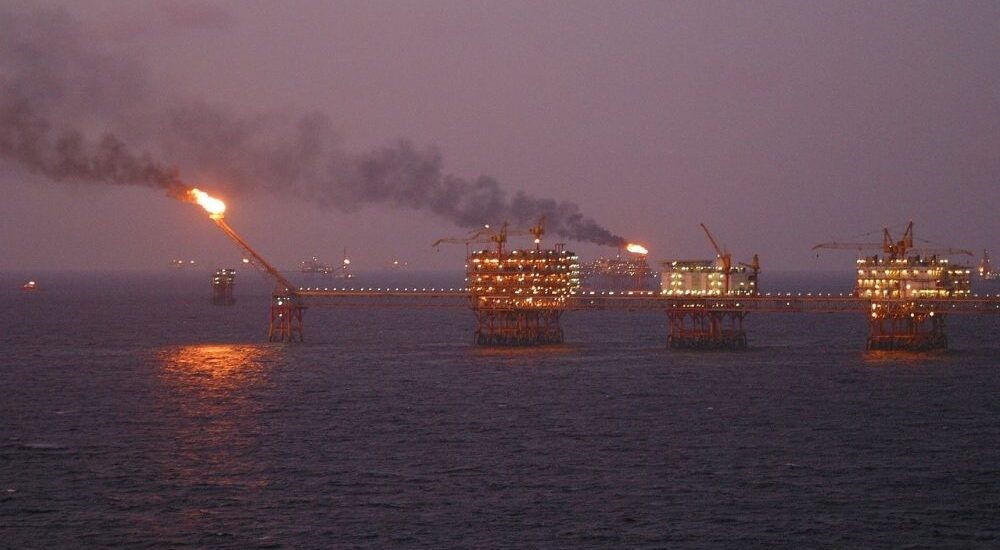
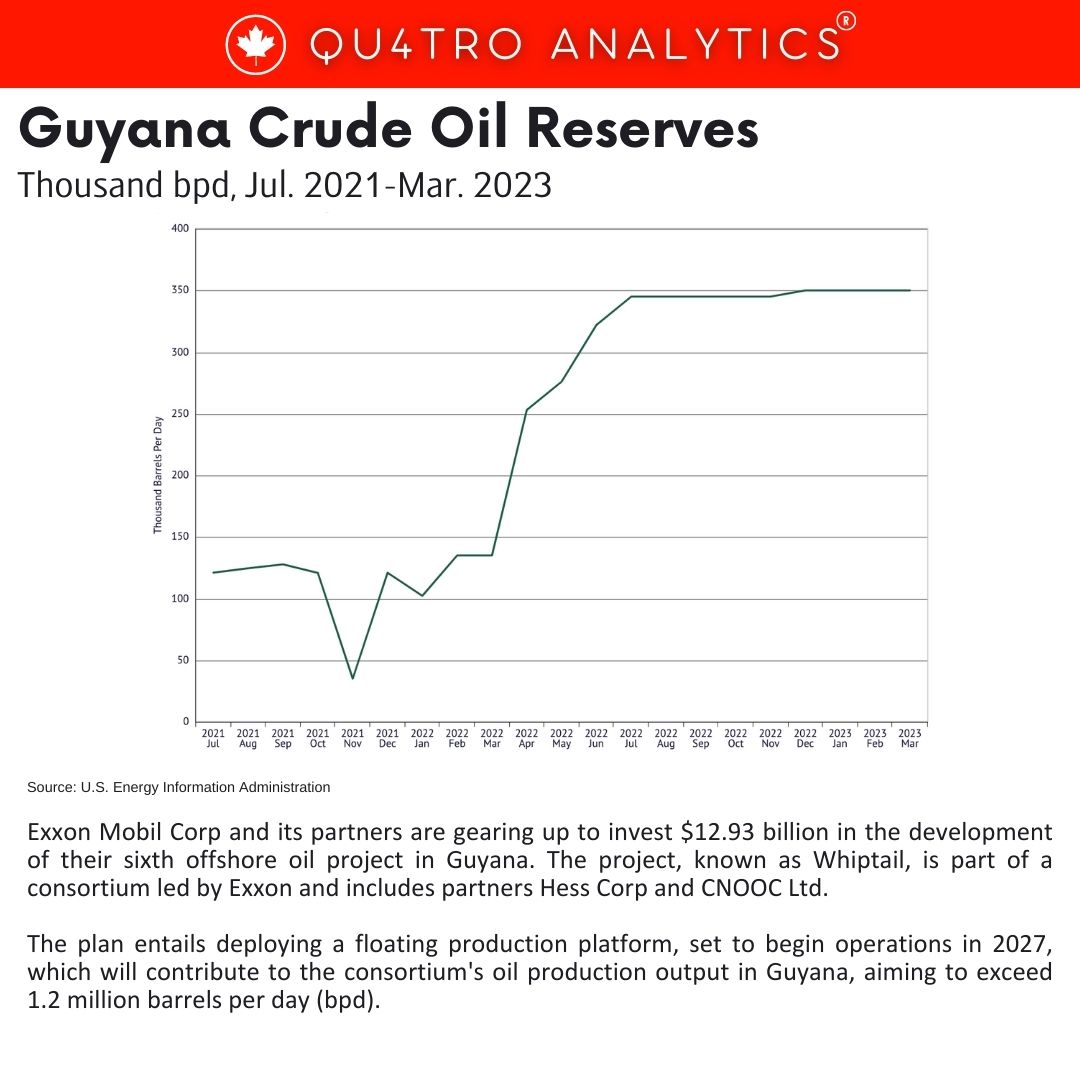
Exxon Mobil Corp and its partners are gearing up to invest $12.93 billion in the development of their sixth offshore oil project in Guyana. The project, known as Whiptail, is part of a consortium led by Exxon and includes partners Hess Corp and CNOOC Ltd. The plan entails deploying a floating production platform, set to begin operations in 2027, which will contribute to the consortium’s oil production output in Guyana, aiming to exceed 1.2 million barrels per day (bpd).
Guyana has recently emerged as a major player in the global oil industry with substantial discoveries totaling over 11 billion barrels of oil and gas. Exxon and its partners have already achieved an output of 400,000 bpd from two vessels in the region. The new Whiptail project, following the model of the Uaru project, is anticipated to add to this production capacity, contributing significantly to the country’s growing oil revenue.
 Exxon, Hess, and CNOOC have committed substantial financial resources to the development of Guyana’s offshore oil sector. The investments have also led to substantial direct revenue for the country, totaling $2.8 billion, and the creation of job opportunities for thousands of Guyanese citizens.
Whiptail’s plan does not involve the production of natural gas due to concerns that reducing injected gas could adversely impact oil recovery. The consortium plans to drill around 72 wells and commence development drilling by late 2024, with subsea component installation beginning in the second half of 2025 or early 2026. The project is expected to generate employment opportunities for up to 540 people during the drilling and installation phase, and around 100 to 180 people during the production operations phase.
Interested in learning more?
Sign up for Top Insights Today

Top Insights Today delivers the latest insights straight to your inbox.
You will get daily industry insights on
Oil & Gas, Rare Earths & Commodities, Mining & Metals, EVs & Battery Technology, ESG & Renewable Energy, AI & Semiconductors, Aerospace & Defense, Sanctions & Regulation, Business & Politics.
Read more insights
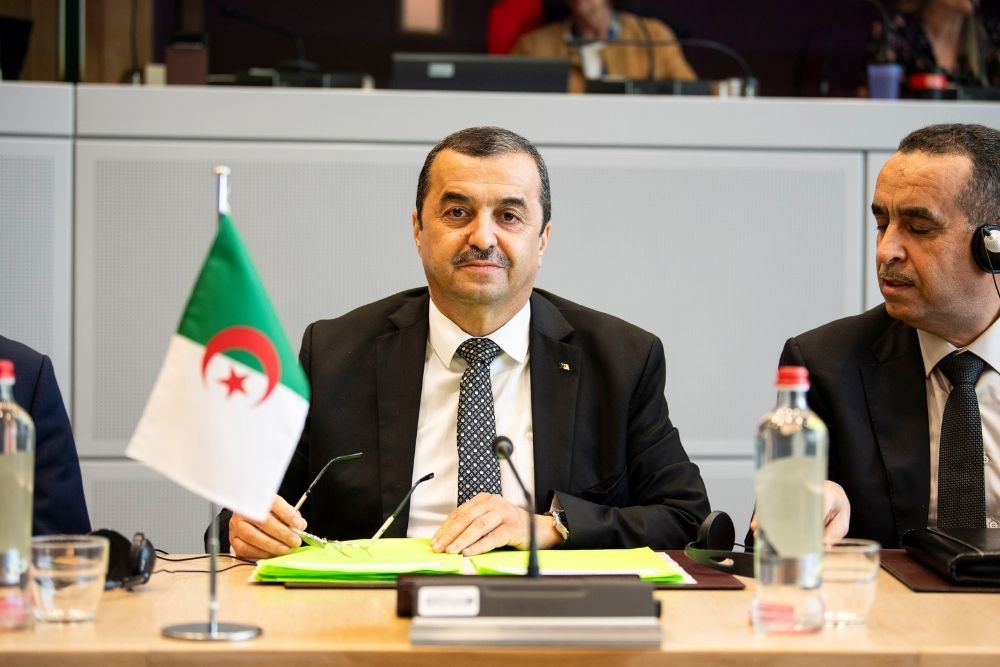
Algeria’s Sonatrach looking to store carbon by planting 420 million trees
The Algerian Minister of Energy and Mines, Mohamed Arkab, has announced a significant carbon storage project planned by the Algerian state energy company, Sonatrach. The project aims to plant approximately 420 million trees over the course of 10 years, with an estimated…
U.S. and China turn port access into a new front in industrial policy
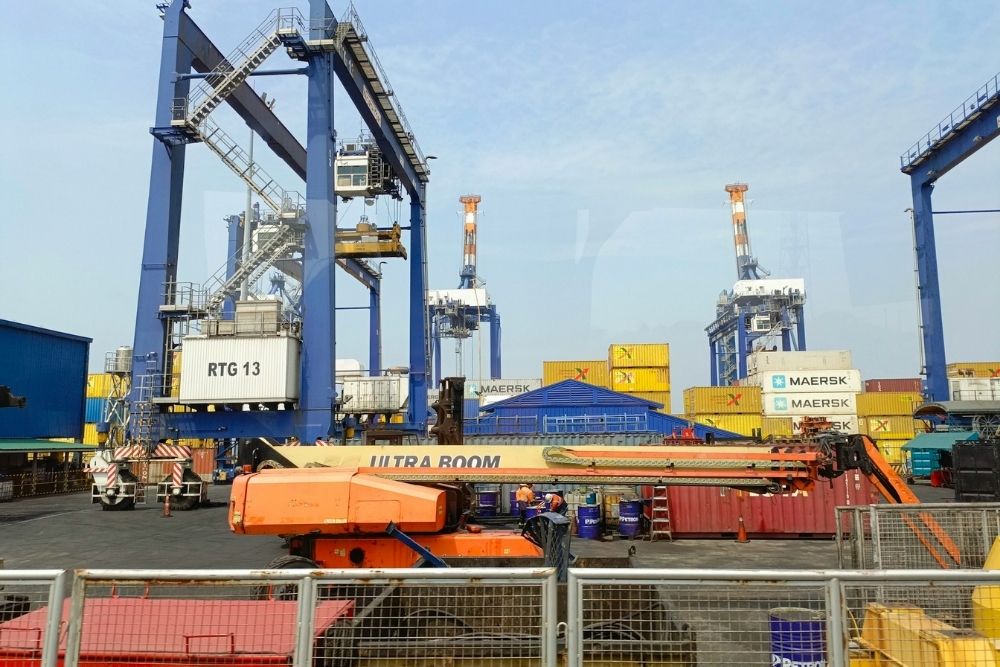
Washington just turned port access into an industrial policy tool, and Beijing immediately mirrored the move. U.S. Customs has begun collecting fees on Chinese-built and Chinese-operated merchant ships calling at American ports, with the White House pitching the revenue as seed money for a domestic shipbuilding revival, even though no legal funding channel exists yet to route those proceeds to yards.
China’s counter came within days: a proposed levy on any vessel with 25% or more U.S. ownership or control entering Chinese harbors, paired with fresh threats to curb critical-mineral exports. Markets lurched as shipowners froze provisional bookings and traders tried to reprice voyage economics in real time.
Iran conflict reprices energy as chokepoint risk, not scarcity
Iran war is accelerating a structural change in how energy is priced, secured and politicized. Energy dominance, the US shift from a large net importer to a net exporter, has given Washington more freedom to take geopolitical risks that would have been far harder to justify in an era of import dependence.
In doing so, the US is moving from the post-war role of underwriting energy security (keeping sea lanes open, deterring regional escalation) toward being a more active source of turbulence, willing to use hydrocarbons and access to them as tools of statecraft. That shift is also rewriting the meaning of ESG: away from environmental and social branding toward a harder-edged triad of economics, security and geopolitics as the dominant lens for energy decisions.