
Exxon and partners to spend $12.93 billion for sixth Guyana offshore oil project
- August 22, 2023
- Posted by: Quatro Strategies
- Categories: Americas, Oil & Gas
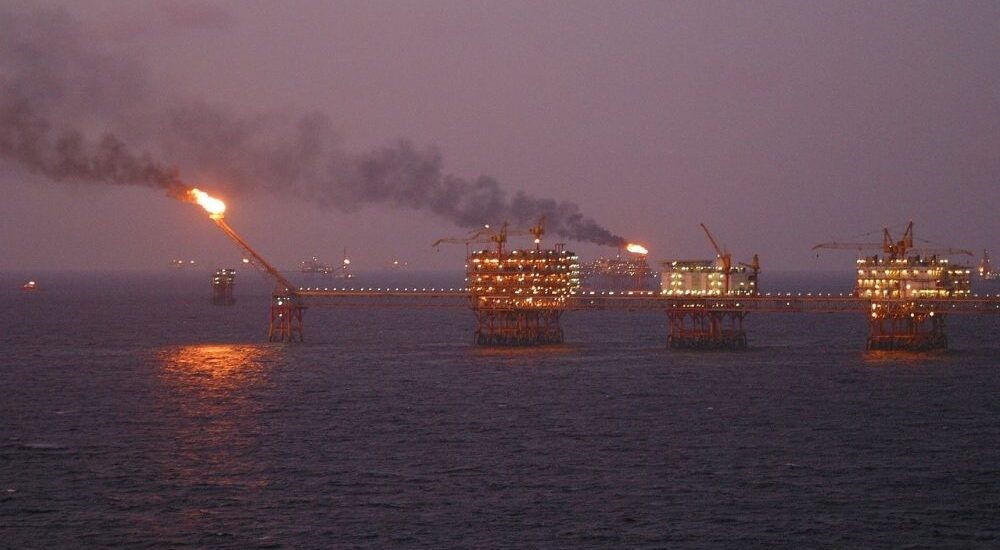
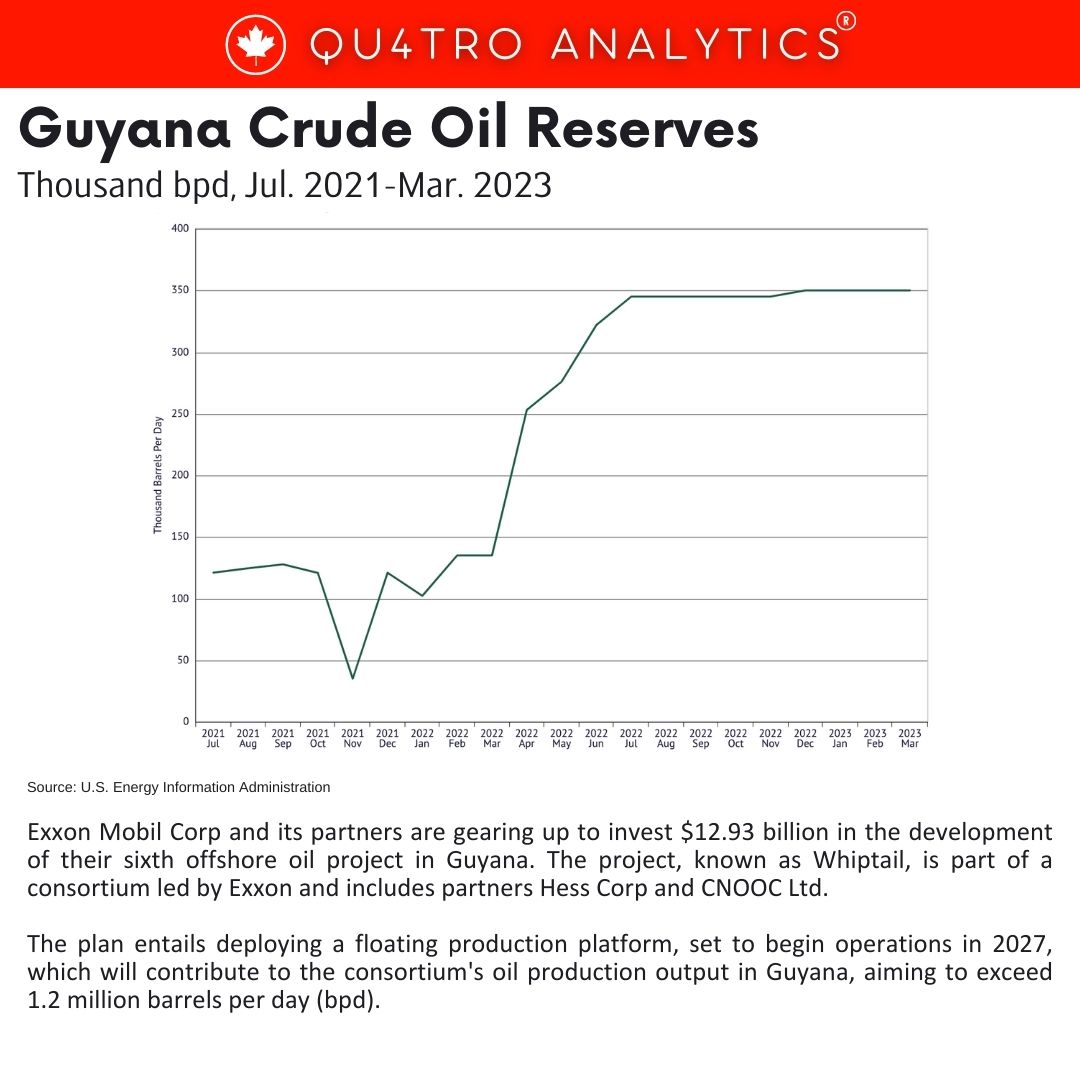
Exxon Mobil Corp and its partners are gearing up to invest $12.93 billion in the development of their sixth offshore oil project in Guyana. The project, known as Whiptail, is part of a consortium led by Exxon and includes partners Hess Corp and CNOOC Ltd. The plan entails deploying a floating production platform, set to begin operations in 2027, which will contribute to the consortium’s oil production output in Guyana, aiming to exceed 1.2 million barrels per day (bpd).
Guyana has recently emerged as a major player in the global oil industry with substantial discoveries totaling over 11 billion barrels of oil and gas. Exxon and its partners have already achieved an output of 400,000 bpd from two vessels in the region. The new Whiptail project, following the model of the Uaru project, is anticipated to add to this production capacity, contributing significantly to the country’s growing oil revenue.
 Exxon, Hess, and CNOOC have committed substantial financial resources to the development of Guyana’s offshore oil sector. The investments have also led to substantial direct revenue for the country, totaling $2.8 billion, and the creation of job opportunities for thousands of Guyanese citizens.
Whiptail’s plan does not involve the production of natural gas due to concerns that reducing injected gas could adversely impact oil recovery. The consortium plans to drill around 72 wells and commence development drilling by late 2024, with subsea component installation beginning in the second half of 2025 or early 2026. The project is expected to generate employment opportunities for up to 540 people during the drilling and installation phase, and around 100 to 180 people during the production operations phase.
Interested in learning more?
Sign up for Top Insights Today

Top Insights Today delivers the latest insights straight to your inbox.
You will get daily industry insights on
Oil & Gas, Rare Earths & Commodities, Mining & Metals, EVs & Battery Technology, ESG & Renewable Energy, AI & Semiconductors, Aerospace & Defense, Sanctions & Regulation, Business & Politics.
Read more insights

China rolls out coordinated stimulus to lift consumption without direct handouts
China’s leadership is trying to engineer a stronger, consumption-led start to 2026 by coupling fiscal money with directed credit in a single, coordinated push, an approach that reflects both urgency about near-term momentum and recognition that traditional, investment-heavy stimulus has diminishing returns.
At a State Council meeting chaired by Premier Li Qiang on Friday, the cabinet discussed implementing a package that blends budgetary tools and financial sector incentives to “expand effective demand,” with an explicit emphasis on lifting household consumption through cheaper credit, more service-sector financing, and an expanded supply of “high-quality services,”.

EU approves weaker sustainability rules in major competitiveness pivot
The EU’s final approval of watered-down corporate sustainability rules is a significant political and regulatory turning point, not just a technical amendment.
What Brussels has now done is formally narrow the reach of two flagship sustainability regimes, the Corporate Sustainability Due Diligence Directive (CSDDD) and the Corporate Sustainability Reporting Directive (CSRD), after a long period of lobbying pressure from industry, some member states, and external governments including the United States and Qatar.

Trump’s tariffs deepen petrochemical slump but force industry shakeout
The global petrochemicals industry is in the midst of one of its most severe downturns in decades, a slump that has been amplified by President Donald Trump’s tariff wars but rooted in a deeper structural imbalance: massive overcapacity. The sector, which converts oil-derived feedstocks such as naphtha, propane and ethane into plastics, has seen production expand far faster than consumption since 2022, dragging margins into negative territory and leaving even the largest producers struggling to break even.
The stakes are enormous. Plastics demand, for packaging, autos, electronics, and even renewable energy infrastructure like solar panels and wind turbine blades, is still expected to climb for decades as Asia’s middle class expands. That growth underpins forecasts from the International Energy Agency showing petrochemicals accounting for 95% of net oil demand growth between 2019 and 2024 and an additional 2.1 million barrels per day of feedstock demand growth by 2030.