
India to award $452 million for battery storage projects
- September 7, 2023
- Posted by: Quatro Strategies
- Categories: EVs & Battery Technology, India
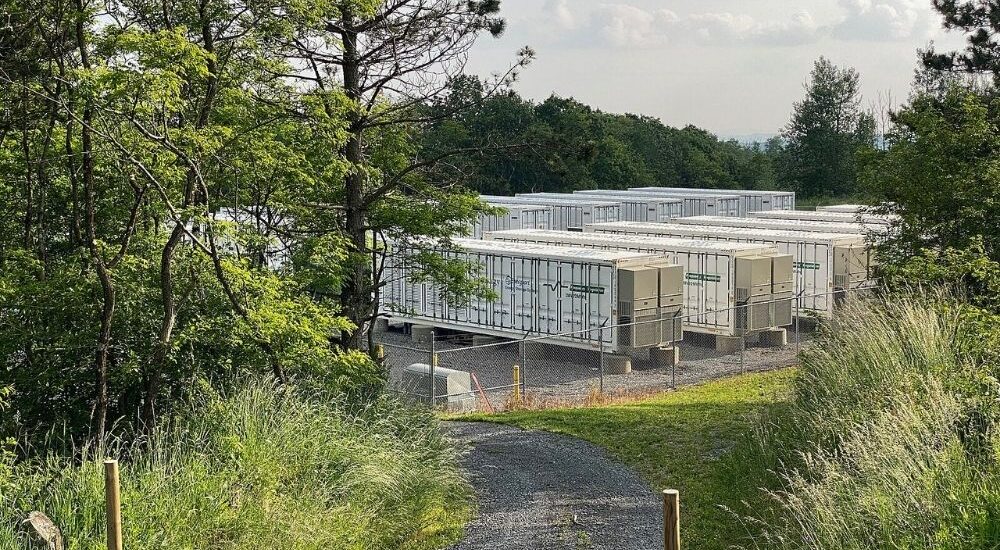
India is offering $452 million in incentives to companies to encourage the development of battery storage projects. This initiative is part of India’s efforts to expand its green energy capacity and achieve its goal of reaching 500 gigawatts (GW) of renewable energy capacity by 2030, up from the current 178 GW.
Battery storage projects are crucial for storing energy generated from renewable sources like solar and wind, enabling it to be used when demand is high.
The program aims to support a storage capacity of 4,000 megawatt hours (MWh) by 2030-31. Indian conglomerates such as Reliance Industries, Adani Power, and JSW Energy have expressed plans to establish large-scale battery manufacturing plants.
The government will provide viability gap funding, which includes incentives to cover risks for developers of critical infrastructure projects that may be economically unviable. This funding will be provided in the form of grants. The federal cabinet approved the program, with incentives of up to 40% of capital costs available to companies establishing manufacturing units.
India currently has 37 MWh of battery storage capacity, and this initiative is expected to significantly boost the country’s energy storage capabilities, making it better equipped to integrate renewable energy into its power grid.
Interested in learning more?
Sign up for Top Insights Today

Top Insights Today delivers the latest insights straight to your inbox.
You will get daily industry insights on
Oil & Gas, Rare Earths & Commodities, Mining & Metals, EVs & Battery Technology, ESG & Renewable Energy, AI & Semiconductors, Aerospace & Defense, Sanctions & Regulation, Business & Politics.
Read more insights
BYD is turning Europe’s tariff wall into an investment strategy
BYD’s plan to launch a heavy-duty electric truck in Europe next year and eventually manufacture trucks locally marks an important expansion of Chinese competition into one of the continent’s most strategically important industrial markets. The company is no longer positioning itself simply as an exporter of electric vehicles. It wants to become a local European manufacturer with an integrated commercial ecosystem covering vehicles, financing, charging infrastructure, maintenance and roadside support.
That distinction matters because heavy trucks are a very different market from passenger cars. Fleet operators are less influenced by branding and consumer sentiment and more concerned with total cost of ownership, vehicle uptime, charging availability, financing, maintenance and residual value. BYD’s decision to offer a full package rather than just a truck suggests it understands that competing successfully in commercial vehicles requires control over the broader operating system around the vehicle.

Hedge funds dive into cobalt market amid record price slump
Hedge funds, including Anchorage Capital Advisors and Squarepoint Capital LLP, are taking advantage of falling cobalt prices and the increasing liquidity of the futures market by investing in physical cobalt. This move comes as cobalt prices have dropped to their lowest in over seven years due to an oversupply driven by…
Wall Street rebrands climate finance as AI-era energy security
New York’s climate week has never been larger, and yet the mood among financiers has rarely felt more distant from the old rhetoric of “greening” balance sheets. Bankers who once spoke in the grammar of net-zero pledges now frame their deal pipelines around two imperatives that feel politically safer and commercially clearer: securing enough power for the artificial-intelligence boom and hardening the grid for reliability.
The upshot is a decisive pivot away from portfolio “decarbonization” as a headline goal and toward bankable energy supply, with lenders stressing projects that can clear today’s cost of capital without relying on soft benefits or reputational lift.