
Iran’s oil exports surging despite U.S. sanctions
- September 1, 2023
- Posted by: Quatro Strategies
- Categories: Middle East, Oil & Gas, Sanctions & Regulation, United States
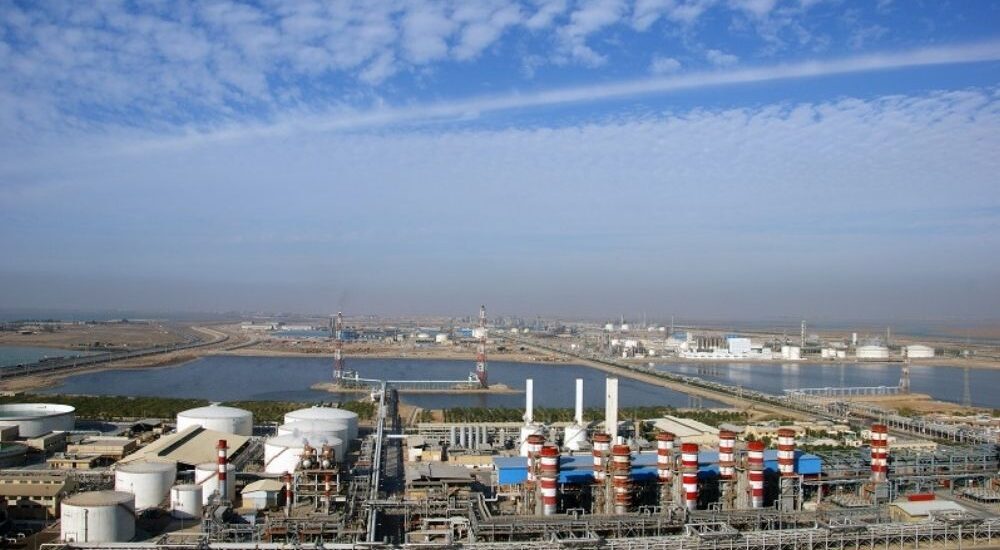
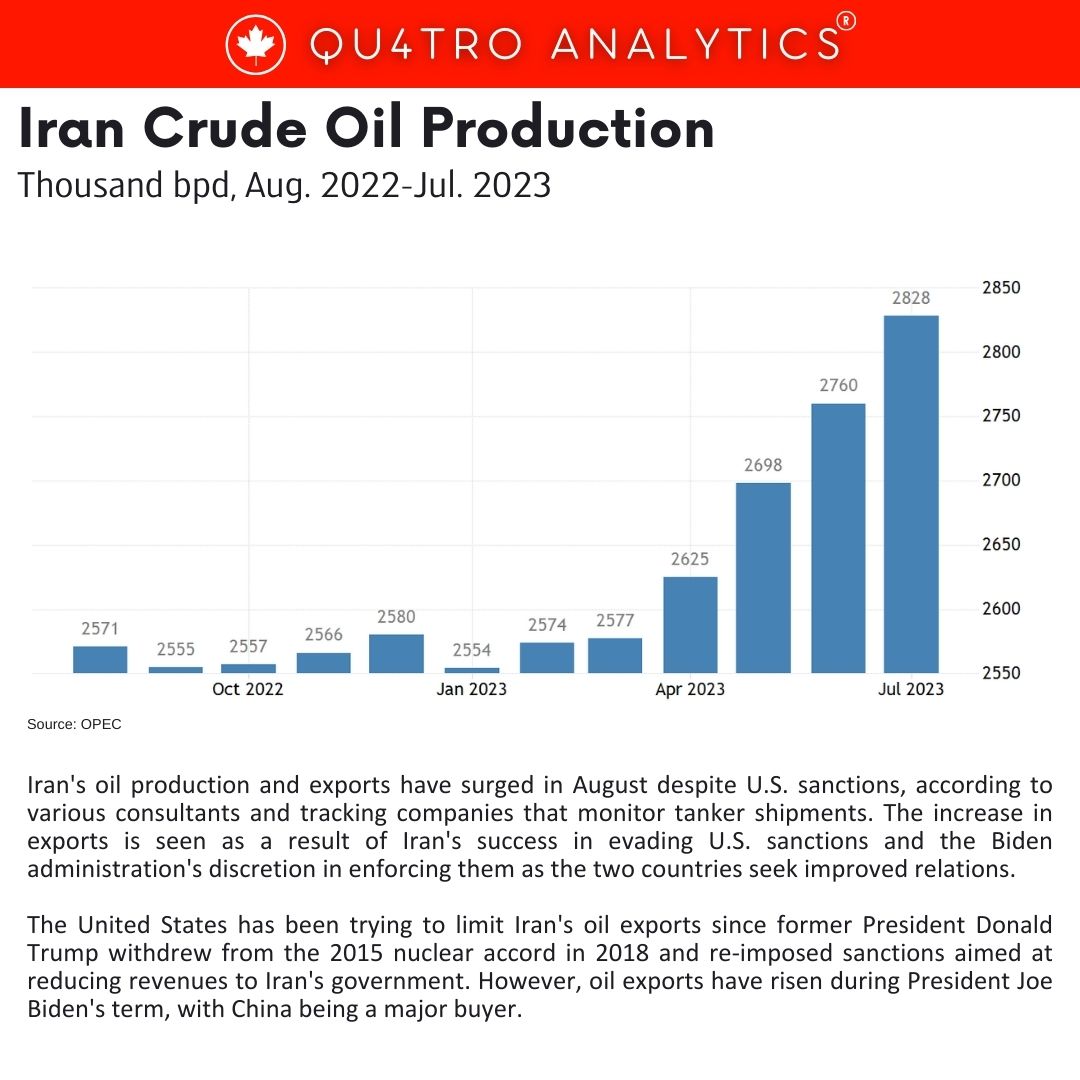
Iran’s oil production and exports have surged in August despite U.S. sanctions, according to various consultants and tracking companies that monitor tanker shipments. The increase in exports is seen as a result of Iran’s success in evading U.S. sanctions and the Biden administration’s discretion in enforcing them as the two countries seek improved relations.
The United States has been trying to limit Iran’s oil exports since former President Donald Trump withdrew from the 2015 nuclear accord in 2018 and re-imposed sanctions aimed at reducing revenues to Iran’s government. However, oil exports have risen during President Joe Biden’s term, with China being a major buyer.
Consultant SVB International estimates that Iran’s oil production increased in August to 3.15 million barrels per day (bpd), the highest since 2018, with crude oil and condensate exports at just under 2 million bpd. Other tracking companies provided similar estimates.
The Biden administration is currently in talks with Iran over a potential agreement involving the release of five U.S. citizens by Iran and the unfreezing of $6 billion in Iranian funds in South Korea.
 Experts suggest that Iran has been successful in evading oil sanctions through methods such as ship-to-ship transfers and manipulating GPS transponders to obscure ship positions. Iran has also offered significant discounts on its oil shipments to China to encourage increased purchases.
Iranian oil is also believed to be finding its way to countries like Syria and Venezuela. If Iran’s oil production reaches 3.15 million bpd, it would be the highest level since 2018.
TankerTrackers.com, a company that monitors oil shipments, estimates that Iran’s crude and condensate exports averaged 1.92 million bpd in the first 27 days of August. This would be the highest monthly rate this year.
While the exact figures may vary among tracking companies, the overall trend suggests that Iran is significantly increasing its oil exports despite U.S. sanctions and ongoing efforts to limit them.
Interested in learning more?
Sign up for Top Insights Today

Top Insights Today delivers the latest insights straight to your inbox.
You will get daily industry insights on
Oil & Gas, Rare Earths & Commodities, Mining & Metals, EVs & Battery Technology, ESG & Renewable Energy, AI & Semiconductors, Aerospace & Defense, Sanctions & Regulation, Business & Politics.
Read more insights
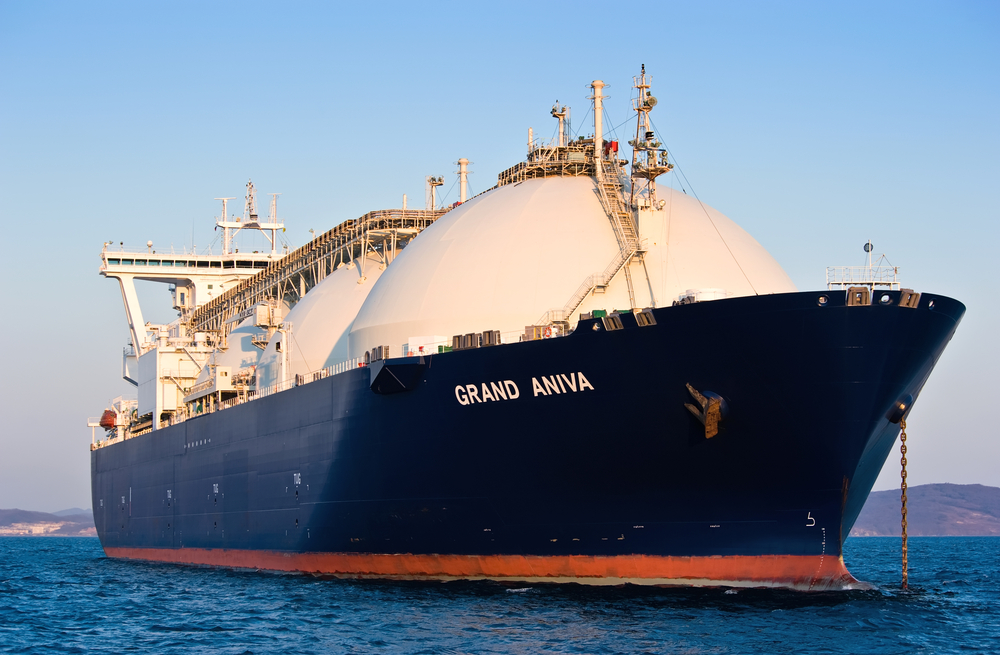
Price-driven demand boom boosts spot LNG imports in Asia
The recent decrease in liquefied natural gas (LNG) prices to their lowest level in nearly three years has led to a surge in spot shipments to price-sensitive buyers in China, India, and parts of Southeast Asia. This price-driven demand revival is expected to surpass previous import records…
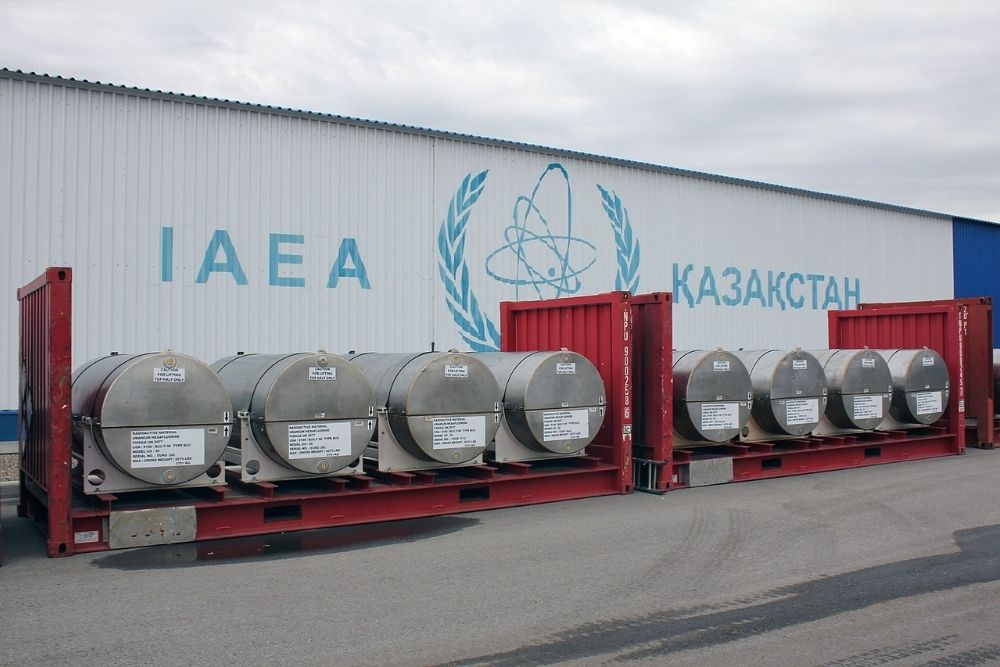
Renewed popularity of nuclear energy pushes uranium prices soaring
Uranium prices are experiencing a remarkable surge and are anticipated to continue their upward trajectory, potentially ending the year more than 50% higher than their current levels. This surge is propelled by mounting concerns about climate change and the world’s increasing shift towards cleaner energy sources, particularly nuclear power.
Lithium prices face more pressure as CATL restarts Yichun Refinery
China’s Jiangsu Lopal Tech Co. and Contemporary Amperex Technology Co. Ltd. (CATL) have resumed operations at their lithium carbonate refinery in Yichun, Jiangxi province, after a five-month production halt, adding further downward pressure on already depressed lithium prices…