
Korean and Chinese rare earths magnet firms looking to open plants in Vietnam
- August 23, 2023
- Posted by: Quatro Strategies
- Categories: Asia Pacific, China, Rare Earths & Commodities
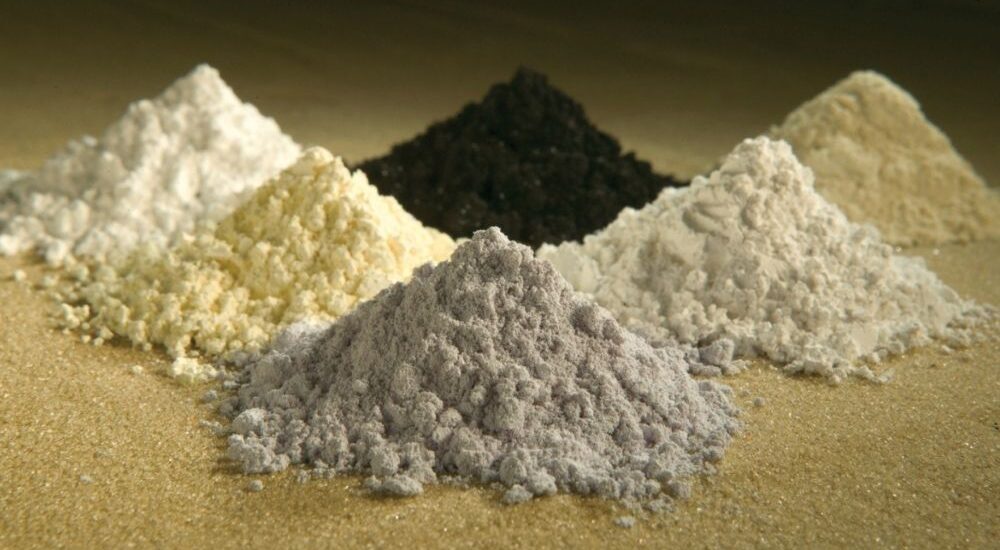
Korean and Chinese magnet manufacturers, including a supplier for Apple, are reportedly exploring the establishment of factories in Vietnam, signaling a trend of diversifying supply chains away from China. This move comes as companies seek to mitigate the risks of trade restrictions and disruptions caused by increasing trade tensions between China and other countries. The shift in assembly lines to Vietnam is particularly notable in the magnet manufacturing sector due to China’s dominant position in producing magnets and the rare earth metals they are made from. Magnets, especially neodymium magnets, are crucial components used in various products such as electric vehicles, wind turbines, weapons, and smartphones.
South Korea’s Star Group Industrial (SGI) and China’s Baotou INST Magnetic are among the companies considering the move to Vietnam. SGI’s Vietnam project, scheduled for 2025, aims to produce high-end neodymium (NdFeB) magnets, with a potential output of 5,000 tons per year, sufficient for around 2 million electric vehicles. Vietnam possesses significant rare earth deposits, second only to China’s, and has a growing processing industry, positioning it as a potential competitor to China’s dominance in the magnet sector.
However, Vietnam’s current magnet production capacity remains limited, contributing just 1% of the world’s magnets, as per data from Adamas Intelligence cited in a U.S. Department of Energy report. In contrast, China controls about 92% of the global magnet production. Despite this, the rise of magnet manufacturing in Vietnam is noteworthy. For instance, SGI’s project could contribute nearly 3% of the 2022 global output of neodymium magnets, which is estimated by critical materials consultancy Project Blue. This equates to almost half of the United States’ imports of neodymium magnets in 2021.
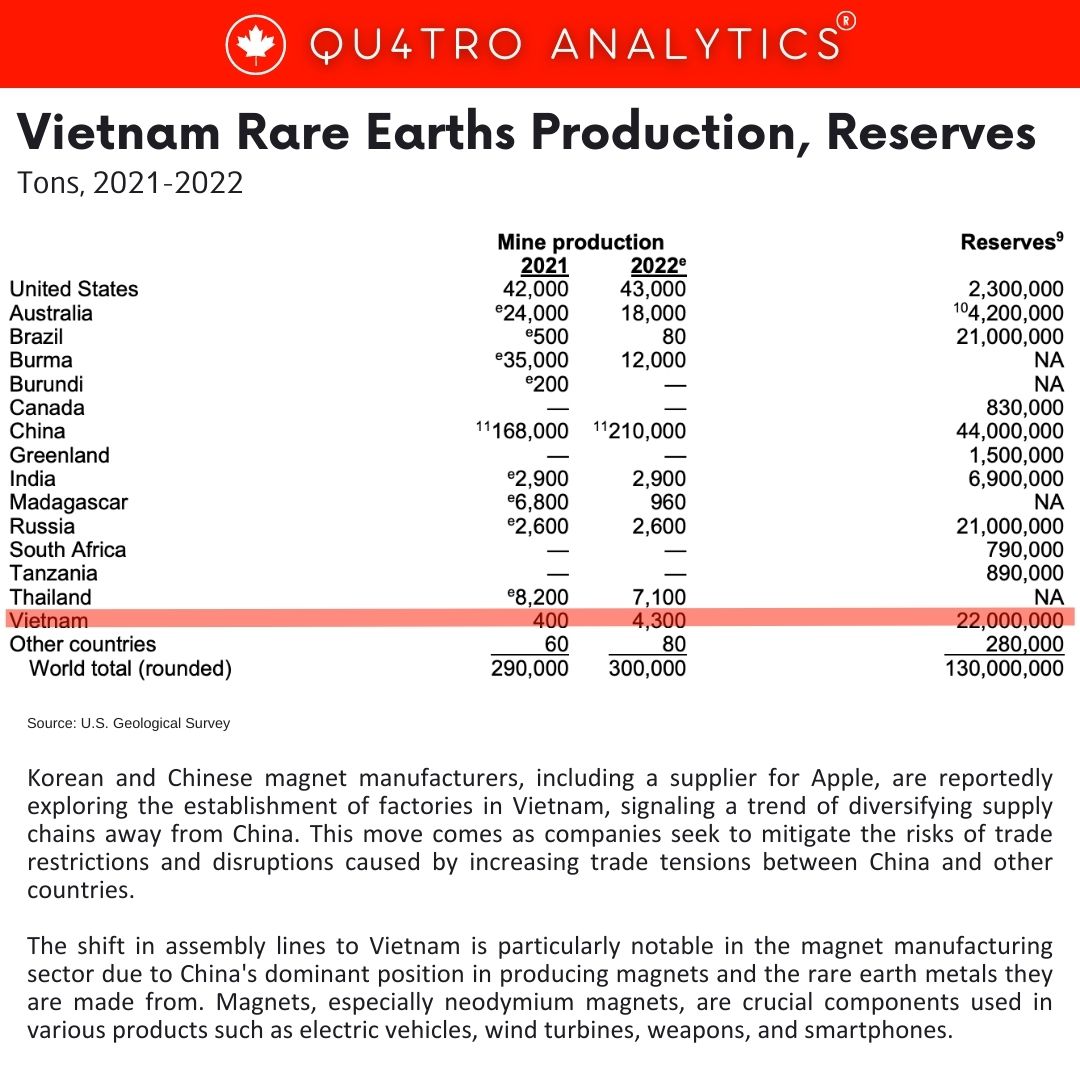 Several factors are driving magnet manufacturers to consider Vietnam as a location for their production. These include Vietnam’s low labor costs, access to markets through multiple free-trade agreements, and proximity to Vietnam-based clients such as automakers and electronics firms. Additionally, companies are seeking to diversify their supply chains away from China to reduce over-reliance on Chinese supplies, especially due to growing trade tensions and concerns about geopolitical risks.
The Vietnamese government is also playing a role in promoting the growth of the rare earth sector. The government is planning to expand rare earths production significantly by the end of the decade and boost refining capacity. However, experts note that building a complete mine-to-magnet supply chain from scratch poses challenges.
Overall, the shift of magnet manufacturing to Vietnam represents a significant development in the broader context of global supply chain diversification efforts, driven by geopolitical factors, trade tensions, and the need to secure critical resources for various industries.
Interested in learning more?
Sign up for Top Insights Today

Top Insights Today delivers the latest insights straight to your inbox.
You will get daily industry insights on
Oil & Gas, Rare Earths & Commodities, Mining & Metals, EVs & Battery Technology, ESG & Renewable Energy, AI & Semiconductors, Aerospace & Defense, Sanctions & Regulation, Business & Politics.
Read more insights
U.S. HALEU bottleneck threatens next-gen reactor ambitions
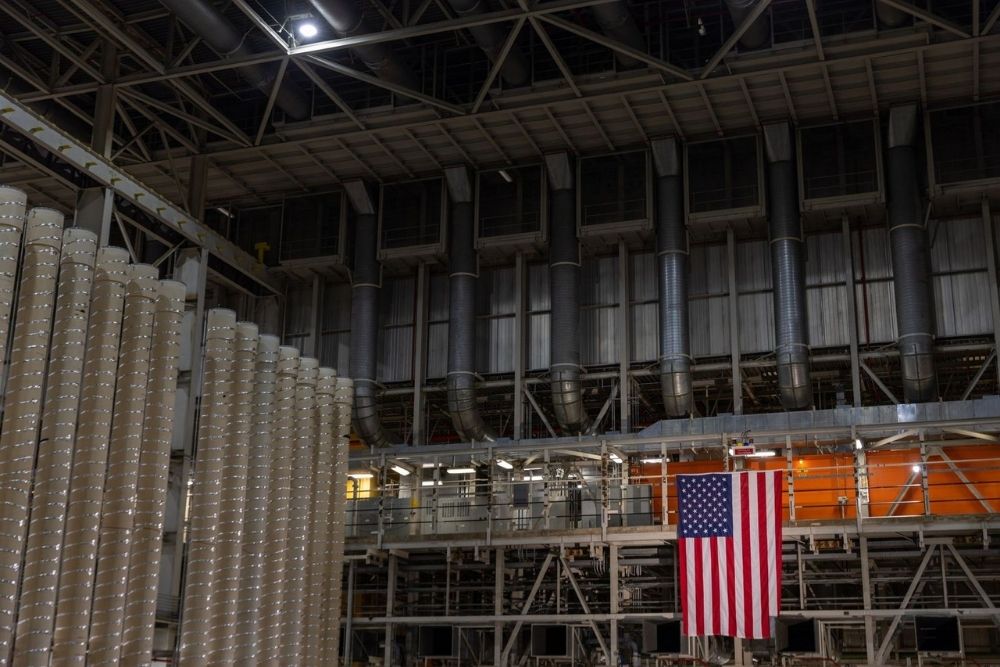
Centrus Energy’s sprawling enrichment complex in Piketon, Ohio, looks like a symbol of American nuclear ambition waiting to be realized. The facility was designed to house 11,000 centrifuges, yet today only 16 are in operation, spinning out small quantities of high-assay low-enriched uranium, or HALEU.
That modest beginning underscores the paradox of the moment: while demand for nuclear fuel remains limited, political momentum and industrial interest suggest that the United States could soon be entering a new nuclear age, and HALEU may be its most critical ingredient.
CATL fuses upstream control into its EV battery moat under a stricter regulatory regime
China just put a price tag on CATL’s route back into one of its most important raw-material assets. Jiangxi’s natural resources department disclosed that Contemporary Amperex Technology Co. Ltd. must pay 247 million yuan (about $35 million) for the mining rights to the Jianxiawo deposit in Yichun, an administrative step required before regulators will reissue the license and allow operations to resume.
Jianxiawo has been idle since a permit lapsed on August 9, a pause that injected fresh uncertainty into lithium supply at a time when Beijing is tightening oversight of the entire battery-materials chain. The fee is a precondition for restarting; the province’s valuation report also reveals a curious wrinkle: the 2022 asset appraisal was pegged to kaolinite, not lithium, reflecting how quickly Yichun’s clay-hosted resources have leapt from industrial afterthought to strategic prize.
Equinor, Orsted, and Eversource secures contracts for New York offshore wind projects
The New York State Energy Research and Development Authority (NYSERDA) announced on Tuesday that it has finalized contracts for Equinor’s Empire Wind 1, as well as Orsted’s and Eversource’s Sunrise Wind offshore wind projects. In February, NYSERDA awarded conditional contracts to purchase electricity…