
Mali suspends lithium shipping operations
- September 5, 2023
- Posted by: Quatro Strategies
- Categories: Africa, Mining & Metals, Rare Earths & Commodities
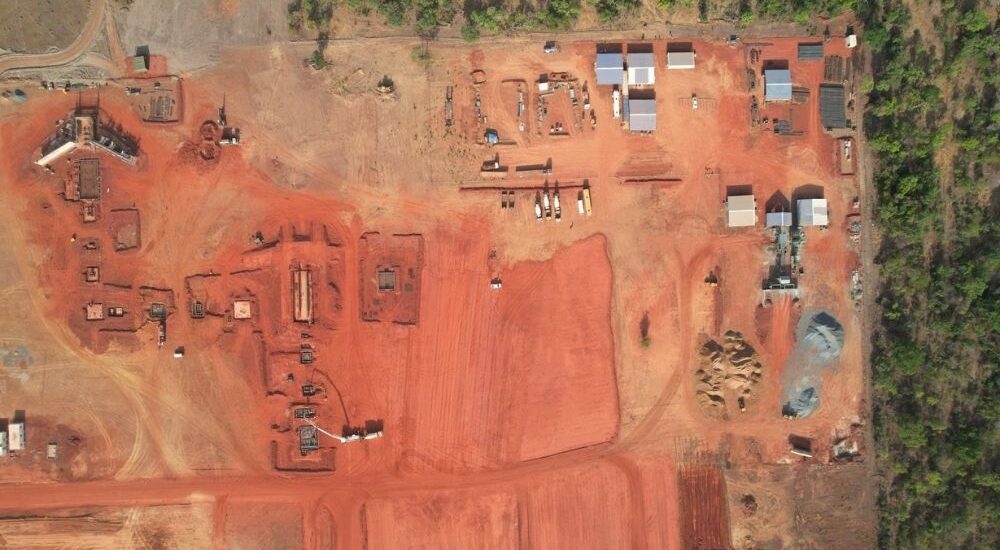
Australian mining company Leo Lithium Ltd. has announced that Mali has suspended operations involving unrefined lithium ore from the Goulamina project, a joint venture with China’s Ganfeng Lithium Group Co. Crushing of direct shipping ore (DSO), an unprocessed form of lithium ore, has been halted immediately, pending discussions with Mali’s Ministry of Mines.
This suspension will not delay any aspect of the Goulamina project, which remains on schedule for spodumene concentrate production in the second quarter of 2024. Mining activities continue according to the pre-existing plan, and mined ore is being stockpiled.
The decision to halt DSO operations comes after correspondence from the Malian mines ministry on July 17 regarding DSO, the status of the government’s 10% stake in the project, and overall project progress. Mali has also established a commission to examine these matters.
Leo Lithium had originally planned to export up to 139,000 tons of unrefined lithium ore before beginning to ship concentrate next year.
The Goulamina project aims to become Mali’s first producing lithium project and is one of the largest resources of lithium-bearing spodumene under development. This development is of significant interest as global demand for lithium, a key component in batteries, continues to grow.
The suspension of DSO operations appears to be related to issues concerning the government’s stake and the processing of lithium resources within Mali. There is a growing trend among resource-rich nations to encourage domestic processing of minerals to add more value to their economies rather than exporting unprocessed materials. Mali, known for its large gold mining industry, is seemingly looking to follow this trend with its lithium resources.
Interested in learning more?
Sign up for Top Insights Today

Top Insights Today delivers the latest insights straight to your inbox.
You will get daily industry insights on
Oil & Gas, Rare Earths & Commodities, Mining & Metals, EVs & Battery Technology, ESG & Renewable Energy, AI & Semiconductors, Aerospace & Defense, Sanctions & Regulation, Business & Politics.
Read more insights
Iran conflict reprices energy as chokepoint risk, not scarcity
Iran war is accelerating a structural change in how energy is priced, secured and politicized. Energy dominance, the US shift from a large net importer to a net exporter, has given Washington more freedom to take geopolitical risks that would have been far harder to justify in an era of import dependence.
In doing so, the US is moving from the post-war role of underwriting energy security (keeping sea lanes open, deterring regional escalation) toward being a more active source of turbulence, willing to use hydrocarbons and access to them as tools of statecraft. That shift is also rewriting the meaning of ESG: away from environmental and social branding toward a harder-edged triad of economics, security and geopolitics as the dominant lens for energy decisions.
Logistics surge as temporary U.S.-China tariff truce sparks shipping frenzy
A temporary easing of trade tensions between the United States and China has set off a rapid surge in Chinese export activity, as manufacturers and logistics operators rush to capitalize on a narrow window of reduced tariffs before the 90-day truce expires. The spike, concentrated in mid-May, is the clearest signal yet of the disruptive influence of President Donald Trump’s trade policies on global commerce and the fragility of U.S.-China supply chains.
In the week starting May 12—just as Washington and Beijing agreed to temporarily scale back tariffs—bookings on vessels departing China for the U.S. more than doubled to 228,000 TEUs (twenty-foot equivalent units). That’s a sharp rebound after weeks of cautious inventory management amid tariff uncertainty.
Teck’s germanium push aims to fortify U.S.-Canada critical mineral alliance
Teck Resources, one of the leading producers of germanium outside China, is actively exploring an expansion of its production capacity amid growing geopolitical competition over strategic minerals. The Vancouver-based miner is currently in discussions with both the Canadian and U.S. governments regarding potential public funding to support this effort.
The push by Teck to scale up germanium output comes at a time when Western governments are increasingly prioritising the development of secure supply chains for critical minerals essential to modern technologies, including semiconductors, telecommunications, defence systems, and clean energy infrastructure.