
Shell looking to invest in Indian renewable assets
- September 22, 2023
- Posted by: Quatro Strategies
- Categories: ESG & Renewable Energy, India

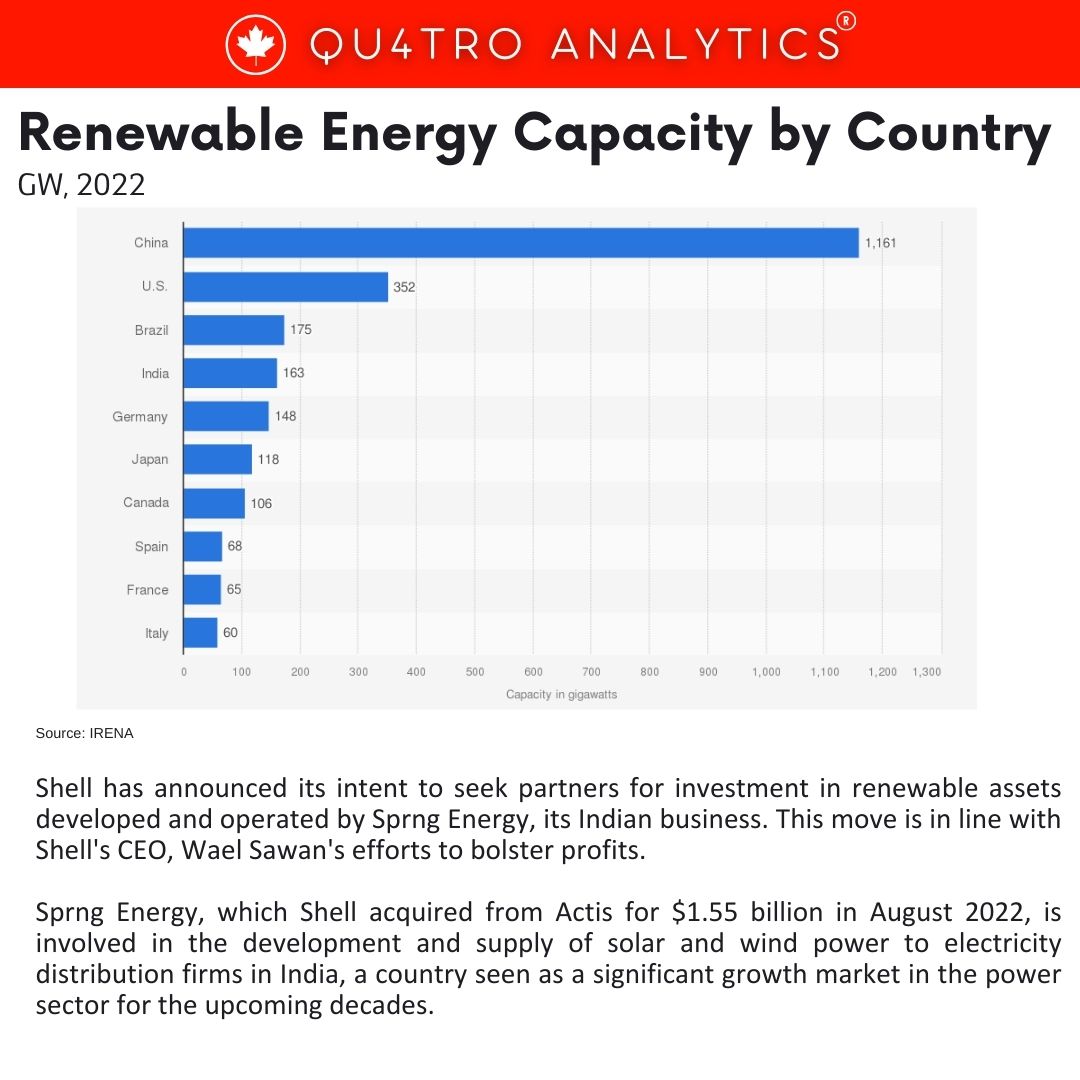
Shell has announced its intent to seek partners for investment in renewable assets developed and operated by Sprng Energy, its Indian business. This move is in line with Shell’s CEO, Wael Sawan’s efforts to bolster profits. Sprng Energy, which Shell acquired from Actis for $1.55 billion in August 2022, is involved in the development and supply of solar and wind power to electricity distribution firms in India, a country seen as a significant growth market in the power sector for the upcoming decades.
Shell expressed its ongoing commitment to developing new projects within the Sprng Energy group while actively exploring partnership opportunities with investors eager to invest in de-risked operational assets. The objective is to have Shell retain a stake in these assets. By focusing on capital discipline, Shell aims to accelerate the growth of its renewables portfolio.
 Sawan’s strategy involves enhancing Shell’s performance and returns, which includes a strengthened emphasis on oil and gas operations and a reduction in certain investments in renewables. Recent actions reflecting this strategy include the sale of Shell’s UK power retail business, putting two refineries in Singapore and Germany under strategic review, and exiting several low-carbon projects.
However, this strategy has faced criticism from climate-focused investors, and there has been notable personnel change within Shell’s renewable generation division, with Thomas Brostrom, the head of renewable generation, leaving the company in June.
By QUATRO Strategies International Inc.
QUATRO Strategies International Inc. is the leading business insights and corporate strategy company based in Toronto, Ontario. Through our unique services, we counsel our clients on their key strategic issues, leveraging our deep industry expertise and using analytical rigor to help them make informed decisions to establish a competitive edge in the marketplace.
Interested in learning more?
Sign up for Top Insights Today

Top Insights Today delivers the latest insights straight to your inbox.
You will get daily industry insights on
Oil & Gas, Rare Earths & Commodities, Mining & Metals, EVs & Battery Technology, ESG & Renewable Energy, AI & Semiconductors, Aerospace & Defense, Sanctions & Regulation, Business & Politics.
Read more insights

Venezuela set for crucial milestone to ease sanctions
Venezuela’s government and opposition are set to resume talks, marking a potentially pivotal step toward a resolution to the country’s enduring political and economic crisis. President Nicolas Maduro announced that these discussions, scheduled to take place in Barbados, would…
Trump slaps Brazil with 50% tariff after Lula feud
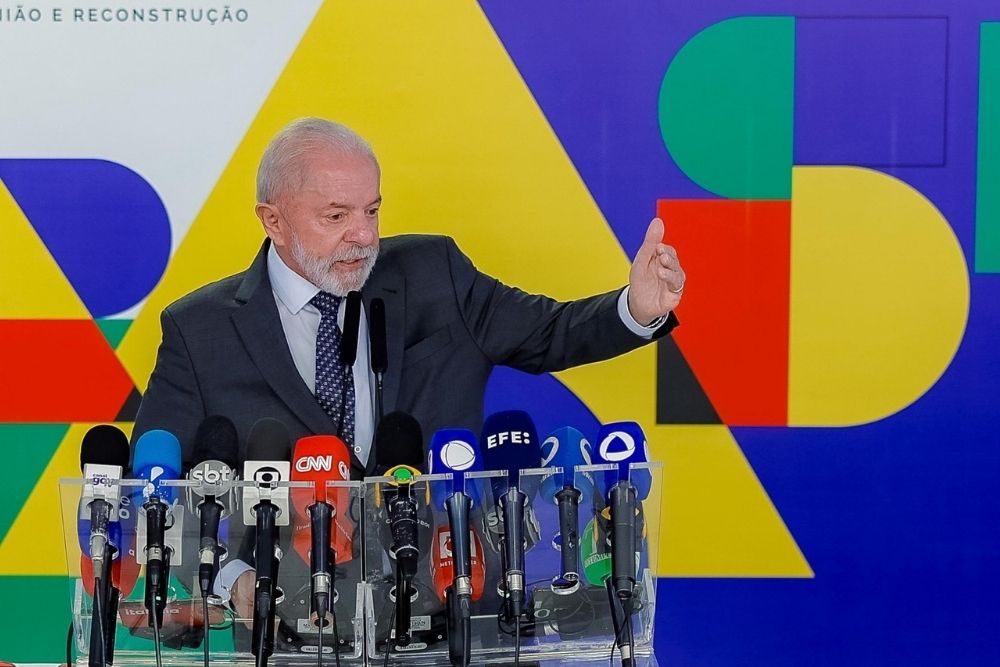
President Donald Trump has dramatically escalated a brewing trade clash with Brazil, announcing the United States will impose a 50% tariff on all imports from Latin America’s largest economy starting August 1. The move comes after a public spat with Brazilian President Luiz Inácio Lula da Silva, who blasted Trump earlier this week as an unwanted “emperor,” underscoring how personal politics and ideological divides are reshaping critical trade relationships.
Trump’s surprise declaration, made Wednesday via a sharply worded letter, tied the sweeping new tariffs not just to economic concerns but also to Brazil’s domestic politics — accusing Lula’s administration of persecuting former President Jair Bolsonaro, a right-wing populist and close Trump ally, who faces charges of conspiring to overturn Lula’s 2022 election victory.
Trade war ripples hit China’s commodity demand even before U.S. tariffs bite
China’s imports of key commodities mostly declined in March compared to a year earlier, underscoring how the country’s slowing economy and intensifying trade tensions with the U.S. were already sapping demand even before President Donald Trump’s sweeping tariffs in early April brought bilateral trade to a near standstill.
March was the final full month of relatively open trade before Trump imposed a 145% blanket tariff on Chinese goods, and the data reflects the early tremors in China’s industrial engine — as well as disruptions triggered by Beijing’s own retaliatory tariffs on U.S. energy in February and agriculture in March.