
Tesla’s superchargers becoming industry standard as more automakers adopting them
- August 21, 2023
- Posted by: Quatro Strategies
- Categories: EVs & Battery Technology, Sanctions & Regulation, United States
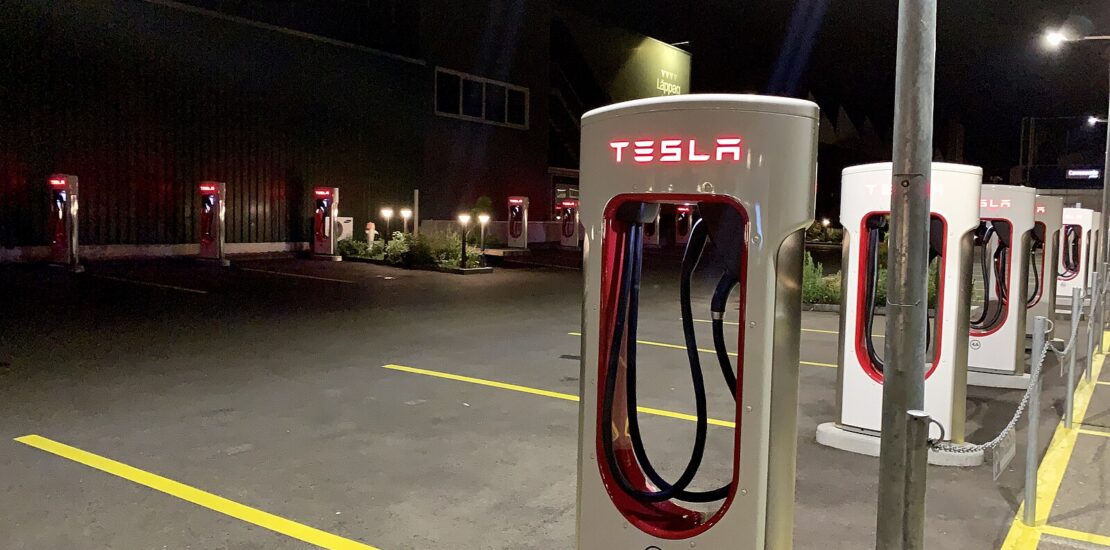
An increasing number of automakers are partnering with Tesla to utilize its electric vehicle (EV) charging infrastructure across the United States. This trend is moving Tesla’s superchargers closer to becoming the industry standard for charging EVs.
In Texas, a plan has been approved that mandates EV charging companies to incorporate Tesla’s charging plug in their networks if they want to be eligible for federal funds related to electric vehicle infrastructure.
Tesla’s North American Charging Standard is gaining prominence due to its wide availability and reliability compared to competing charging networks. This comes in contrast to the Combined Charging System (CCS), which is supported by other automakers such as Volkswagen and Hyundai. Tesla’s robust network and standardized charging system offer convenience and compatibility to a growing number of electric vehicle users.
This move signifies a broader industry shift towards collaboration and standardization in electric vehicle charging infrastructure, making it more convenient and accessible for EV owners across different car brands.
Since May of this year, eight automakers, including Ford, General Motors, Mercedes-Benz, Volvo and Nissan; and eight EV charger manufacturers have announced the adoption of Tesla superchargers.
Meanwhile, four U.S. states have either mandated automakers to adopt Tesla standard or plan to if they want to benefit from federal funds. Texas and Kentucky have already approved plans on that end, while Washington state and Florida are planning to.
Interested in learning more?
Sign up for Top Insights Today

Top Insights Today delivers the latest insights straight to your inbox.
You will get daily industry insights on
Oil & Gas, Rare Earths & Commodities, Mining & Metals, EVs & Battery Technology, ESG & Renewable Energy, AI & Semiconductors, Aerospace & Defense, Sanctions & Regulation, Business & Politics.
Read more insights

Philippines seeks stronger US and Western alliances for territorial safeguarding
The Philippines is proceeding with plans to establish defense alliances with the U.S. and its Western allies, aiming to enable the country to explore the oil-and-gas-rich South China Sea. Gilberto Teodoro, the Philippines’ Defense Secretary, emphasized the urgency of initiating these alliances…
U.S. tariffs on copper threaten key trade ties with Chile
The looming imposition of 50% U.S. tariffs on copper imports—set to take effect August 1—has sent shockwaves through global commodity markets and stirred uncertainty in Chile, the world’s largest copper producer and the top supplier of refined copper to the United States. Yet, as of mid-July, Chilean officials and Codelco, the state-owned copper giant, have still not received clarity on how the sweeping U.S. measures will be implemented.
At its core, the tariff move is a clear extension of President Donald Trump’s broader industrial and trade strategy, which prioritizes onshoring critical supply chains, including those tied to semiconductors, electrification, and defense. Copper, indispensable to electric vehicles, power grids, AI hardware, and missile systems, now joins the ranks of other “strategic materials” like rare earths and graphite that the U.S. is aggressively attempting to domesticate.
Vietnam looking for Aramco partnership for its oil refinery projects
Vietnam is actively seeking investment from Saudi Aramco in its petrochemical and oil refinery projects. The Vietnamese Prime Minister, Pham Minh Chinh, took the opportunity to discuss potential investment with Yasser M. Mufti, Aramco’s Vice President of Production and…