
U.S. firm Apache to invest $1.4 billion in Egypt’s energy sector
- August 22, 2023
- Posted by: Quatro Strategies
- Categories: Africa, Oil & Gas
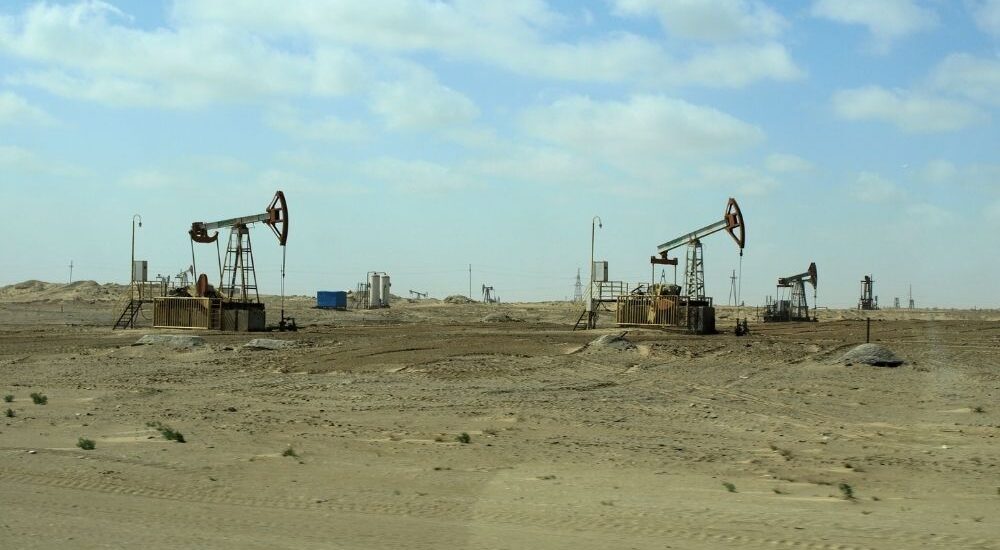
Apache Corporation has unveiled plans to invest $1.4 billion in Egypt’s energy industry next year. As one of the biggest foreign investors and the largest oil producer in Egypt, Apache’s investment aims to deepen its partnership with the country and expand its oil and gas exploration activities despite the global economic challenges.
The announcement was made during a meeting between Apache’s CEO John Christmann and Egyptian Prime Minister Mostafa Madbouly. The government of Egypt expressed hopes that Apache would continue to invest and increase its oil production in the country.
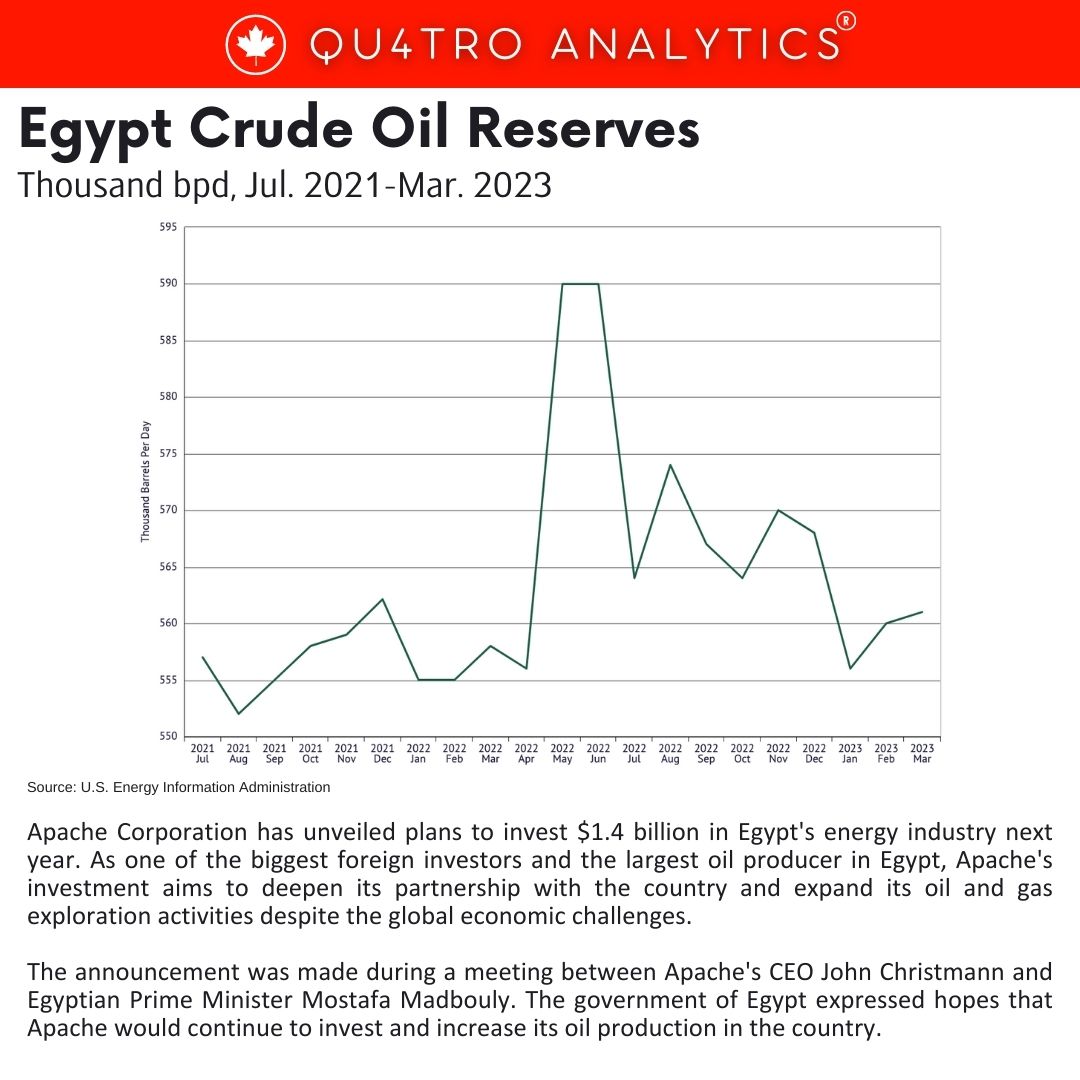 Apache has been operating in Egypt for more than 27 years and is a significant player in the country’s energy sector. With upgrades to its operations, Apache has managed to increase its oil production by 10% to over 150,000 barrels per day.
The company primarily focuses on the Western Desert region of Egypt, with exploration targets in both new and existing acreage. The company holds around 5.3 million gross acres across six separate concessions, with 68% of its acreage considered undeveloped, offering future exploration and development opportunities.
The recent investment commitment from Apache is part of its ongoing efforts to strengthen its presence in Egypt and contribute to the country’s energy development goals.
Interested in learning more?
Sign up for Top Insights Today

Top Insights Today delivers the latest insights straight to your inbox.
You will get daily industry insights on
Oil & Gas, Rare Earths & Commodities, Mining & Metals, EVs & Battery Technology, ESG & Renewable Energy, AI & Semiconductors, Aerospace & Defense, Sanctions & Regulation, Business & Politics.
Read more insights
US-Taiwan deal sets 15% tariff, Taiwan cuts duties on US goods
Washington and Taipei have now put hard legal language around the “reciprocal” trade framework they first sketched in January, locking in a 15% U.S. tariff rate on imports from Taiwan while committing Taiwan to a timetable to eliminate or reduce tariffs on nearly all U.S. goods and to expand purchases of major U.S. exports over 2025-2029.
The final text is not just a tariff adjustment; it is a managed-trade package that blends market access, sector-specific purchasing pledges (notably energy and aviation), and supply-chain commitments aimed at reducing strategic vulnerability in high-technology industries.

China’s demand restraint rewrites the global oil market
The most striking thing about the largest oil supply disruption in half a century is how little it looks like one. Five months into a war that closed the Strait of Hormuz and removed roughly a fifth of global oil and gas exports from the market, inflation sits below 3 percent, unemployment remains low, equity markets are elevated, and crude trades below 85 dollars.
The forecasts of 200 dollar oil and global recession that circulated in March have not merely failed to materialise; the conditions that would produce them have not appeared either. Understanding why is more instructive than any price forecast, because the reasons reveal an energy system that has changed more fundamentally than most participants realised.

Trump administration moves to dismantle Biden-era EV and emissions rules
The Trump administration is moving aggressively to dismantle Biden-era vehicle emissions regulations, rolling back key measures designed to accelerate the transition to electric vehicles (EVs). The Environmental Protection Agency (EPA) announced on Wednesday that it is reconsidering rules that would have required automakers to significantly cut passenger vehicle emissions and increase EV production.
The Biden administration’s 2024 regulations aimed to slash fleetwide tailpipe emissions nearly 50% by 2032, requiring between 35% and 56% of new vehicle sales to be electric by the early 2030s. Automakers, including Ford, had backed the plan, which was expected to drive investment in EV production and infrastructure. However, the Trump administration argues the regulations place an undue burden on automakers and consumers.