
Poland set to buy $12 billion worth Apache helicopters from U.S.
- August 22, 2023
- Posted by: Quatro Strategies
- Categories: Aerospace & Defense, Europe, United States
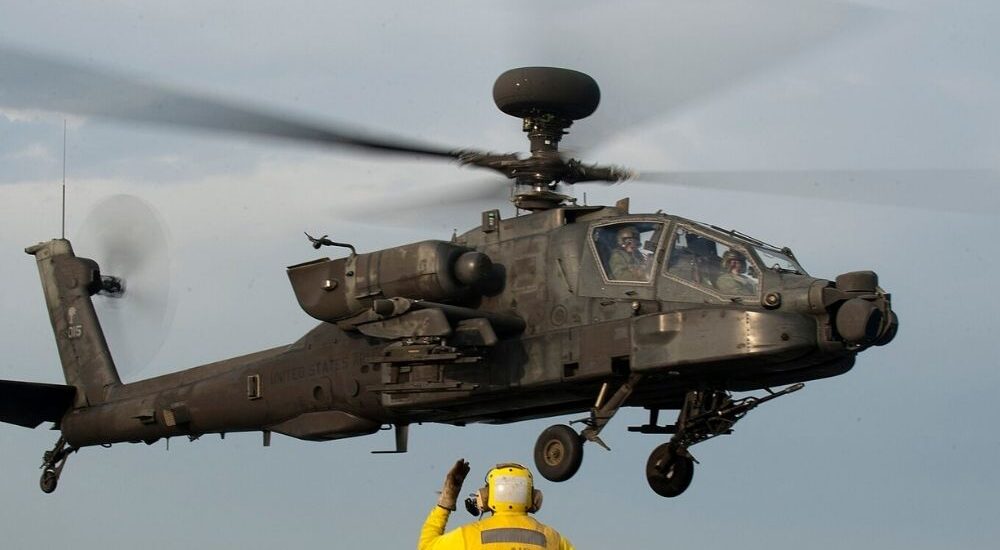
The U.S. State Department has granted approval for the potential sale of a significant arms package to Poland, which includes 96 AH-64E Apache attack helicopters along with related equipment. The deal’s estimated value is up to $12 billion. In addition to the helicopters, the package includes 1,844 Hellfire missiles and 508 Stinger missiles, which are vital components for the effective use of attack helicopters. This proposed arms sale comes as Poland has been actively working to bolster its military capabilities, particularly in response to regional security concerns triggered by Russia’s actions in neighboring Ukraine.
Poland, a NATO member, has been making military modernization a priority to enhance its defense capabilities. The potential acquisition of AH-64E Apache attack helicopters, known for their effectiveness in combat and versatility, aligns with Poland’s efforts to strengthen its military forces. The Apache helicopters are widely used by various armed forces around the world and have a proven track record in combat operations.
The U.S. defense industry would play a significant role in fulfilling this arms deal, as Boeing and Lockheed Martin are named as the prime contractors for the AH-64E Apache helicopters and related equipment. However, it’s important to note that the approval from the State Department is just one step in the process. While it signifies the willingness of the U.S. government to support such a sale, it does not guarantee the finalization of the contract or the conclusion of negotiations between the parties involved.
The proposed sale also highlights the strong defense ties between the United States and Poland, both of which are NATO allies. This collaboration underscores the broader regional security dynamics in Europe and the efforts of NATO member states to enhance their defense capabilities in response to evolving geopolitical challenges. As the potential arms deal progresses, it will likely continue to draw attention within the international defense community and contribute to discussions about the security landscape in Europe and beyond.
Interested in learning more?
Sign up for Top Insights Today

Top Insights Today delivers the latest insights straight to your inbox.
You will get daily industry insights on
Oil & Gas, Rare Earths & Commodities, Mining & Metals, EVs & Battery Technology, ESG & Renewable Energy, AI & Semiconductors, Aerospace & Defense, Sanctions & Regulation, Business & Politics.
Read more insights

China’s CATL-led consortium deepens cooperation with Bolivia in lithium industry
A consortium led by China’s CATL (Contemporary Amperex Technology Co. Limited), named CBC, has signed a new agreement with Bolivia, deepening their cooperation in one of the world’s largest lithium reserves. This builds upon a previous deal inked in January 2023 when CBC committed…
Alert from G7 coalition highlights evasion risks to Russian oil price cap
The G7 price cap coalition, which imposed a price cap of $60 a barrel on Russian oil in response to Moscow’s invasion of Ukraine, has issued an enforcement alert detailing ways that market players evade the mechanism. The alert, posted on the U.S. Treasury Department’s website, emphasizes that…
EU plans strict origin rules to close loopholes in Russian gas ban
European Union governments are weighing a significant tightening of rules on gas imports as they press ahead with their plan to end dependence on Russian energy. A draft proposal circulated among member states indicates that Brussels may soon require companies to provide verifiable proof of where imported gas is produced, even in cases where the fuel is blended during transit, making origin notoriously hard to track.
The move is part of a wider legislative package that would cut Russian oil and gas imports entirely by January 1, 2028, marking the formal end of an energy relationship that had bound Europe to Moscow for decades. The draft, prepared under Denmark’s rotating EU presidency, lays out new obligations for importers.