
Norway’s Hystar to build electrolyzer plant in Oslo, expand into North America
- October 2, 2023
- Posted by: Quatro Strategies
- Categories: Americas, ESG & Renewable Energy, Europe
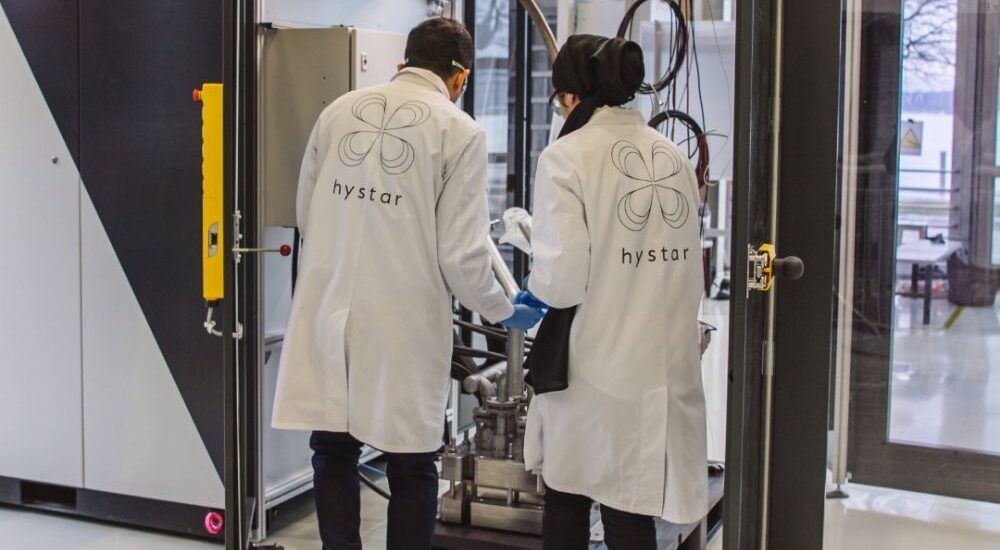
Hystar, a Norwegian electrolyser company, is embarking on significant expansion plans, aiming to build a new factory outside Oslo and expand into North America to tap into investment incentives. Electrolysers are instrumental in producing green hydrogen by splitting water using electricity, enabling the decarbonization of industry sectors that can’t transition to electricity directly. Hystar has garnered financial support from Japanese companies Mitsubishi and Nippon Steel Trading.
The company is set to construct a factory in Hoevik outside Oslo, capable of producing 4 gigawatts of electrolyser capacity annually. The facility is expected to be operational by 2026.
Hystar’s technology boasts a 10% energy efficiency improvement compared to current models and is designed to be easily scalable. The company already operates a small research and production facility at the site, which can assemble 50 MW of electrolyser capacity.
Beyond Europe, Hystar is eyeing North America for expansion, planning to set up a North American headquarters in 2024 and aiming to build a multi-gigawatt factory by 2027. The company sees attractive incentives in the U.S. and Canada, with the U.S. Inflation Reduction Act (IRA) providing investment incentives.
The company sees strong demand in the U.S. hydrogen market, particularly with the government proposing up to 10 hydrogen hubs soon, prompting an accelerated and more ambitious expansion strategy.
QUATRO Strategies International Inc. is the leading business insights and corporate strategy company based in Toronto, Ontario. Through our unique services, we counsel our clients on their key strategic issues, leveraging our deep industry expertise and using analytical rigor to help them make informed decisions to establish a competitive edge in the marketplace.
Interested in learning more?
Sign up for Top Insights Today

Top Insights Today delivers the latest insights straight to your inbox.
You will get daily industry insights on
Oil & Gas, Rare Earths & Commodities, Mining & Metals, EVs & Battery Technology, ESG & Renewable Energy, AI & Semiconductors, Aerospace & Defense, Sanctions & Regulation, Business & Politics.
Read more insights
London Metal Exchange considers expanding metal warehouse network to Hong Kong
The London Metal Exchange (LME) is reportedly exploring the possibility of expanding its global metal warehouse network to Hong Kong, with the potential aim of later including mainland China. This strategic move follows Hong Kong Exchanges and Clearing’s (HKEx) acquisition of the LME in…
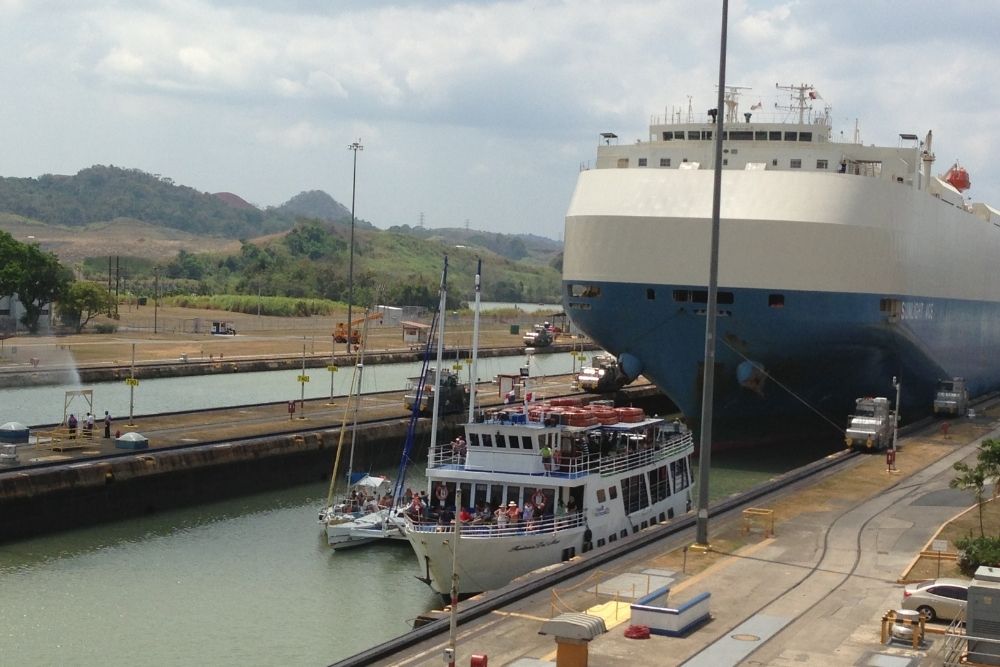
Panama Canal rerouting shows how Iran conflict is redrawing oil trade
The rerouting of U.S. Gulf Coast crude to Asia through the Panama Canal is a vivid sign of how deeply the Iran war is reshaping oil trade flows. Asian refiners are now chartering medium-sized Aframax and partially loaded Suezmax tankers to move U.S. crude through Panama to South Korea and Japan, even though this is usually a more expensive option per barrel than the standard very large crude carrier route around the Cape of Good Hope.
The willingness to pay those higher transport costs and canal fees shows that speed and security of delivery have suddenly become more important than transport efficiency. The immediate background is the collapse of normal Middle East supply patterns. The U.S.-Israeli war with Iran has severely disrupted flows through the Strait of Hormuz, the route for roughly a fifth of global oil and LNG.

Almonty revives a Montana mine, aiming for 2026 output and a U.S. supply foothold
Almonty is positioning itself at the center of America’s push for critical mineral self-reliance by snapping up a long dormant tungsten asset in Montana and fast-tracking it back to production. The Gentung-Browns Lake project, once run by Union Carbide, comes with practical advantages that compress timelines and capex risk: legacy water rights and piping, and the ability to redeploy refurbished plant from Almonty’s Spanish operations.
If permitting lands on schedule, first output in late-2026 would make it the first U.S. tungsten mine in roughly a decade, a symbolic reversal after years of retreat that left the country dependent on imports and scrap.