
Mali unveils new law to ramp up gold mining revenue
- August 30, 2023
- Posted by: Quatro Strategies
- Categories: Africa, Mining & Metals, Rare Earths & Commodities
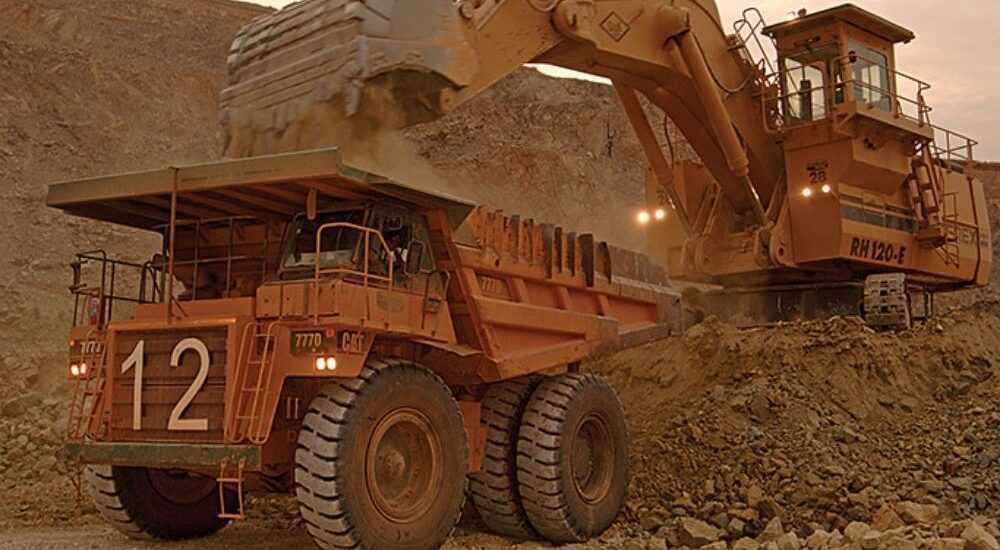
Mali’s interim President Assimi Goita has approved a new mining code that aims to increase the military-led government’s ownership of gold concessions and recover perceived shortfalls in production revenues. The new code allows the state and local investors to hold stakes of up to 35% in mining projects, compared to the previous limit of 20%. This change could potentially more than double the mining sector’s contribution to Mali’s gross domestic product (GDP) to around 20%.
The specifics of how the new mining code will affect existing projects are yet to be clarified, as this will depend on the implementing decrees, which have not been released. Mali is a significant gold producer in Africa, hosting companies like Barrick Gold, B2Gold, Resolute Mining, and Hummingbird Resources.
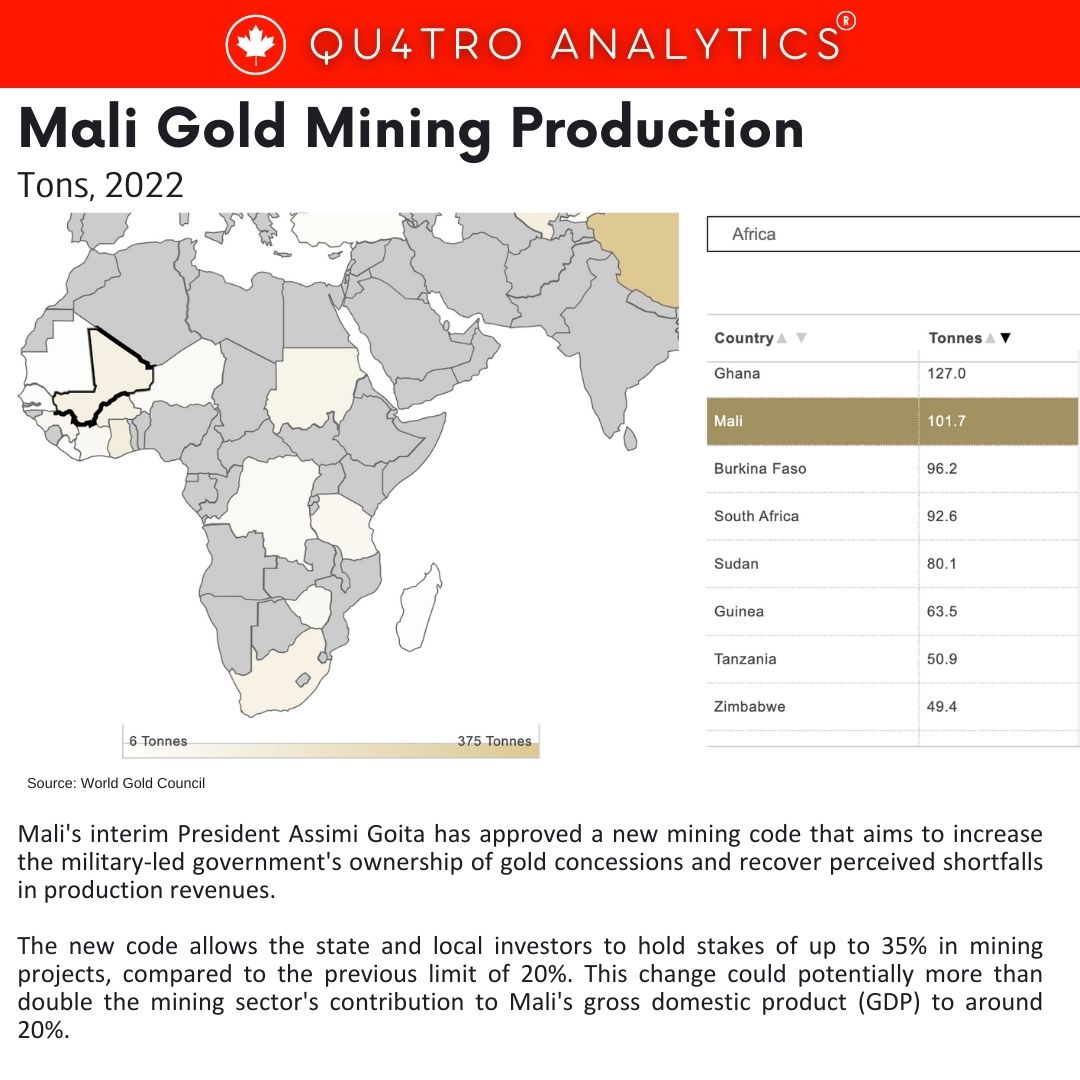 Mali’s Finance Minister Alousseni Sanou stated that an audit of the mining sector revealed a shortfall of 300 billion to 600 billion CFA francs (approximately $497 million to $995 million), which the government intends to recover. Sanou explained that negotiations with mining companies could potentially lead to recouping a substantial portion of the shortfall.
The new mining code also aims to address issues such as mining companies transporting gold ore to tax-exempt mines for processing and tighten the issuance of mining titles. The move is part of Mali’s broader efforts to increase transparency, inclusiveness, and revenue from its mining sector.
President Assimi Goita came to power after overthrowing two presidents in 2020 and 2021 due to dissatisfaction with the handling of an Islamist insurgency. He has pledged to organize elections and transfer power to civilian rule by 2024.
Interested in learning more?
Sign up for Top Insights Today

Top Insights Today delivers the latest insights straight to your inbox.
You will get daily industry insights on
Oil & Gas, Rare Earths & Commodities, Mining & Metals, EVs & Battery Technology, ESG & Renewable Energy, AI & Semiconductors, Aerospace & Defense, Sanctions & Regulation, Business & Politics.
Read more insights

Foreign firms have withdrawn $160 billion of earnings from China in the last six quarters
Foreign companies have been steadily repatriating their profits from China over the past six quarters, resulting in an extended period of sustained profit outflows, according to an analysis of Chinese data. Over $160 billion in earnings were withdrawn, reflecting a longer-term…
European exporters see Supreme Court tariff ruling as new uncertainty phase
European companies are reading the U.S. Supreme Court’s tariff ruling less as a clean victory and more as the beginning of a new compliance and planning problem. ,
The Court’s decision knocked down a large share of President Donald Trump’s emergency-based tariffs, but many exporters in Europe immediately concluded that the practical benefit may be limited because Washington can still pursue alternative tariff routes and has already signaled that it will.
Global economy faces fragmentation two years after Ukraine invasion
Two years after Russia’s invasion of Ukraine, the global economy appears to be fragmenting into two distinct blocs, with multilateral trade rules facing significant threats. Rising geopolitical tensions, particularly regarding Ukraine and the Middle East, coupled with concerns over economic security…