
Chinese battery maker Gotion taking 25% stake in Slovakia’s Inobat
- September 4, 2023
- Posted by: Quatro Strategies
- Categories: China, Europe, EVs & Battery Technology
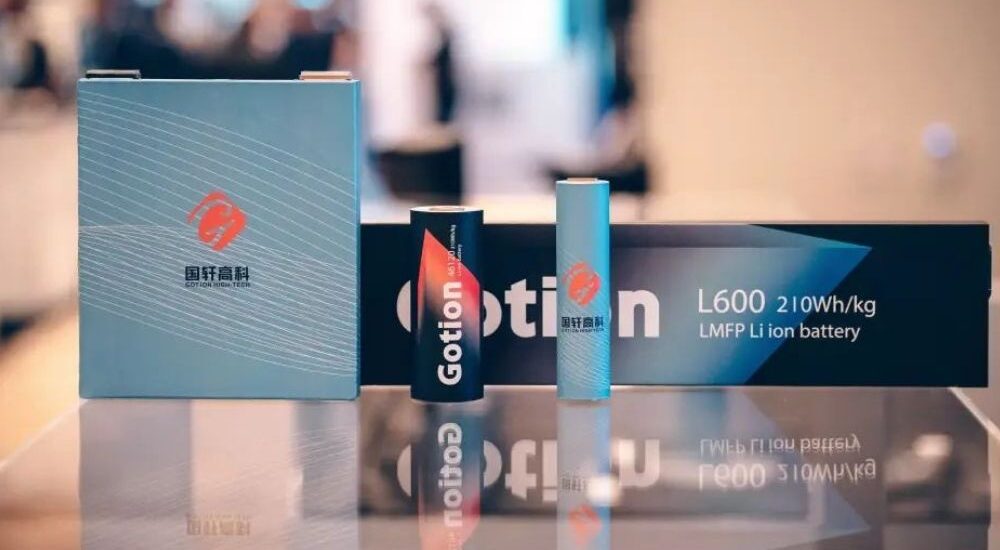
Chinese battery manufacturer Gotion High Tech is acquiring a 25% stake in Slovak battery firm Inobat, marking the first investment by a Chinese battery maker in a European start-up. The deal is part of the two firms’ ongoing collaboration, announced earlier this year, to explore joint ventures to develop batteries for electric vehicles (EVs) and energy storage. While the financial details of the transaction remain undisclosed, the partnership is expected to help Inobat speed up its path to mass production of EV batteries.
Through this investment, Gotion will provide Inobat with access to its research and development capabilities, lithium supply chain, cell production, and recycling capabilities. This support will be instrumental in helping the Slovak startup scale up its battery production operations, enabling it to meet the growing demand for EV batteries in Europe. The partnership aligns with Gotion’s broader goal of expanding its production capacity outside China to cater to the increasing demand from EV manufacturers and energy storage providers.
Europe has been making efforts to reduce its reliance on dominant Asian battery manufacturers and establish a self-sufficient EV battery industry. While some companies, like Swedish firm Northvolt, have succeeded in raising substantial investments, others have faced challenges, such as the UK’s Britishvolt, which encountered difficulties earlier this year. Gotion’s partnership with Inobat reflects the ongoing trend of global collaboration in the EV battery sector, as companies seek to secure their positions in a rapidly growing market.
Gotion is a partially-owned subsidiary of Volkswagen, and its investment in Inobat represents a significant step in the global expansion of Chinese battery manufacturers. This move signifies China’s ambition to play a more prominent role in the EV and battery industries on a global scale. Inobat, on the other hand, has signed declarations of intent with the governments of Spain and Serbia to build EV battery plants, although these agreements are still pending finalization. The collaboration between Gotion and Inobat is poised to contribute to the growth of Europe’s EV battery ecosystem as the region continues to transition towards electric mobility.
Interested in learning more?
Sign up for Top Insights Today

Top Insights Today delivers the latest insights straight to your inbox.
You will get daily industry insights on
Oil & Gas, Rare Earths & Commodities, Mining & Metals, EVs & Battery Technology, ESG & Renewable Energy, AI & Semiconductors, Aerospace & Defense, Sanctions & Regulation, Business & Politics.
Read more insights
Maduro’s removal signals wider US bid to squeeze rivals’ Latin America networks
The removal of Nicolás Maduro has jolted assumptions about how far Washington is prepared to go to reassert primacy in the Western Hemisphere, and it is being interpreted in markets and capitals as more than a Venezuela-only operation.
The underlying logic is geoeconomic: weaken the ability of U.S. rivals to use Latin America’s energy, logistics routes, and financial architecture as a buffer against sanctions and as leverage in commodity markets. In that frame, Venezuela becomes both a symbol and a test case for a broader strategy that blends coercive tools (sanctions enforcement, interdictions, tariff threats, targeted legal pressure) with a push to rewire trade and investment flows back toward U.S.-aligned channels.
Data security worries prompt US to explore restrictions on Chinese “smart cars”
The Biden administration is contemplating measures to restrict imports of Chinese “smart cars” and related components beyond tariffs, aiming to address mounting US concerns regarding data security, according to individuals familiar with the matter. These potential measures would encompass…
EU seeks emergency energy relief without breaking climate rules
The European Union is once again confronting a familiar problem in a new geopolitical setting: an external war has exposed how vulnerable the bloc remains to imported energy and to the price shocks that travel with it. EU energy ministers met on March 16 to discuss emergency responses after the U.S.-Israeli war on Iran drove a sharp rise in oil and gas prices, with Energy Commissioner Dan Jorgensen describing the situation bluntly as a “price crisis.”
Even though Brussels insists that physical oil and gas supplies remain secure because much of Europe’s energy now comes from the United States, Norway and other non-Middle Eastern suppliers, the core issue is that Europe still imports a large share of its energy and therefore remains highly exposed to global benchmark prices, even when molecules keep flowing.