
Foreign investors have made $17.2 billion equity investment in India this year
- September 5, 2023
- Posted by: Quatro Strategies
- Categories: Business & Politics, India

Foreign investors have reversed their record exodus from Indian stocks, pouring $17.2 billion into the South Asian nation’s equities this year through September 1st. This influx has more than offset their retreat in 2022 and marks a shift towards India as an alternative to China.
The appeal of India’s stock market is growing, as investors are drawn to its strong corporate earnings performance, robust economic growth, and political stability. This surge of foreign inflows has helped boost India’s market capitalization to an all-time high of $3.75 trillion.
Additionally, foreign investors are now holding a net long position in NSE Nifty 50 index futures, indicating their short-term bullishness on Indian stocks. This marks the first time they’ve held a net long position in these futures since August 1st.
Indian stocks have been on a multi-year rally, with key benchmarks like the S&P BSE Sensex and NSE Nifty 50 Index headed for their eighth consecutive year of advances. This sustained positive performance, along with India’s growing attractiveness as an investment destination, has made it a favored market for global investors.
Interested in learning more?
Sign up for Top Insights Today

Top Insights Today delivers the latest insights straight to your inbox.
You will get daily industry insights on
Oil & Gas, Rare Earths & Commodities, Mining & Metals, EVs & Battery Technology, ESG & Renewable Energy, AI & Semiconductors, Aerospace & Defense, Sanctions & Regulation, Business & Politics.
Read more insights

Optimism emerges in lithium market as prices surge amid production cuts
After a significant downturn, lithium, a key material in electric vehicle batteries, is showing signs of a potential recovery, albeit tentatively. The spot price of lithium carbonate in China, crucial for electric vehicle production, has rebounded to its highest level since December after experiencing a drastic…

Global IPO activity falls to nine-year low amid tariffs and market turbulence
Global equity initial public offerings (IPOs) have slumped to their lowest level in nine years, as companies navigate a storm of macroeconomic and geopolitical headwinds — from resurgent U.S. tariffs and investor uncertainty to elevated interest rates and volatile market conditions.
Global IPO volume fell by 9.3% year-on-year to just $44.3 billion as of June 17. The United States, traditionally a cornerstone of global capital raising, saw IPO proceeds fall 12% to $12.3 billion. Europe experienced an even more pronounced collapse, with volumes plummeting 64% to $5.8 billion. The only bright spot was the Asia-Pacific region, where IPO activity surged 28% to $16.8 billion, buoyed by a wave of Chinese and Japanese listings.
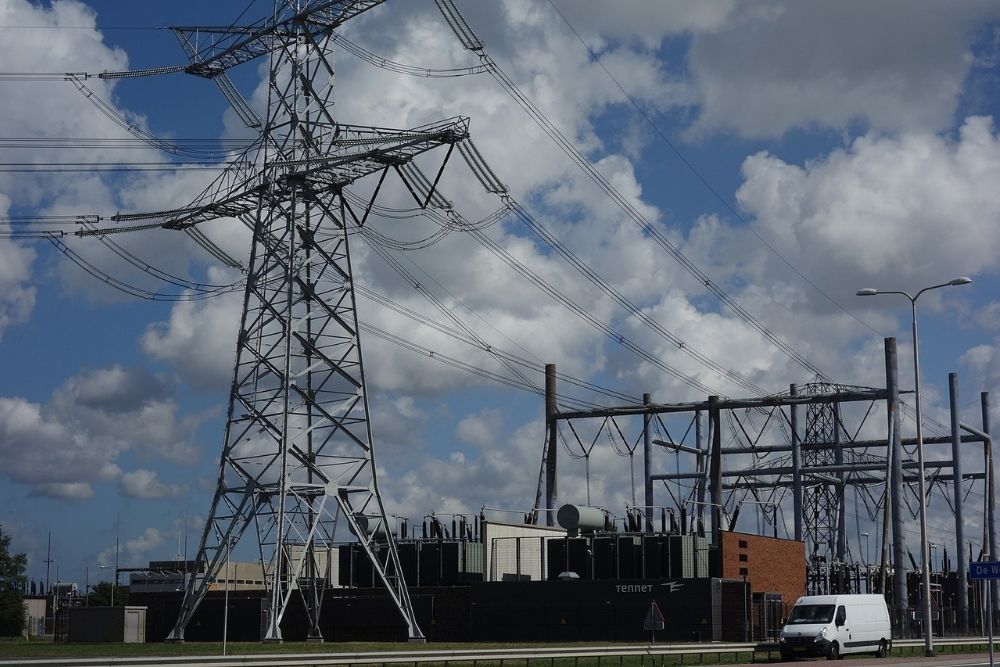
Germany, Netherlands racing to finalize TenneT’s German unit sale
Berlin and The Hague are engaged in a time-sensitive effort to finalize the sale of the German unit of Dutch grid operator TenneT by mid-October. This proposed acquisition is a pivotal part of Berlin’s strategy to expedite its energy transition, which has been hindered by administrative hurdles and an insufficient expansion of the energy network.