
Foreign investors have made $17.2 billion equity investment in India this year
- September 5, 2023
- Posted by: Quatro Strategies
- Categories: Business & Politics, India

Foreign investors have reversed their record exodus from Indian stocks, pouring $17.2 billion into the South Asian nation’s equities this year through September 1st. This influx has more than offset their retreat in 2022 and marks a shift towards India as an alternative to China.
The appeal of India’s stock market is growing, as investors are drawn to its strong corporate earnings performance, robust economic growth, and political stability. This surge of foreign inflows has helped boost India’s market capitalization to an all-time high of $3.75 trillion.
Additionally, foreign investors are now holding a net long position in NSE Nifty 50 index futures, indicating their short-term bullishness on Indian stocks. This marks the first time they’ve held a net long position in these futures since August 1st.
Indian stocks have been on a multi-year rally, with key benchmarks like the S&P BSE Sensex and NSE Nifty 50 Index headed for their eighth consecutive year of advances. This sustained positive performance, along with India’s growing attractiveness as an investment destination, has made it a favored market for global investors.
Interested in learning more?
Sign up for Top Insights Today

Top Insights Today delivers the latest insights straight to your inbox.
You will get daily industry insights on
Oil & Gas, Rare Earths & Commodities, Mining & Metals, EVs & Battery Technology, ESG & Renewable Energy, AI & Semiconductors, Aerospace & Defense, Sanctions & Regulation, Business & Politics.
Read more insights

Mexico tries to balance Chinese EV manufacturing investment and US trade relations
Mexico’s federal government is facing pressure from the U.S. to keep Chinese automakers at a distance, refraining from offering incentives such as low-cost public land or tax cuts for electric vehicle (EV) production. This pressure is believed to be a result of concerns about Chinese automakers…
From steel to cement, EU’s carbon levy rewrites global export rules
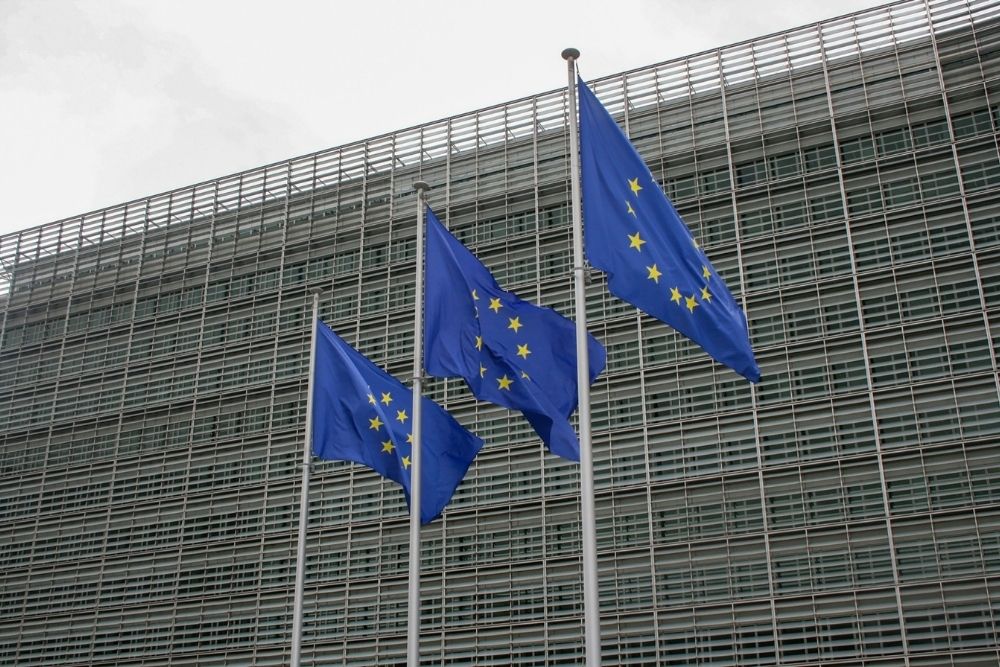
Europe is about to hardwire carbon costs into the price of imports. In less than three months, the EU will flip the switch on its Carbon Border Adjustment Mechanism, a first-of-its-kind levy that makes foreign steel, cement, aluminum, fertilizers, and hydrogen carry the same carbon price European producers face at home.
The mechanics are blunt by design: importers must buy CBAM certificates linked to the EU carbon market, paying the prevailing EU ETS price for the embedded emissions in each shipment. In policy terms, Brussels is exporting its carbon discipline, closing the gap that encouraged “carbon leakage,” where smokestack industries shifted production to jurisdictions with looser rules and then sold back into Europe.

Labour shortfall poses hidden risk to Europe’s security goals
Across Europe, defence firms are facing a paradox: the post-Ukraine war surge in military spending has created a historic growth opportunity, but the continent’s defence sector is bumping up against a severe shortage of skilled workers. This growing labour bottleneck is threatening to undercut Europe’s ability to deliver on its pledges to boost military production, reduce dependence on U.S. weapons, and rebuild its defence industrial base.
PBS Group, a Czech company that makes engines for missiles and drones, is eager to expand output—but it can’t find enough people. Based in Velka Bites, southeast of Prague, PBS has already raised wages by 8% and plans another 10% hike in 2025. Yet, even with better pay and job security, attracting the welders, technicians, engineers and software specialists needed to meet booming demand has proven difficult.