
Italy considers measures to protect auto industry from Chinese imports
- October 3, 2023
- Posted by: Quatro Strategies
- Categories: China, Europe, EVs & Battery Technology, Sanctions & Regulation

Italy is reportedly considering implementing new incentives for car purchases that take into account carbon emissions in the manufacturing and distribution process. The inspiration for this scheme comes from a similar one adopted in France recently. The aim is to potentially discourage purchases of Chinese-built electric cars (EVs), as imports of these vehicles are increasing in Europe due to lower prices compared to those produced by local automakers.
While typical incentives usually target a vehicle’s emissions, the proposed rules in France score car models against government-set thresholds considering the energy used in manufacturing their materials, assembly, transport to market, and the type of battery they use. This nuanced approach aims to account for the overall carbon footprint associated with the vehicle.
However, it’s important to note that European Union competition rules prohibit favoring local producers. France’s criteria, while indirectly discouraging Chinese imports due to their manufacturing processes being largely powered by coal-generated electricity, align with WTO rules as exemptions are allowed for health and environmental reasons.
In Italy, the government is aiming to agree on a comprehensive long-term plan for its automotive industry, involving discussions with relevant groups, including Stellantis, Italy’s major automaker. The talks, expected to continue until the end of the year, encompass new incentive schemes designed to encourage a shift towards environmentally friendly vehicles and to boost national car output.
This move underscores Italy’s strategy to protect its automotive industry against the influx of Chinese EVs and promote sustainability within the sector.
QUATRO Strategies International Inc. is the leading business insights and corporate strategy company based in Toronto, Ontario. Through our unique services, we counsel our clients on their key strategic issues, leveraging our deep industry expertise and using analytical rigor to help them make informed decisions to establish a competitive edge in the marketplace.
Interested in learning more?
Sign up for Top Insights Today

Top Insights Today delivers the latest insights straight to your inbox.
You will get daily industry insights on
Oil & Gas, Rare Earths & Commodities, Mining & Metals, EVs & Battery Technology, ESG & Renewable Energy, AI & Semiconductors, Aerospace & Defense, Sanctions & Regulation, Business & Politics.
Read more insights

Egypt emerges as key player in green hydrogen production race
Two years ago, Egypt, as the host of COP27, witnessed a surge in announcements regarding large-scale green hydrogen production, particularly in the expansive Suez Canal Economic Zone (SCZone) spanning from Port Said to the Gulf of Suez. Leveraging Egypt’s abundant solar and wind resources to power…
Bosch asks for subsidies from the U.S. to expand California chip plant
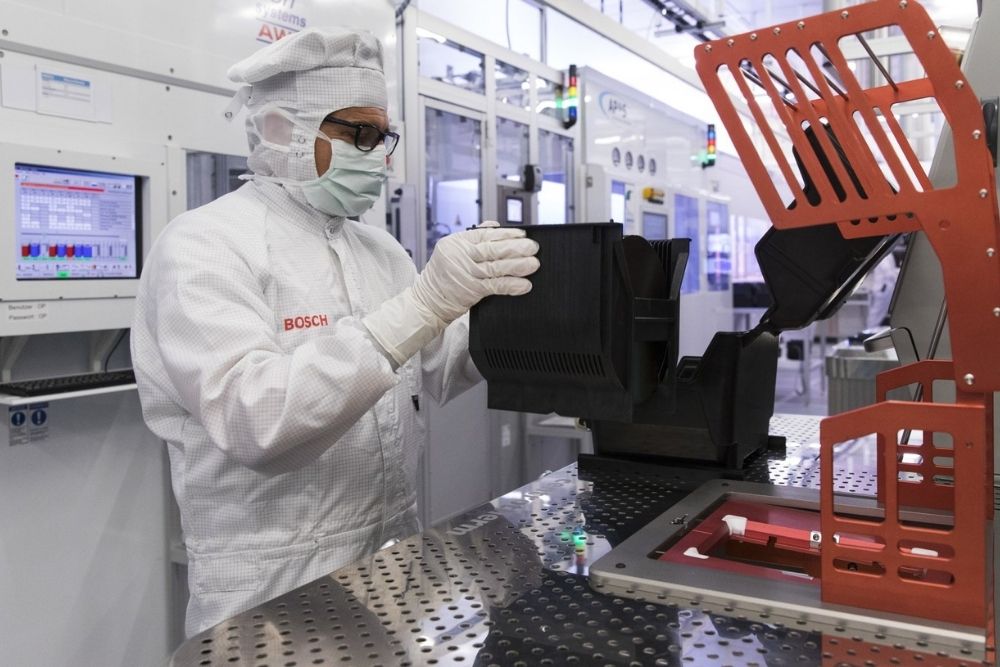
The CEO of Robert Bosch, a German technology group, Stefan Hartung, has indicated that the company is seeking subsidies from the U.S. government to facilitate the full-scale expansion of a chip manufacturing plant it is in the process of acquiring in California. This announcement comes as Bosch aims to invest $1.5 billion in the plant’s retooling to produce silicon carbide chips, which are vital for enhancing the performance and range of electric vehicles. The facility, named Robert Bosch Semiconductor LLC, is scheduled to commence production in 2026.

Foxconn uses Nvidia Blackwell to turn hardware muscle into platform economics
Foxconn is repositioning itself from the world’s quintessential contract manufacturer into an infrastructure and platforms company for the AI era. Its plan to stand up a $1.4 billion, 27-megawatt supercomputing center in Taiwan by the first half of 2026, built around Nvidia’s next-gen Blackwell GB300 chips and operated under a new cloud unit, Visonbay.ai, signals that Foxconn no longer wants to just assemble other people’s servers; it wants to rent compute at scale.
Nvidia’s message at the launch, which emphasized pay for capacity when you need it rather than owning it outright, captures a broader shift in AI economics as capex swells and balance sheets strain. For Foxconn, already Nvidia’s primary manufacturer of AI racks and claiming an output rate of roughly a thousand racks per week, the data center is both a showroom and a flywheel: it deepens the partnership with Nvidia, attracts anchor tenants, and validates its vertically integrated offering from hardware build to operated compute.