
BRICS leaders still divided on expanding the group
- August 23, 2023
- Posted by: Quatro Strategies
- Category: Business & Politics
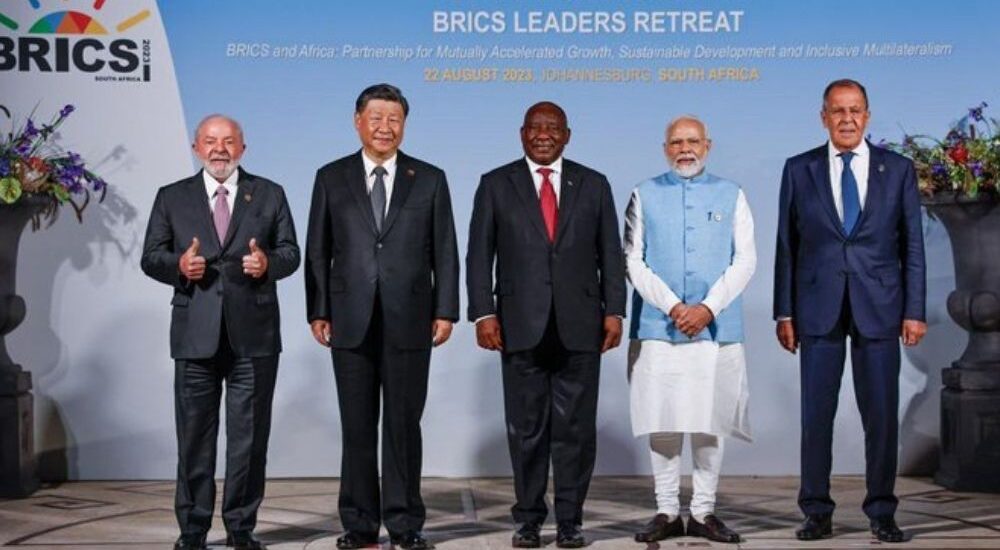
Leaders of the BRICS nations – Brazil, Russia, India, China, and South Africa – convened to chart the future course of the bloc, yet apparent divisions have resurfaced, particularly regarding the contentious issue of expanding the group. The backdrop of heightened tensions following the Ukraine conflict and China’s escalating rivalry with the United States has spurred China and Russia to seek the consolidation of BRICS. With Russian President Vladimir Putin participating virtually, the leaders of these countries aimed to bolster BRICS as a counterweight to Western dominance within global institutions.
China and Russia’s intention is to utilize the August 22-24 summit held in Johannesburg to bolster the cohesion of the BRICS group, which also includes Brazil, South Africa, and India. The objective is to build BRICS into an influential entity that can challenge and balance against Western influence. China’s President Xi Jinping, in remarks conveyed at a BRICS business forum, stated, “Right now, changes in the world, in our times, and in history are unfolding in ways like never before, bringing human society to a critical juncture.”
However, amid the discussions, noticeable divisions emerged, highlighting differing visions within the bloc. Heightened tensions between India and China, coupled with long-standing discrepancies, have impeded the process of finding a shared consensus. While China’s President Xi Jinping was absent from the event, his comments were delivered by Chinese Commerce Minister Wang Wentao. The reason behind Xi’s absence, despite having earlier meetings with the host President Cyril Ramaphosa, remained unclear.
Brazil’s President Luiz Inacio Lula da Silva’s statements reflected the divergence in viewpoints among the participating countries. Lula emphasized that the BRICS bloc is not aimed at being a direct counterpoint to groups such as the G7, G20, or the United States. Instead, he underlined the group’s aspiration to self-organize for their mutual benefit and not primarily as a reaction to the Western bloc’s dominance.
Amid discussions of potential expansion, the agenda also encompassed the aim of boosting the use of local currencies of member states in trade and financial transactions, aiming to reduce dependency on the US dollar. Russian President Vladimir Putin highlighted the ongoing de-dollarization process of economic ties, considering the objective as an irreversible shift.
Nonetheless, the ongoing debate over potential enlargement has highlighted the inherent challenges and disparities within the BRICS bloc. Each member represents a diverse range of economies and geopolitical concerns, from China’s status as the world’s second-largest economy to South Africa’s relatively smaller, yet advanced economy within Africa.
The aim of Russia to showcase its global alliances and India’s concurrent inclination to engage with Western nations has added to the complex dynamics within the BRICS bloc. India and China have also grappled with border conflicts, further complicating cohesive decision-making within the group that fundamentally operates through consensus.
Though there is growing momentum to diversify and balance against Western influence, White House national security advisor Jake Sullivan asserted that BRICS, given its diverse composition and differing views on critical issues, is unlikely to emerge as a geopolitical rival to the United States. Nevertheless, BRICS countries are striving to strengthen their position within the global order and challenge the traditional dominance of Western powers. The bloc’s leaders also intend to discuss the criteria and framework for admitting new countries, with both China and Russia aiming to expand the membership.
While the prospects of BRICS enlargement remain uncertain, the group’s aspiration to become a champion of the developing world and provide an alternative to the Western-dominated global order continues to resonate. With more than 40 countries expressing interest in joining BRICS, the summit in Johannesburg signifies a crucial juncture for the bloc’s direction and its potential to reshape the global geopolitical landscape.
Interested in learning more?
Sign up for Top Insights Today

Top Insights Today delivers the latest insights straight to your inbox.
You will get daily industry insights on
Oil & Gas, Rare Earths & Commodities, Mining & Metals, EVs & Battery Technology, ESG & Renewable Energy, AI & Semiconductors, Aerospace & Defense, Sanctions & Regulation, Business & Politics.
Read more insights

Supply disruptions, demand growth, and speculative activity drive up tin prices
The recent surge in tin prices on the London Metal Exchange (LME) has put the spotlight on this often-overlooked metal, raising concerns about a potential short squeeze. Several factors have contributed to tin’s rapid ascent and the tightening grip of a dominant trader, known as the “big bull,” in the market…
U.S. trying to ease Indo-Pacific worries of China decoupling
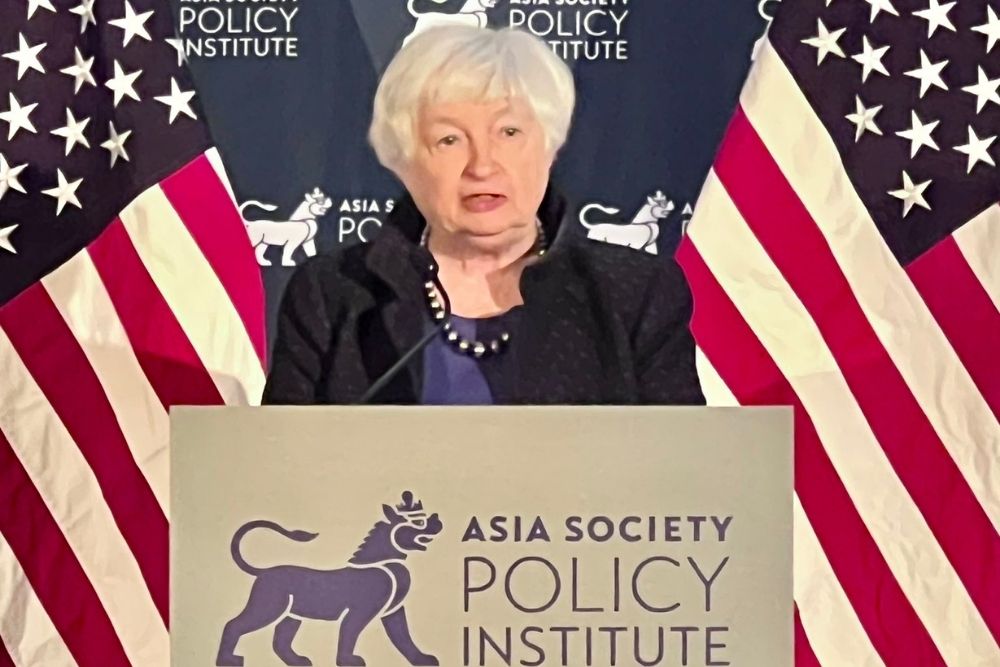
U.S. Treasury Secretary Janet Yellen has sought to reassure Asian countries that the United States’ approach to China will not lead to a divisive global economy, forcing nations to take sides. In her speech ahead of the Asia Pacific Economic Cooperation (APEC) Summit in San Francisco…

UK to seize control of British Steel to protect national industrial base
The British government has taken emergency steps to assume control of British Steel, with Prime Minister Keir Starmer and ministers signalling that full nationalisation of the country’s last producer of virgin steel may soon become inevitable. The dramatic intervention aims to prevent the imminent closure of the Scunthorpe blast furnaces and secure a future for the UK’s strategically vital steelmaking sector.
British Steel, which employs 3,500 people at its Scunthorpe site, is currently owned by China’s Jingye Group. The company has been losing approximately £700,000 a day, and talks with the UK government over funding a transition to greener steelmaking have collapsed. Without urgent action, the furnaces—which produce steel from iron ore and coke, rather than recycled scrap—were at risk of shutting down.