
Japan’s Sojitz, ENEOS establish large scale solar power plant in Australia
- October 3, 2023
- Posted by: Quatro Strategies
- Categories: Asia Pacific, ESG & Renewable Energy
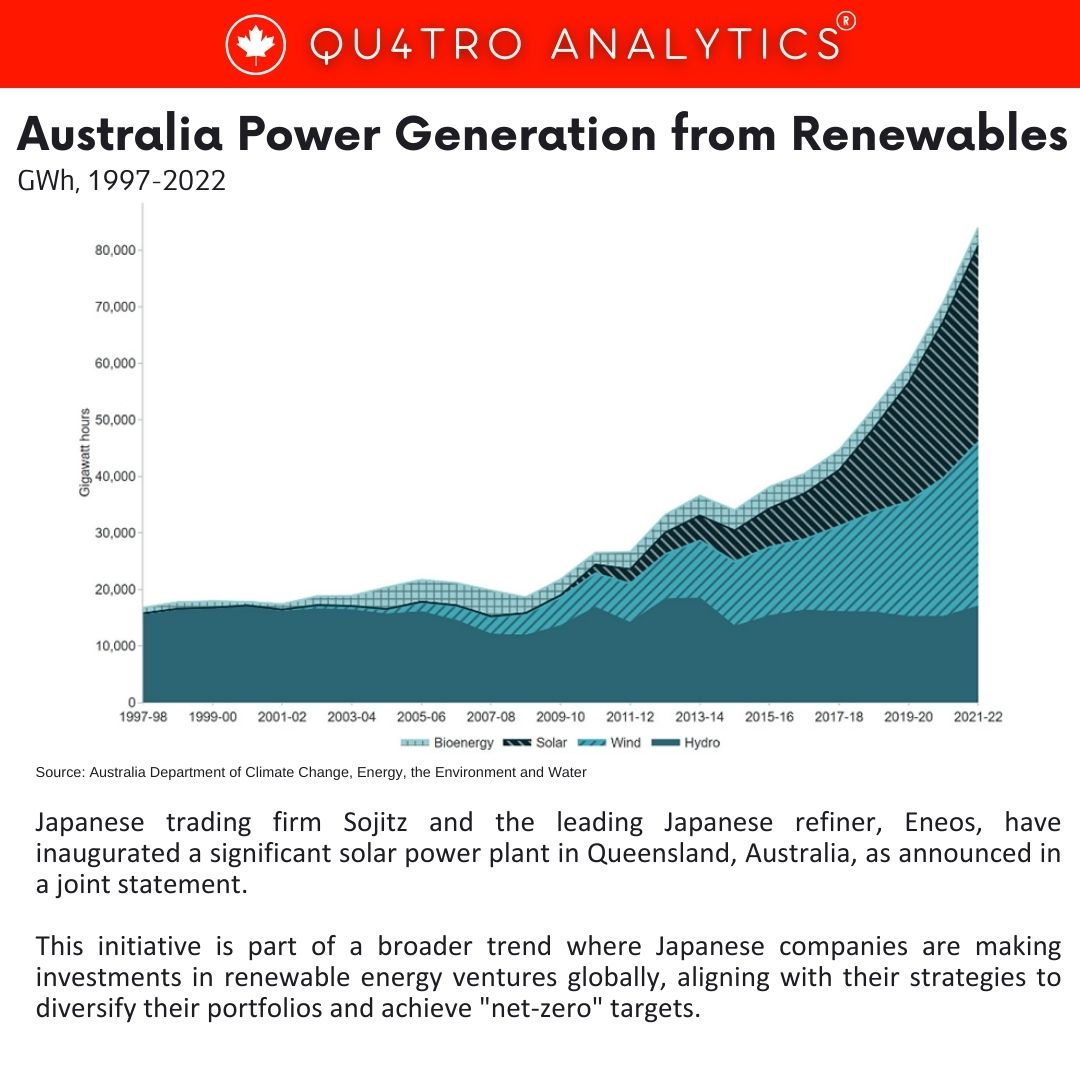
Japanese trading firm Sojitz and the leading Japanese refiner, Eneos, have inaugurated a significant solar power plant in Queensland, Australia, as announced in a joint statement. This initiative is part of a broader trend where Japanese companies are making investments in renewable energy ventures globally, aligning with their strategies to diversify their portfolios and achieve “net-zero” targets.
These endeavors abroad are meant to bring back valuable experience to Japan and reduce dependence on fossil fuels.
 The Edenvale Solar Park boasts a capacity of 204 megawatts and construction began in June 2021, with the plant officially launched on September 28, although financial specifics were not disclosed. Sojitz and Eneos share a 50% stake in the joint venture managing the plant.
Notably, this solar power facility is the largest in Australia operated by Japanese investors, underlining their commitment to sustainable energy ventures beyond their home country.
QUATRO Strategies International Inc. is the leading business insights and corporate strategy company based in Toronto, Ontario. Through our unique services, we counsel our clients on their key strategic issues, leveraging our deep industry expertise and using analytical rigor to help them make informed decisions to establish a competitive edge in the marketplace.
Interested in learning more?
Sign up for Top Insights Today

Top Insights Today delivers the latest insights straight to your inbox.
You will get daily industry insights on
Oil & Gas, Rare Earths & Commodities, Mining & Metals, EVs & Battery Technology, ESG & Renewable Energy, AI & Semiconductors, Aerospace & Defense, Sanctions & Regulation, Business & Politics.
Read more insights
U.S. tariffs trigger sharp selloff in Indian equities, widen gap with China
President Donald Trump’s decision to impose a 50% tariff on Indian exports, half of which is framed as a penalty for New Delhi’s purchases of Russian oil, is creating significant short-term headwinds for India’s financial markets and potentially weakening its long-term strategic positioning as an alternative to China in global supply chains.
The selective nature of the measure, which largely spares China despite its far greater imports from Russia, has amplified investor concerns over U.S. policy unpredictability and the durability of India-U.S. economic alignment.
Russia hits roadblock in quest for major China gas pipeline amid pricing impasse
Russia’s efforts to finalize a significant gas pipeline deal with China, known as the Power of Siberia 2 pipeline, have hit a roadblock due to what Moscow perceives as unreasonable demands from Beijing regarding pricing and supply levels. China has requested to pay prices close to Russia’s heavily subsidized domestic…

Chile’s lithium ambitions soar as SQM and Codelco strike game-changing partnership
SQM, the world’s second-largest lithium producer, has reached a framework agreement with state-owned Codelco to transfer a majority stake in its Chilean brine assets in exchange for an extension of operations for three more decades. This potential deal, if ratified, would establish…