
Saudi Arabia to extend 1 million barrel oil cut into October
- August 24, 2023
- Posted by: Quatro Strategies
- Categories: Business & Politics, Middle East, Oil & Gas
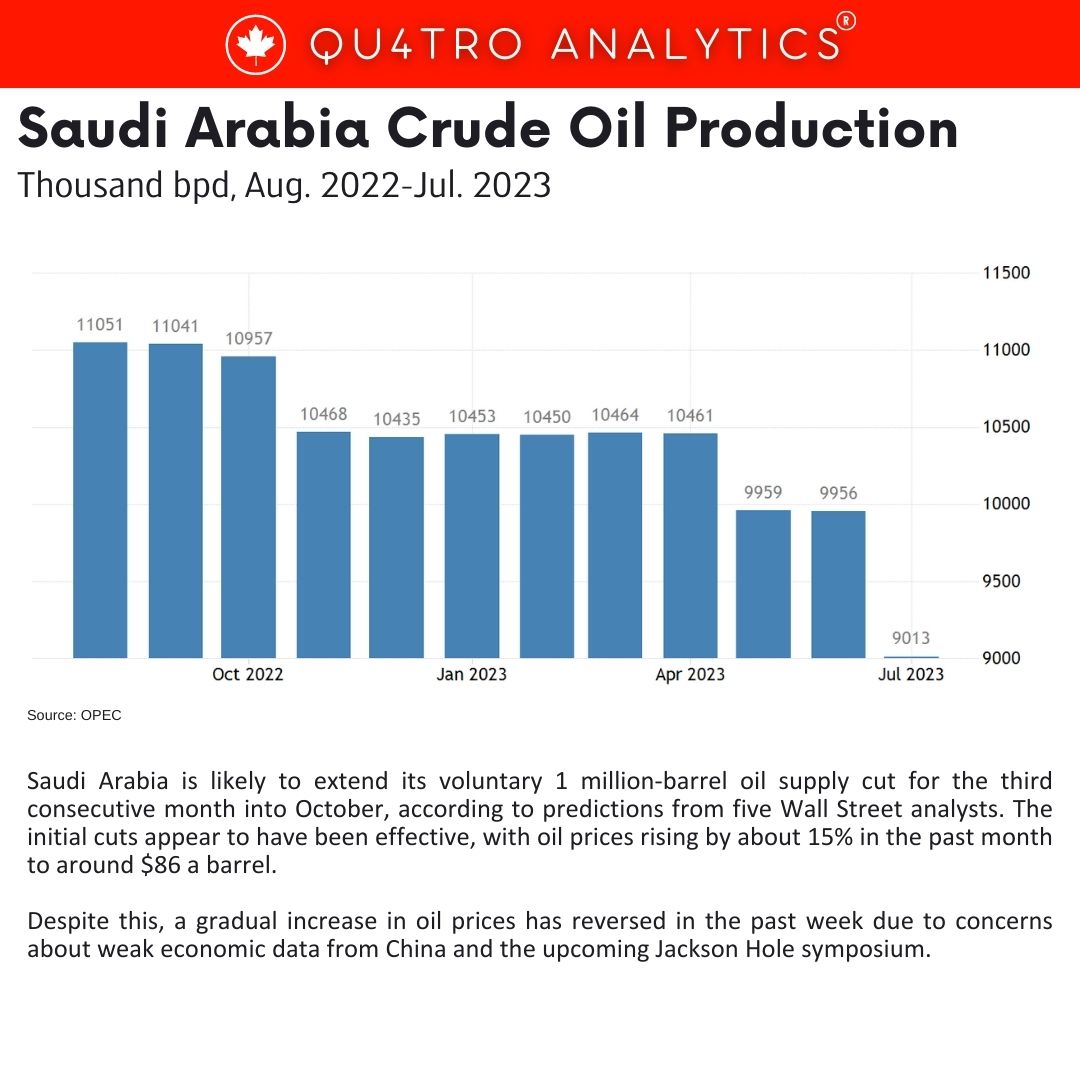
Saudi Arabia is likely to extend its voluntary 1 million-barrel oil supply cut for the third consecutive month into October, according to predictions from five Wall Street analysts. The initial cuts appear to have been effective, with oil prices rising by about 15% in the past month to around $86 a barrel. Despite this, a gradual increase in oil prices has reversed in the past week due to concerns about weak economic data from China and the upcoming Jackson Hole symposium.
The current Brent crude prices of $82.71 are considered too low for Saudi Arabia, as the country needs oil prices at around $100 a barrel to balance its fiscal budget. This provides the country with further incentive to maintain tight supplies in the market. Richard Bronze, an analyst at consultancy Energy Aspects, has stated that Saudi Arabia is likely to extend the supply cut through October. The cautious approach is influenced by the weaker oil market conditions in the first half of the year, and the country will want to see a significant decline in global inventories before considering unwinding the additional cuts.
 Analysts from brokerage PVM Oil and Saxo Bank have also speculated that a potential resumption of oil production from Iraq’s Kurdistan region might lead Saudi Arabia to withhold additional supplies to the market for the time being. Despite these uncertainties, oil markets are expected to tighten gradually, leading to an increase in prices as the months progress.
The International Energy Agency (IEA) has predicted a global oil shortage of approximately 1.7 million barrels per day during the second half of the year. Experts at Standard Chartered have forecasted a supply deficit of 2.81 million barrels per day in August, 2.43 million barrels per day in September, and over 2 million barrels per day in November and December. Their projections also suggest that global inventories will decrease by 310 million barrels by the end of 2023 and another 94 million barrels in the first quarter of 2024, contributing to higher oil prices. The experts anticipate that Brent prices will rise to $93 per barrel in the fourth quarter.
Interested in learning more?
Sign up for Top Insights Today

Top Insights Today delivers the latest insights straight to your inbox.
You will get daily industry insights on
Oil & Gas, Rare Earths & Commodities, Mining & Metals, EVs & Battery Technology, ESG & Renewable Energy, AI & Semiconductors, Aerospace & Defense, Sanctions & Regulation, Business & Politics.
Read more insights
China seeks to tie Belt and Road to Saudi Vision 2030 in bid for Gulf leverage
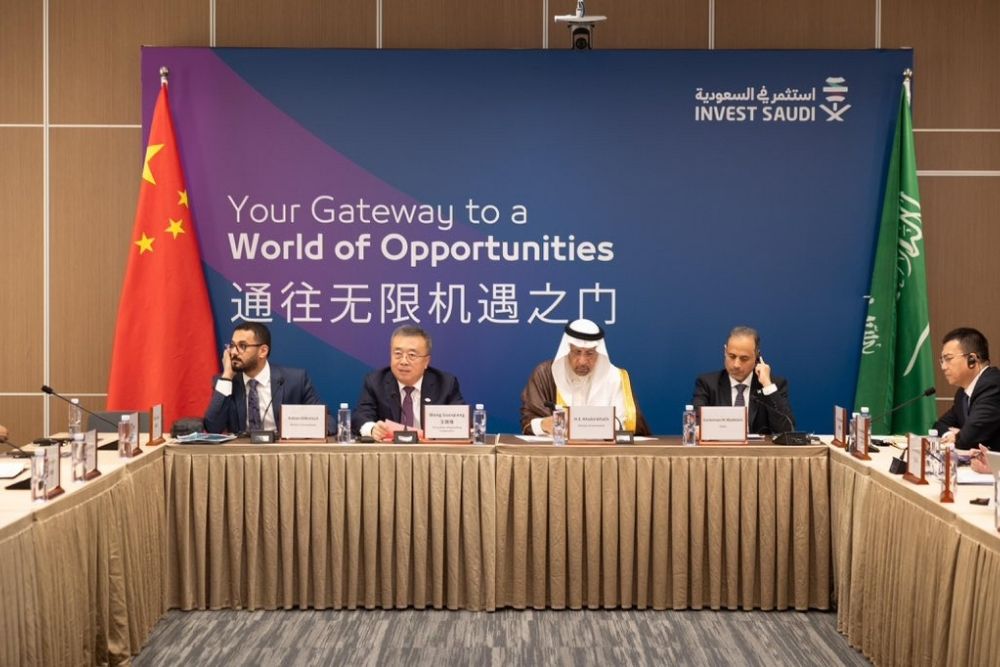
China’s latest outreach to Saudi Arabia underscores how Beijing is trying to lock in strategic Gulf partnerships as a hedge against mounting trade frictions with the United States and European Union. Commerce Minister Wang Wentao’s talks with Saudi Investment Minister Khalid Al-Falih this week were framed around energy transition and financial cooperation, but the deeper objective is clear.
China wants Riyadh’s backing to advance a stalled China–Gulf Cooperation Council (GCC) free trade deal while aligning its own Belt and Road Initiative (BRI) with Saudi Arabia’s Vision 2030. For Beijing, the timing is critical. U.S. and EU tariffs on Chinese green tech, EVs and other low-cost exports have squeezed China’s room to maneuver in developed markets.
Energy trading giants face cash conundrum amid limited investment opportunities
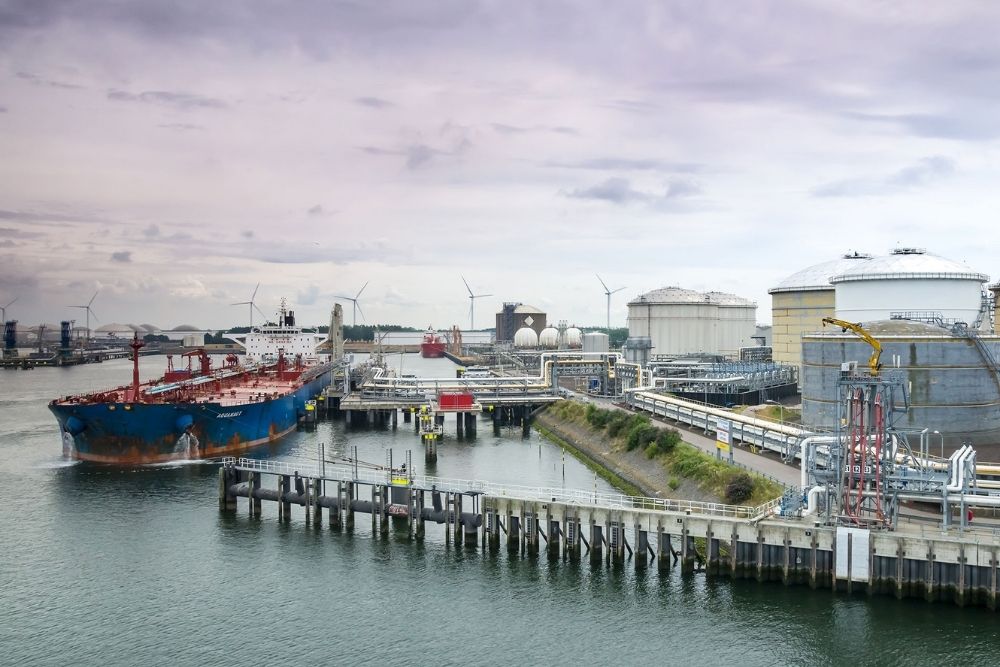
As the top global energy trading houses gear up for their annual industry gathering in London, they face a significant challenge: what to do with their substantial cash reserves. While these trading houses typically disclose little about their cash position, equity, or dividends, companies like Vitol…
Chevron-led consortium to expand production at Israel’s Tamar gas field
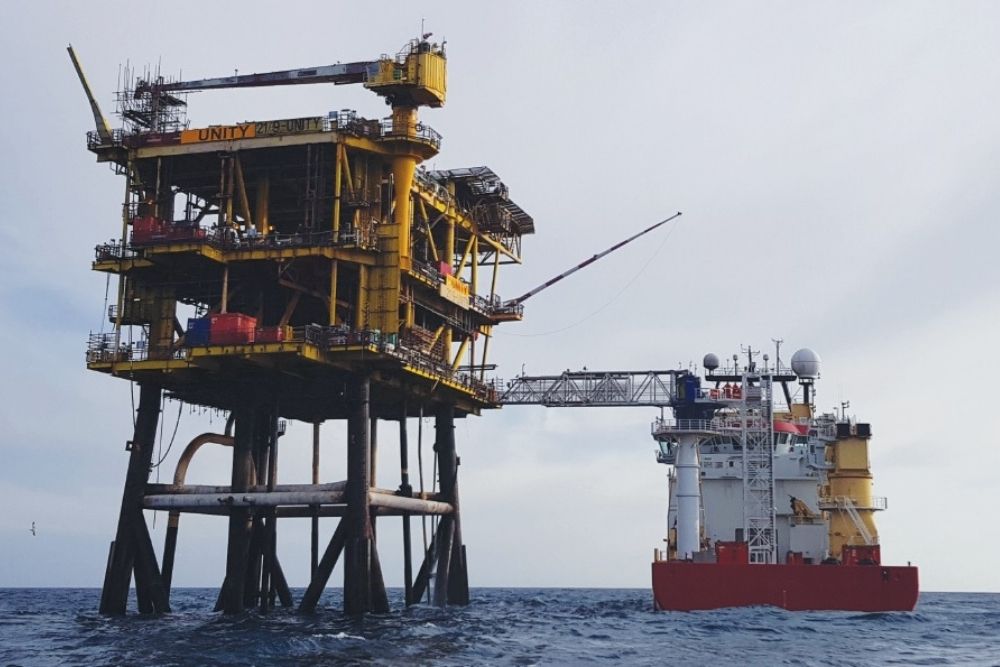
On Sunday, the partners in Israel’s Tamar natural gas field announced an agreement to expand production at the offshore site, which serves as a significant energy source for Israel and also supplies Egypt and Jordan. Chevron, the operator of the field, stated that the expansion will boost Tamar’s…